Abrasion resistance is one of the important properties of paint films, especially those that are subject to mechanical wear during application (such as aircraft, train wagons, automobiles, floor coatings, etc.). The mechanical wear of materials should be regarded as the sum of the two processes of wear and rubbing.
Under the action of sliding friction and rolling friction (that is, the first type of friction and the second type of friction), the shedding of the sample particles (which can be removed later) is called wear.
Since the rolling friction is much smaller than the sliding friction, the role of the dynamic friction in the wear process is obviously not great.
The flattening of the sample under the action of a moving weight is called rubbing (wrinkling).
Abrasion leads to loss of film weight, while rubbing only causes changes in surface shape. In fact, these two processes are interrelated and cannot be clearly separated.
According to the existing theory, the main reason for the friction force is that the contact surface is not flat enough, and the contact object is deformed due to the pressure during the massage. The damage of the surface during sliding friction is mainly due to the particularly strong adhesion of the part in contact with the solid surface.
Therefore, a phenomenon like "welding of one surface projecting portion to the other surface projecting portion" occurs. In order for sliding to continue, these protrusions must be damaged by friction, causing surface wear.
The type of friction force (I or Il), unit pressure on the friction surface, friction velocity, sample size, and many other factors can affect the wear intensity of the sample.
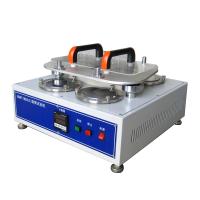
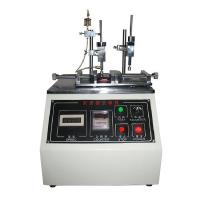
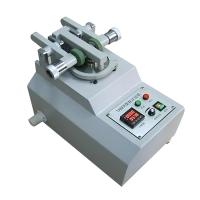
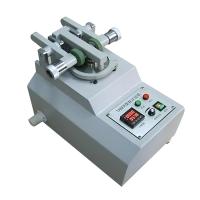
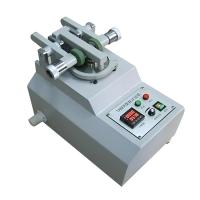
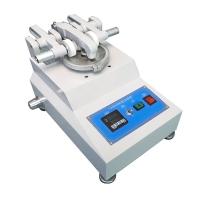
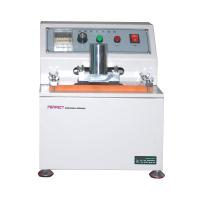
According to the opinions of many authors, mechanical wear resistance is a special property of materials, which has no fixed and strict regular relationship with other mechanical properties of materials (such as hardness, stretchability, elasticity, etc.), but it is also It is pointed out that there is an approximate proportional relationship between the abrasion resistance and the hardness produced by elasticity. (Related instruments: Abrasion Tester)
It is very difficult to judge the wear degree of the coating film according to the hardness, elasticity, impact strength and other indicators. Therefore, measuring the wear resistance of the coating film is the correct way to solve this problem, but this measurement is very complicated. During the wear process, the miscellaneous individual particles mixed into the paint film or the particles separated from the paint film and left on the surface play a very important role.
The presence of these particles can also affect the degree of wear of the sample, which will cloud the test results. In order to compare the wear resistance of each coating film, it is necessary to make the test close to its application conditions, and this test must be carried out under strict standard conditions.
Although the mechanical abrasion strength is decisive for most paint films of good quality during application, insufficient attention has been given to the method of determining the abrasion strength for removal of the film. The problem of material wear is most comprehensively described in metallography. But even in this science, there are only a few instruments that can be used for wear measurement during grinding.
Special attention should also be paid to the wear test of rubber. The various methods of wear testing used in the rubber industry are described in detail in the works of Izra Yelit. Some of the methods described in this book can be applied to the testing of paint films.
All the methods proposed for testing paint films can be divided into two broad categories
(1) Based on the method of using strong abrasive materials (fine sand, corundum, corundum, abrasive powder, etc.) to fall on the paint film at a certain speed and pressure to wear the paint film (coating film).
(2) A method based on the uniform wear of the paint film (coating film) based on the use of weak abrasive materials (leather, linen, rubber, metal, etc.) at different speeds and different pressures.
The test method and the selection of suitable test equipment will depend on the application conditions of the paint film.