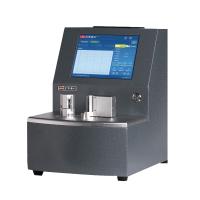
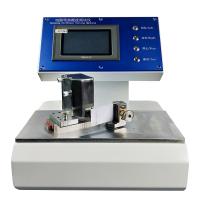
In the coating industry, flexibility is a key performance indicator, which reflects the performance of the coating in the face of external stress and deformation. The flexibility of the coating film directly affects its performance and durability in different application scenarios. This article will provide an in-depth look at the importance of flexibility, how it is tested, and its widespread use in industry.
Coating film flexibility test method:
Elasticity: The elasticity of a coating determines whether it can return to its original shape under the action of external forces. This involves the resilience of the coating film under tension and compression.
Plasticity: The plasticity of the coating film is manifested by whether permanent deformation occurs under the action of external forces. This is critical for certain applications, such as coatings that undergo deformation.
Adhesion: The adhesion of a coating film indicates whether it adheres tightly to the surface of the substrate and is not easy to peel or crack.
Impact resistance: The ability of a coating to resist rapid deformation, such as whether it is prone to cracking when an object strikes the surface of the coating.
Postformability: The performance of a coating film during subsequent processing, such as whether it can maintain its flexibility and performance during roll coating or forming.
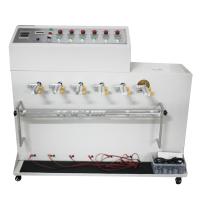
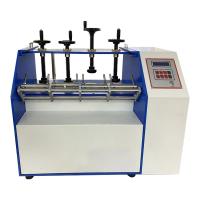
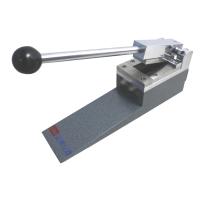
Flexibility testing methods: In order to evaluate flexibility, various testing methods and instruments are widely used. The following are some common flexibility testing methods:
Shaft rod Tester: Use steel shaft rods of different diameters to bend the coating film sample to observe whether the coating film is cracked. The smallest available rod diameter indicates the flexibility of the coating film.
Cylindrical shaft bending Tester: Use a cylindrical shaft to perform bending tests on thinner test plates, and evaluate the flexibility by observing whether the coating film cracks or peels off.
Cone deflection Tester: Use a cone to deflect the paint film sample and observe the minimum diameter that causes damage to the paint film. It is suitable for whole board testing and reduces the influence of human factors.
Cupping Tester: Use a spherical punch to push the back of the painted test panel to observe whether it causes cracking or peeling of the coating film. The minimum indentation depth indicates the flexibility of the coating film.
T-shaped bending test: used for coil coatings. The test panel is folded in half to observe whether it cracks, and then continuous testing is performed. It is usually marked as 0T, 1T, 2T, etc., indicating the flexibility of the coating film.
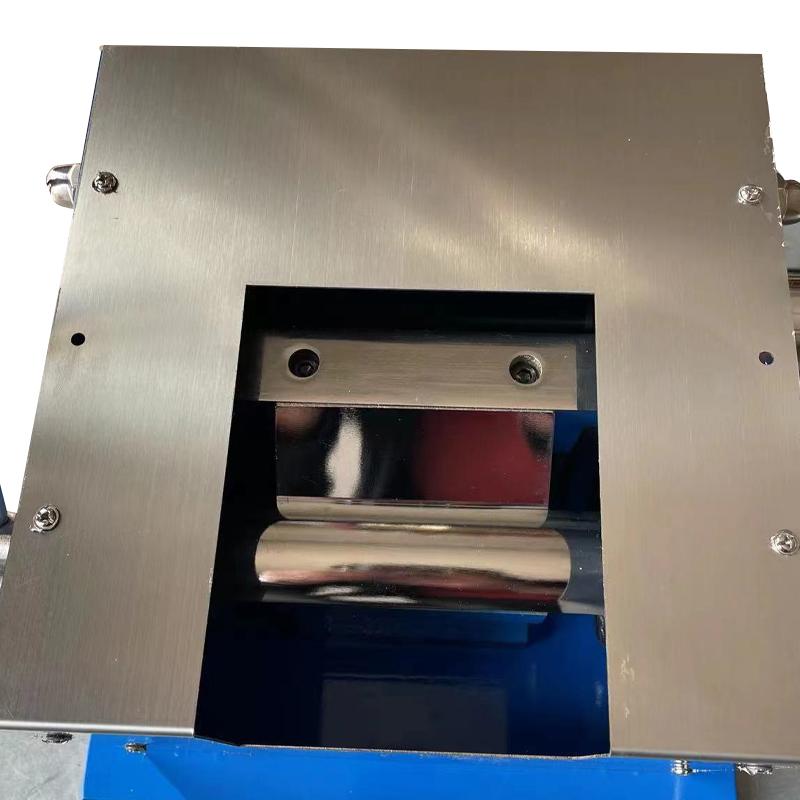
Application of coating film flexibility
Coating film flexibility testing is widely used in the coating industry:
Quality Control: Manufacturers can use flexibility testing to ensure that their film-coated products have the required durability and adaptability in actual use.
Coating selection: Manufacturers can choose coating types and formulations suitable for different applications based on flexibility test results.
Post-formability evaluation: Flexibility testing can be used to evaluate the performance of coating films during subsequent processing, such as in coil coating and forming industries.
R&D and Improvement: By understanding flexibility characteristics, R&D teams can improve coating formulations to meet changing application needs.
In short, flexibility is an indispensable performance indicator in the coating industry and is crucial to ensuring product quality and performance. By selecting the appropriate testing method, manufacturers can better understand the flexibility of their coated products and meet customer needs. The choice of flexibility test method should be based on the specific situation and standard requirements to ensure the accuracy and comparability of test results.