Tensile testing is the basic means to determine the core mechanical properties of metal materials, and residual stress will interfere with the accuracy of the test as the residual stress state inside the material. Clarifying its influence mechanism and adopting a pre-elimination method is the key to ensuring reliable tensile test results.
Basic overview
Source - Differences in uneven plastic deformation, temperature gradient, and microstructure transformation during material preparation, processing, and heat treatment.
Classification - According to the distribution direction, it can be divided into longitudinal, transverse, and thick residual stresses, which often cause negative interference with tensile testing.
Impact on tensile test results
Distortion of strength index - residual tensile stress superimposed on external load, making the yield strength test value low; The residual compressive stress offsets the external load, making the yield and tensile strength test values too high, and misjudging the bearing capacity of the material.
Deviation of plastic index - uneven stress distribution leads to uneven tensile deformation of the specimen, local early necking, so that the test values of elongation and section shrinkage are low, and the forming ability is misjudged.
Decrease in test repeatability - superimposed stress is easy to cause cracks, resulting in early fracture of the specimen, abnormal fracture morphology, and increased discreteness of parallel test results.
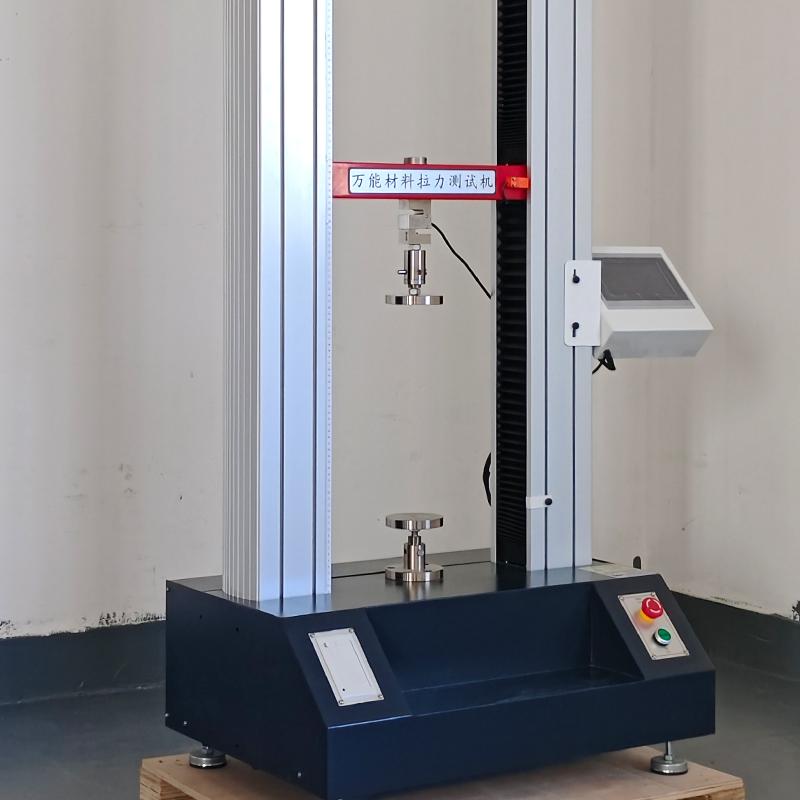
Residual stress relief method before tensile testing
Heat treatment elimination method (most commonly used and most stable)
The core is temperature control and stress relief, mainly low-temperature annealing (heating to 40%~50% melting point of the material, slow cooling after heat preservation), suitable for most metals; Stress relief tempering and isothermal annealing can be selected as needed.
Mechanical elimination method (efficient and convenient)
Through the release of small plastic deformation, vibration aging (low frequency vibration, low energy consumption), shot peening treatment (offset surface tensile stress, strength needs to be controlled), and rolling treatment are commonly used.
Natural timeliness (economical and easy)
Placed in a dry environment at room temperature for several days to several weeks, the force is released through the slow movement of atoms; It is suitable for specimens with small residual stress and no strict cycle requirements, and the efficiency is low.
summary
Residual stresses can significantly affect the strength, plasticity, and repeatability of tensile testing, leading to distortion of results. Before testing, it is necessary to combine the material type, residual stress level and test requirements, and reasonably select the elimination method to ensure that the test results truly reflect the mechanical properties of the material and provide a reliable basis for engineering applications.
