Paint viscosity is one of the physical and chemical properties of liquid and colloidal systems. It is used to describe the resistance of liquids to mutual movement of molecules under the action of external forces. In the coating production and application process, viscosity is a key parameter that has an important impact on the performance and application effect of the coating. This article will introduce the definition of coating viscosity, related standards, test methods, and its importance in coating production and application.
What is paint viscosity
Paint viscosity refers to the ability of the paint to hinder molecular movement due to intermolecular interactions under the action of a certain external force. It is expressed by the ratio of shear stress to shear rate, generally measured as the speed of liquid passing through unit area per unit time. The viscosity of the paint is related to the molecular weight of the polymer in it, and the viscosity can reflect the fluidity and viscosity of the paint.
Paint viscosity related standards
The determination of coating viscosity involves multiple standards, including GB/T1723-93 coating viscosity determination method, GB/T6753.4-1998 paint and varnish outFlow Cup measurement of outflow time, GB/T2794-1995 determination of adhesive viscosity, GB/T 9269-88 Determination of viscosity of architectural coatings - Stormer viscometer method, and GB/T9751-88 Determination of viscosity of coatings at high shear rates, etc.
Introduction to key points of coating viscosity testing methods
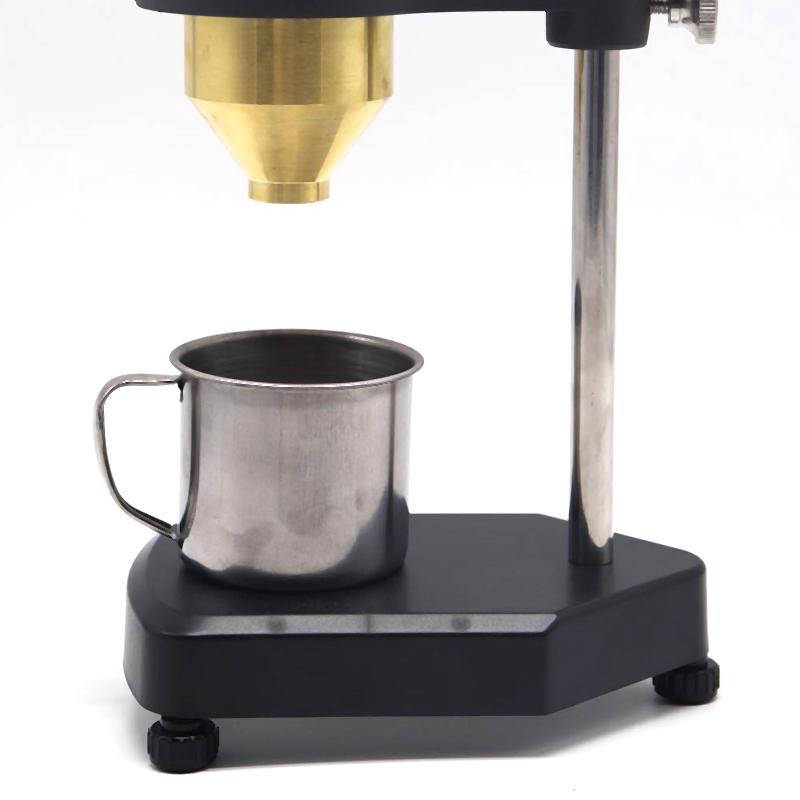
Tu-1 Viscometer method: This method is suitable for coating products with an outflow time of not less than 20 seconds. Under specified temperature and conditions, a certain amount of sample flows out from the specified hole, and its outflow time is measured.
Tu-4 viscometer method: Applicable to coating products with an outflow time of less than 150 seconds. Under certain conditions, the sample flows out from the paint container and the flow out time is measured.
Importance and influencing factors of coating viscosity
Coating viscosity has an important impact on the production and application of coatings. During the coating production process, viscosity that is too high or too low can cause coating performance and application problems. If the viscosity is too high, it will be difficult to apply the paint, while if the viscosity is too low, the paint may have poor wettability and sagging. In addition, the viscosity of the coating will also affect the physical and mechanical properties of the coating film such as gloss, durability, adhesion, etc.
During the coating application process, the appropriate performance of viscosity can make the application smoother and reduce problems such as paint sagging and uneven paint film thickness.
in conclusion
As an important characteristic of coatings, coating viscosity has an important impact on the production and application of coatings. By using standard measurement methods, the viscosity information of the coating can be accurately obtained, allowing for control and adjustment during the production process. Appropriate paint viscosity can ensure the performance and application effect of the paint, and improve the quality and construction efficiency of the paint. Therefore, coating manufacturers and construction personnel should pay attention to the measurement and control of coating viscosity to ensure high-quality application of coatings.