The contact angle meter is an important experimental tool used to measure the contact angle of liquid on a solid surface. Its development has gone through many stages. When purchasing a contact angle meter, factors such as instrument classification, optical imaging system, host design, and contact angle analysis technology need to be considered.
1. Contact angle meters can be classified according to their contact angle optical systems and contact angle analysis methods in the software. The current main classifications include goniometers, standard contact angle meters and advanced contact angle meters. The goniometer is an earlier instrument, developing from simple angle measurement to models using CCD and software. Standard contact angle meters use CCD and software systems, which not only stay at the simple angle measurement stage, but also adopt curve analysis methods. The advanced contact angle meter strives to eliminate influencing factors such as liquid surface tension through advanced optical systems and analysis technologies, and directly analyze the size of the contact angle. Such classification facilitates rational analysis and selection of appropriate instruments.
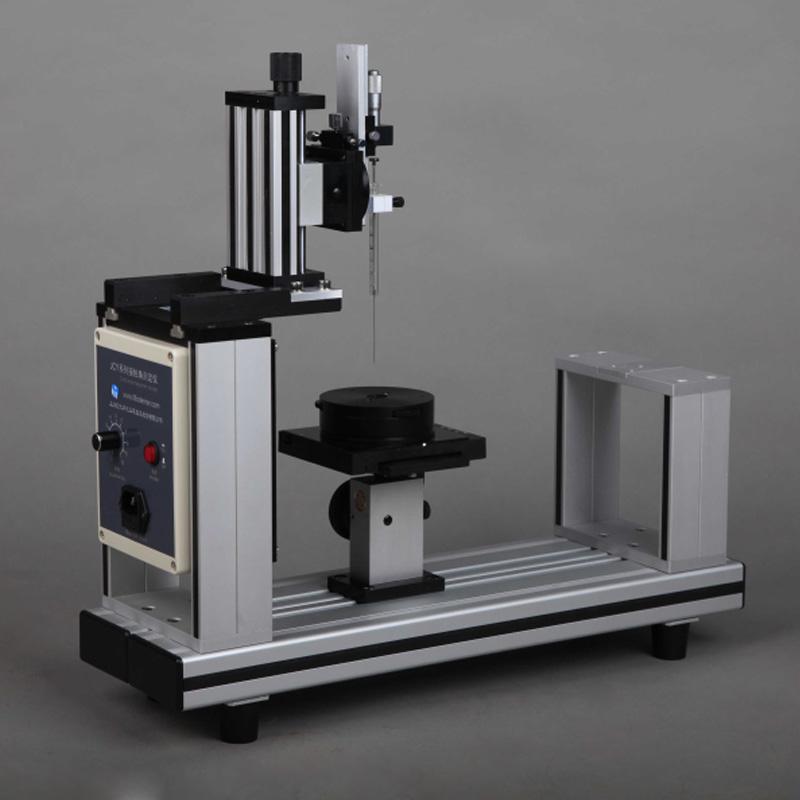
2. The optical imaging system is crucial for contact angle software analysis. Although computer systems are advanced, the design of the optical system directly affects image quality. Generally, an optical system is composed of a lens with a certain magnification and a CCD. A high-quality imaging effect should be characterized by a clear background, a clear foreground, and even a realistic feel, such as a metallic feel.
3. The host design of the contact angle meter is also one of the key factors that need to be considered when purchasing. The stability of the host, ease of operation, focusing accuracy and matching with the software design are all crucial. In addition, the shape and volume of the testable sample need to be considered, otherwise the test may not be completed. Different operating requirements may require different designs of hosts, which must be confirmed with the manufacturer's sales engineer.
4. Contact angle analysis technology is very important. The data required for practical applications is the most critical, so it is necessary to ensure that the contact angle analysis technology provided by the supplier meets the requirements. Discussing this type of technology with vendors to understand how it meets actual needs is a critical part of the purchase process.
To sum up, when purchasing a contact angle meter, you need to comprehensively consider its classification, optical imaging system, host design, and contact angle analysis technology. Only by comprehensively considering these factors can you choose the contact angle instrument that best suits your actual needs.
