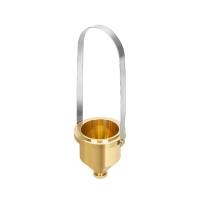
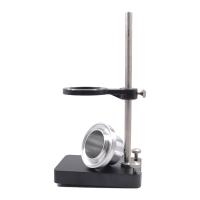
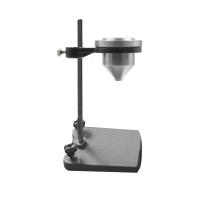
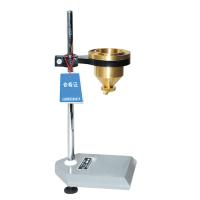
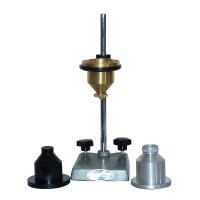
The Tu-4 cup viscosity test is a method used to determine the viscosity of coatings and other samples under kinematic viscosity conditions. This test is suitable for samples with an outflow time between 10 and 150 seconds. The viscosity is measured by the time it takes for the sample to flow out from a specified aperture at a specified temperature. This article will introduce the testing procedures, instruments and usage of Tu-4 cup viscometer, as well as related precautions and result presentation.
Instruments and reagents
The instruments required for Tu-4 cup viscosity testing include Tu-4 cup viscometer, tray balance, beaker, thermometer, etc. In addition, diluting solvents and glass rods are also needed for the preparation and stirring of the test solution.
Preparation
Before conducting the test, the test solution needs to be prepared. First, weigh about 150 mL of the test solution in a beaker, and then use a glass rod to stir and dissolve 100 g of the test substance. If the substance to be measured needs to be diluted, it must be dissolved with the corresponding solvent and stirred thoroughly to dissolve. In addition, the Tu-4 viscometer needs to be checked to ensure that there is no residual adhesion on its surface.
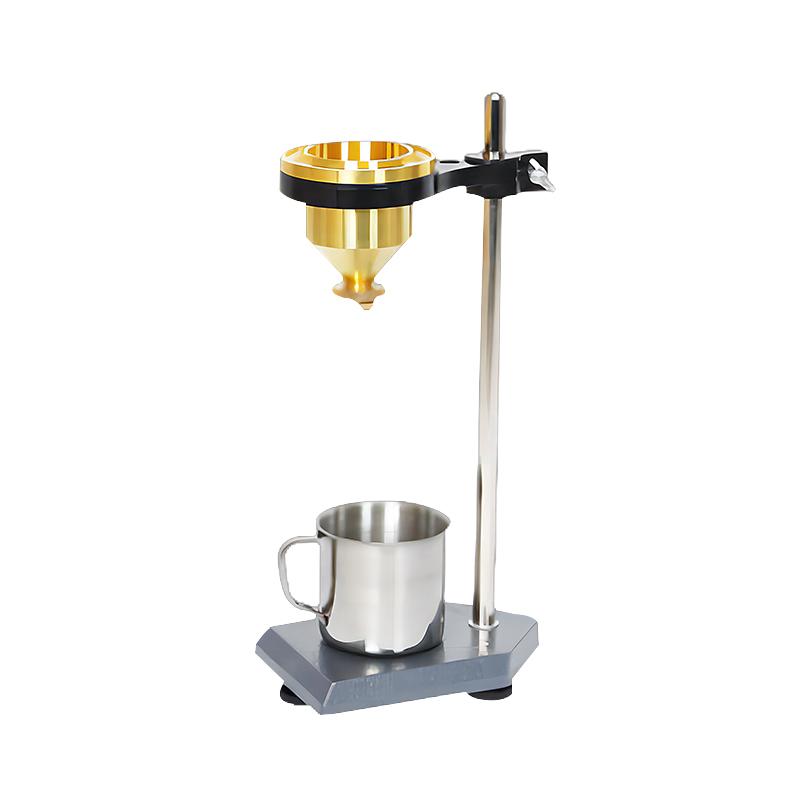
Steps for usage
Pour the test solution into the viscometer, plug the outflow hole with your fingers, scrape it flat with a flat plate, and scrape the excess test solution into the groove on the edge of the viscometer.
Release your finger and the test solution will flow out vertically, and start the stopwatch at the same time. Stop the stopwatch when the test solution flows out in a line shape and breaks off, and record the outflow time as the viscosity value.
After the test is completed, clean the viscometer with cotton dipped in the corresponding solvent to ensure it is clean.
Results presentation and precautions
The test results are expressed as the arithmetic mean of the measured values ââof two parallel samples, and it is required that the difference between the two measured values ââof the parallel tests does not exceed 3% of the average value. During the test process, attention should be paid to checking the cleanliness of the Tu-4 viscometer to avoid residues affecting the test results. In addition, if the sample temperature is too high or too low, it will cause viscosity errors. Make sure that the sample is tested at the specified temperature.
Guideline
This test method follows the national standard GB/T 1723 "Method for determination of paint viscosity".
As an important method to evaluate the viscosity of coatings, the Tu-4 cup viscosity test has wide application value in coatings and other fields. The standardized operation and accuracy of this method ensure the reliability of test results and provide strong support for coating production and quality control.