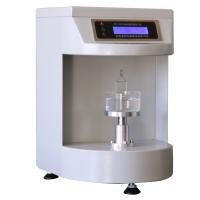
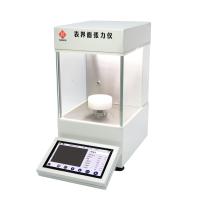
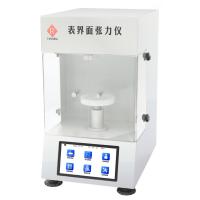
The measurement of liquid surface tension has wide application significance. This technology not only helps us understand the behavior of liquids in various scenarios, but also has a profound impact on fields such as industrial production, materials science, pharmaceutical development, and biomedicine. By measuring and understanding liquid surface tension, we can optimize production processes, improve product performance, and drive innovation and development in a variety of fields.
The plate method and the ring method in liquid table/interfacial tensiometer are two commonly used testing methods. The plate method uses a flat plate to measure the surface tension of liquids and is suitable for samples of different viscosities, but it may not get better results in some cases of self-hate; while the ring method uses a ring structure to measure the interfacial tension of liquids, which is especially suitable for handling self-hate situations and testing. The interfacial tension of immiscible liquids, but its structure is easily affected by external forces. When selecting an appropriate method, consider the sample characteristics and accuracy of the data required. In the measurement of liquid surface or interfacial tension, the plate method and the ring method are two common testing methods. There are some significant differences in their principles, advantages and disadvantages, and applicable samples.
Plate test
Plate testing is a relatively recent test method used to measure the surface or interfacial tension of liquids. Its advantages include: the test piece is not easily deformed, ensuring the stability and accuracy of measurement. Allows surface tension testing of samples with a certain viscosity. The entire testing process can be monitored in real time to ensure the reliability and real-time nature of the data. However, there are also some shortcomings in the plate test. Some samples that are self-hating with the surface of the plate may not be able to obtain good reproducibility in the test. When testing the interfacial tension of two immiscible samples, accurate data may not be obtained.
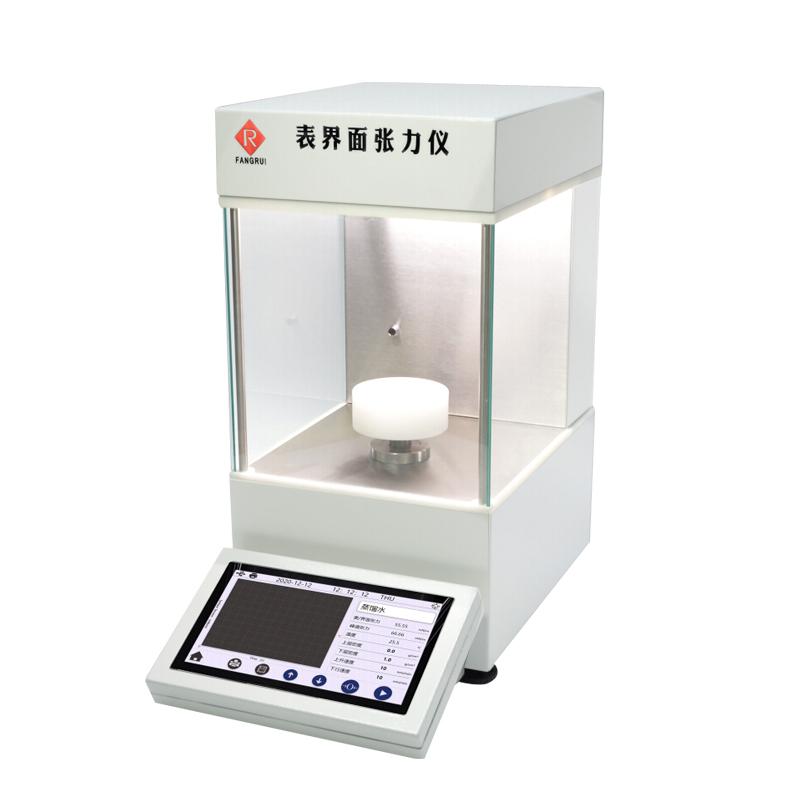
Tour de France test
The ring method test is an earlier testing method used for the measurement of liquid surface or interfacial tension. The advantage is that the ring method detection data is usually relatively stable and reliable, and is especially suitable for measuring the situation where the liquid and the plate surface produce self-hatching. When testing the interfacial tension of two immiscible samples, the ring method has the advantage of providing more accurate data. Of course, there are also some shortcomings in the ring method test. The structure of the ring is easily affected by external forces, which may cause deformation, thereby affecting the accuracy of the measurement data.
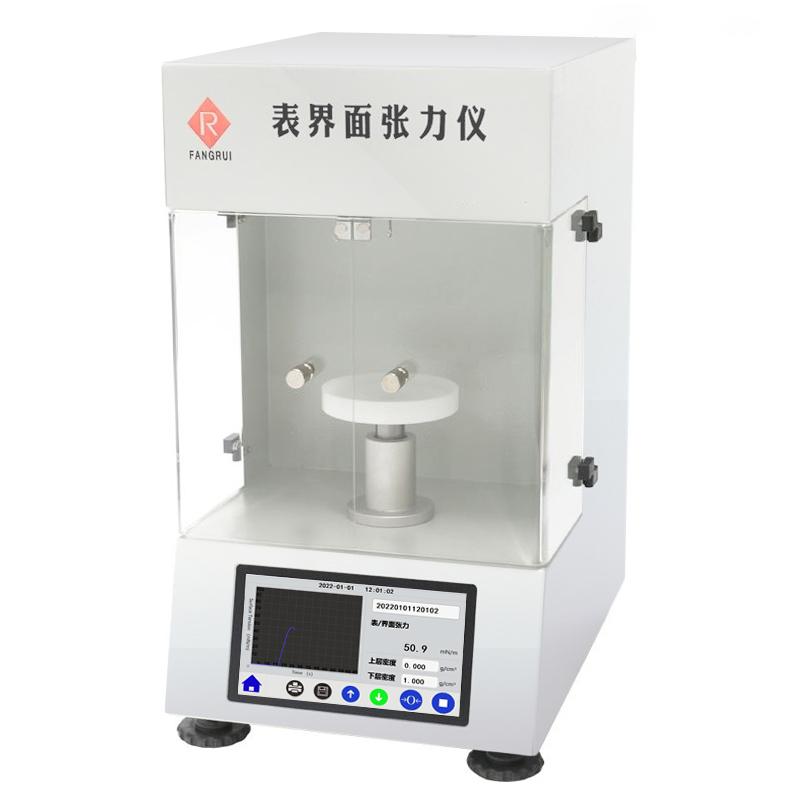
Sample test comparison
For the same sample, whether using the plate method or the ring method, the test results are not always consistent. Usually, when measuring standard samples, the results obtained by the two methods are basically the same. However, in some cases, such as when a liquid is self-repellent to a plate surface or when testing the interfacial tension of two immiscible samples, the two methods may produce different results. Therefore, when selecting a test method, it is necessary to comprehensively consider the characteristics of the sample and the required data accuracy and stability to determine a suitable test method. Through an understanding of the plate method and the ring method, we are better able to choose a liquid surface/interfacial tension testing method suitable for specific samples and testing needs, thereby obtaining more reliable and accurate test data.