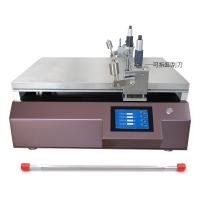
Pinhole resistance testing plays a vital role in the evaluation of packaging materials, especially for liquid packaging bags. During transportation and transportation, liquid packaging bags are prone to pinholes due to shock and vibration, which may lead to product leakage and quality problems, causing unnecessary losses. Therefore, it is critical to understand and evaluate the pinhole resistance of packaging materials. This article will introduce pinhole resistance test methods, including instrument measurement and impact testing, and discuss their application in packaging material evaluation.
1. Instrument measurement method
The instrumented measurement method is a test method used to simulate the pinhole resistance of packaging films under low-velocity impact conditions. The test setup usually consists of a metal cabinet, a cryogenic tank and a set of test samples. The test process is to install the test sample on a metal cabinet and place it in a low temperature tank. Raise the temperature at a speed of 6cm/min to gradually heat up the sample. A needle made of brass is used to touch the sample. The tip of the needle is conical with an apex angle of 70°. As the sample moves upward, the needle hits the sample and penetrates, creating a pinhole. The load and elongation at failure are measured via connected Detectors.
The relationship between failure load and elongation is usually approximated as a linear function. The instrumented measurement method uses a needle with an acute angle to touch the packaging film to simulate pinhole resistance under low-velocity impact conditions. However, in the actual circulation process, the impact speed may be higher, so the impact test method needs to be used for testing.
2. Impact test method
The impact test method simulates the pinhole resistance strength of packaging films under high-speed impact conditions. The test apparatus usually consists of a polyvinyl chloride pipe with an impact head and load attached to the end of the pipe. During the test, when the impact head leaves the horizontal position, an impact is generated, causing pinholes in the sample. The load used for testing is usually 60g. The impact test method evaluates the performance of packaging films by simulating pinhole resistance under high-speed impact conditions. This method is more suitable for actual circulation processes, where the impact velocity is high.
Pinhole resistance testing is critical for the evaluation of packaging materials, especially for liquid packaging bags. Instrument measurement method and impact test method are two commonly used test methods, which simulate the pinhole resistance under low-speed and high-speed impact conditions respectively. By understanding the pinhole resistance of packaging materials, manufacturers and packaging engineers can choose appropriate materials to ensure that products will not leak and be damaged during transportation and use, thereby improving product quality and protecting consumers' interests.