The color difference problem of color-coated boards has always been an important topic of concern in the coating industry. In order to better understand and deal with the problem of color difference, we need to understand the principles and measurement methods of color. In the field of color, the Munsell color space system is a classic standard, which includes three parts: color atlas, color three-dimensional model and color representation instructions. This system uses the classification method of color three-dimensional models to make various standard color samples into pieces of paper to form a color atlas. Color atlases include glossy and matte swatches, as well as neutral color swatches, which help standardize the representation and comparison of colors.
color system
The Munsell color system uses a three-dimensional space model to represent color, in which brightness, saturation and hue are three key parameters. Luminance represents the brightness of a color, saturation represents the vividness of a color, and hue represents the basic color properties of a color. This systematic approach to color representation provides us with an efficient way to describe and compare the differences between different colors.
The Munsell color space system is a widely adopted standard. It provides us with a systematic method of color classification and representation through components such as color atlases, color three-dimensional models, and color representation instructions. This system produces sheets of paper from various standard color samples and sorts them according to parameters such as brightness, saturation and hue. This classification method helps standardize the representation and comparison of colors, but in practical applications, we need to consider the impact of different light sources and observer conditions on color.
In color measurement, we usually use CIE standard illuminants to calibrate color to eliminate the influence of different light sources and spectral power distribution. These standard illuminants include A, D65, F2 and F7, etc., which respectively represent color standards under different light source conditions. By using these standard illuminants, we can more accurately measure and compare colors independent of the light source.
The use of CIE standard illuminators is to eliminate the influence of different light sources and spectral power distributions so that color can be measured more accurately. These standard illuminants represent color standards under different light source conditions, including A, D65, F2 and F7, etc. By using these standard illuminants, we can make consistent color measurements and comparisons under different light sources.
However, in practical applications, the same color may appear chromatic aberration under different light sources and observer conditions. This is called metamerism. Metameric colors are colors with different spectral distributions but the same tristimulus value under certain conditions. This phenomenon requires a specific standard observer and a specific illuminant to be established. Once the observer or illuminant is changed, the metameric properties of the color will be destroyed. This also illustrates the need to consider the effects of light source and observer when dealing with chromatic aberration.
Metameric colors are colors with different spectral distributions but the same tristimulus value under certain conditions. This phenomenon requires a specific standard observer and a specific illuminant to be established. Once the observer or illuminant is changed, the metameric properties of the color will be destroyed. This also emphasizes the need to consider light source and observer factors when dealing with chromatic aberration.
The color difference problem of color-coated boards involves the principle of color, measurement methods, and factors of light source and observer. Understanding and managing color differences is important to the coatings industry and other color-related areas, helping manufacturers provide more consistent products that meet consumer demand. Through standardized color representation and measurement methods, we can better understand and solve color difference issues, providing more accurate tools for color design and reproduction.
Application of Colorimeter
The Colorimeter plays a vital role in measuring the color difference of color-coated boards. First, a Colorimeter accurately measures the color of a coating surface and compares it to a standard color. By measuring the tristimulus value of the coating (that is, the reflection value of the red, green, and blue channels), the Colorimeter can calculate the coordinate value of the color, such as L* (brightness), a* (red-green difference) in the CIELAB color space and b* (yellow-blue difference), thereby quantifying the difference in expressed color. This allows manufacturers to track and control the color of color-coated boards from different batches or different production lines to ensure product consistency.
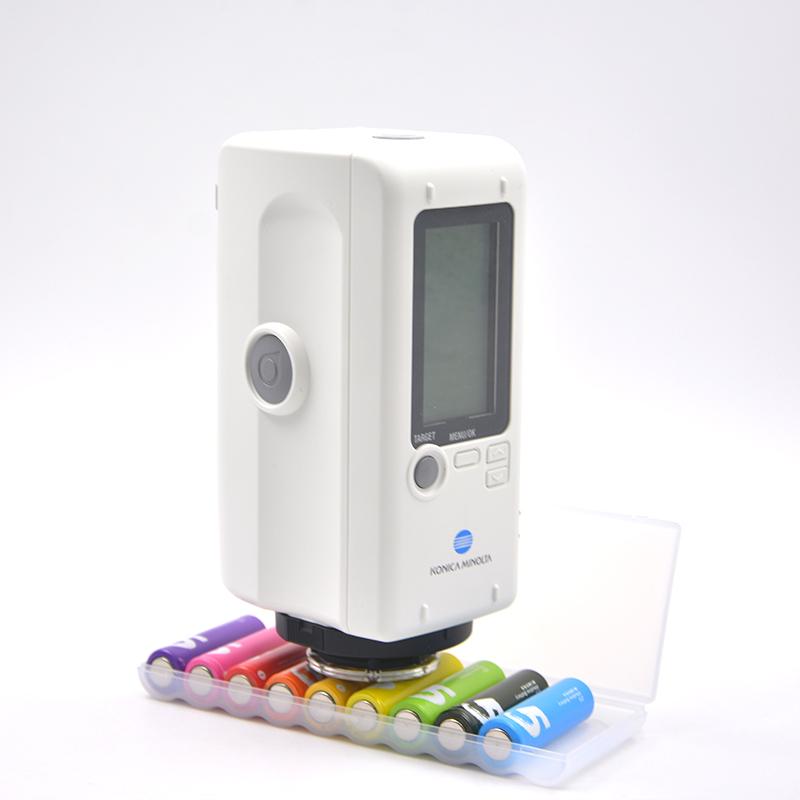
Secondly, a Colorimeter can also detect and identify metamerism, which is the color difference that occurs under different light source conditions. By using different standard illuminant settings, the Colorimeter can simulate observations under different lighting conditions, helping manufacturers more fully understand the color performance of products in different environments. This helps ensure that the color-coated panels maintain a consistent appearance under different lighting conditions, improving product reliability and applicability. Therefore, the application of Colorimeter in color difference measurement of color-coated boards can not only improve product quality, but also help meet customers' requirements for color consistency, and enhance the controllability and efficiency of the production process.