Conformal paint is a protective coating of thin polymer film widely used on printed circuit boards (PCBs). This coating is called tri-proof because it conforms to the contours of the PCB, providing circuit protection against moisture, dust, chemicals and extreme temperatures. In the electronics manufacturing industry, the requirements for PCB reliability and durability are getting higher and higher, and conformal coatings are widely used to meet these requirements.
Coating application method
Three-proof paint can be applied through various methods such as brushing, spraying, spot coating and dipping. Various materials are used as conformal coatings, such as acrylic, silicone, polyurethane, and parylene. Each of these materials has characteristics that make them a reliable choice in specific environments and production scenarios. Most PCB assembly companies will choose to apply a layer of transparent conformal coating to the circuit board after assembly is completed because this coating is lighter and easier to inspect than other methods such as potting.
Reasons for using conformal paint
Conformal anti-coating is mainly used to protect electronic components from environmental factors. These environmental factors include moisture, dust, salt, chemicals, temperature changes and mechanical wear. Successful three-proof coating can effectively prevent corrosion of circuit boards. More recently, conformal coatings have also been used to reduce whisker formation and prevent current leakage between closely spaced components.
The conformal coating is breathable and allows moisture in the circuit board to escape while still preventing contamination. These coatings are not sealants and prolonged exposure to vapor can cause breathability and degradation. There are generally four types of conformal coatings: acrylic, polyurethane, silicone and varnish. While each coating has its specific physical and chemical properties, they are all capable of performing the following functions: Insulation: Allows for tighter conductor spacing, eliminates the need for complex enclosures, has less impact on component weight, and fully protects the assembly Protected from chemicals and corrosion, reducing stress on PCB components caused by environmental hazards.
Application areas
Three-proof coating on PCBA when UV curing is required
Provide three protections for precision analog circuits to avoid accuracy degradation caused by ionic substance contamination on the surface
Prevent damage to chips and wires during on-chip assembly by using a "pellet top" version of the conformal coating
Coating application method
Brushing method: Apply paint to circuit boards by flowing, suitable for low production volumes, refinishing and repairs. The appearance of the coating may be aesthetically inferior and prone to defects such as bubbles.
Spraying method: This can be done using a spray aerosol or a dedicated spray booth and Spray Gun. Suitable for low to medium volume processing. Surface finish may be better when an experienced operator completes the process.
Dip coating: is a highly repeatable process that can increase yields if designed correctly. However, many PCBs may not be suitable for dip coating due to design reasons.
Machine-selective coating: a reliable choice for high-volume applications. By using a needle and atomized sprayer, non-atomized spray, or ultrasonic valve technology, paint can be moved across the board and sprayed/sprayed over the desired area. This method is very effective for high-volume production, provided the PCB is suitable for this method.
Curing and drying methods
Solvent and water-based conformal coatings: For standard solvent-based acrylics, the regular drying (film-forming) process is normal unless speed is required. Heat curing can then be used, using a batch process with a conveyor or an in-line oven, and using a typical cure profile.
UV three-proof coating: UV-cured three-proof coating is becoming increasingly important among a large number of users in fields such as automobiles and consumer electronics. This coating has become popular due to its fast curing speed, ease of handling, environmental friendliness, and resistance to thermal cycling.
Moisture Cure: Silicone and polyurethane resins are cured by this method. Moisture in the atmosphere causes the resin to solidify and form a polymer. Processing time for the board ranges from a few minutes to an hour, but it takes several days to reach its final performance.
Coating Thickness and Measurement
The coating material (after curing) should have a thickness of 30-130μm (0.0012-0.0051 inches) when using acrylic, epoxy or polyurethane resins. For silicone, the recommended coating thickness according to IPC standards is 50-210μm (0.0020-0.0083 inches).
There are several methods of measuring coating thickness, which can be divided into wet film and dry film categories.
Wet film conformal coating measurement â ââThis method ensures quality control while the coating is still wet. Excessive coating can be expensive, and wet film measurements are useful in situations where destructive testing alone is possible or where too much application of a conformal coating may be a problem.
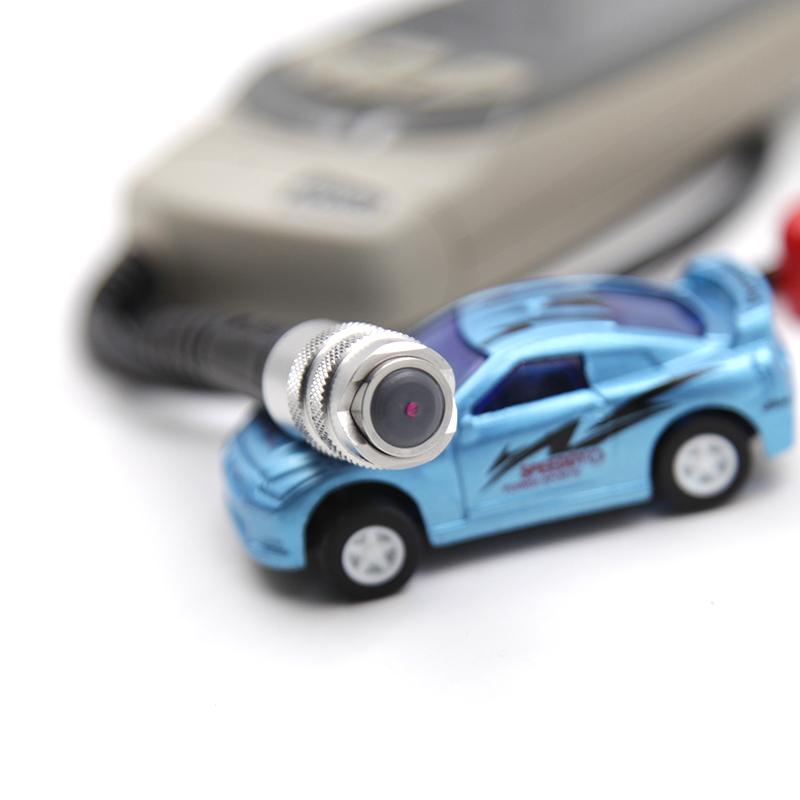
Dry film conformal coating thickness measurement - An alternative to wet film measurement is to use eddy current. The system works by placing a test head on a conformal coating surface. Measurements are almost instantaneous and provide instant repeatable results for thickness measurements.