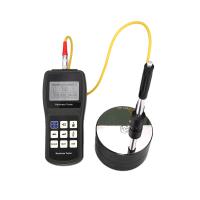
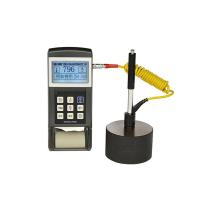
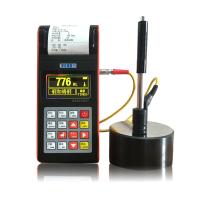
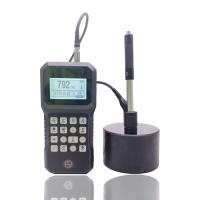
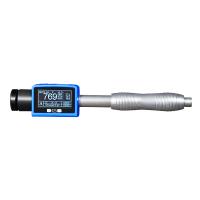
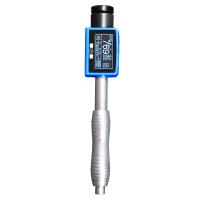
The Leeb Hardness Tester is a metal material hardness measuring instrument manufactured using the Leeb hardness test theory. It adopts advanced microelectronic technology and digitally displays hardness values. It has the advantages of small size, light weight, and simple testing. It is especially suitable for measuring the hardness of large, heavy, unsuitable for disassembly, small space, different directions and special parts of workpieces. In terms of hardness testing of metal materials, Leeb Hardness Testers have been widely used, providing important support for product quality assurance and failure analysis.
Applications
Mold cavity
Heavy workpiece
Failure analysis of pressure vessels, turbine generators and equipment
Bearings and other parts
Test workpieces with small space, such as grooves, inner holes and other components
Require formal original records of test results
Material differentiation in material warehouse, such as annealed or quenched and tempered steel
Rapid inspection of multiple measurement locations over a wide range of large workpieces

working principle
The Leeb hardness test was proposed by Swiss Dr. Leeb in 1978. The basic principle is to use an impact body of specified mass to impact the sample surface at a certain speed under the action of elastic force, and calculate the hardness value through the ratio of the punch's rebound rate at a distance of 1mm from the sample surface to the impact rate. The Leeb Hardness Tester uses the Leeb hardness test theory to convert the speed signal of the impact body into a voltage signal, and uses microelectronics technology to perform signal acquisition and data processing, and finally obtains the Leeb hardness value. Compared with static measurement methods, the Leeb Hardness Tester is a dynamic hardness measurement device.
Conversion between Leeb hardness and other hardnesses
In actual hardness measurement, it is often necessary to convert the Leeb hardness value into other commonly used hardness values, such as Brinell, Rockwell, Vickers, Shore, etc. This conversion usually has two methods: general conversion and specific conversion. The general conversion is to substitute the measured average value of Leeb hardness into a general conversion table classified by material, while the specific conversion is to obtain the corresponding relationship between Leeb hardness and other hardness through comparative experiments. Both methods have their own advantages and disadvantages. General conversion is simple and efficient, but sometimes produces large conversion errors, while specific conversion has higher accuracy but requires a larger workload.

Selection principles
When choosing a Leeb Hardness Tester, users should make the correct selection based on the actual situation and consider factors such as the type, volume, weight, surface shape, and molding process of the sample. The choice of host involves two types: split type and integrated type, each with its own advantages and disadvantages. Reasonable selection of accessories can also maximize the accuracy of hardness measurement, including impact devices, special-shaped support rings, peripherals and software, etc.
Application scenarios - considering the specific application scenarios that need to be tested, the Leeb Hardness Tester is particularly suitable for measuring the hardness of workpieces that are large, heavy, difficult to disassemble, have small spaces, different directions or special parts. Make sure the Hardness Tester you choose can meet your actual testing needs.
Test materials - Different Leeb Hardness Testers are suitable for different kinds of materials, such as steel, alloys, aluminum alloys, stainless steel, etc. Choose an appropriate Hardness Tester based on the type of material being tested and ensure that its hardness testing range covers the required materials.
Hardness range - Leeb Hardness Testers can measure metal materials with a wide hardness range, but different models of Hardness Testers may have different hardness ranges. Choose a Hardness Tester with a hardness range that matches the hardness characteristics of the material being tested to ensure the accuracy of the test.
Indentation spacing and thickness requirements - During the actual test process, attention should be paid to the spacing between indentations and the thickness requirements of the sample being tested to ensure the accuracy of the test results.
In addition, portability and flexibility, functional requirements, and maintenance are also considered. According to the needs of the testing environment, consider the size, weight, portability and whether mobile performance of the Hardness Tester is required. For applications that require testing in different locations, portability is a key consideration. Different models of Leeb Hardness Testers may have different functions, such as digital display, data storage, printout, etc. Choose the appropriate functional configuration according to actual needs. Consider the maintenance and upkeep requirements of the Hardness Tester to ensure that the selected Hardness Tester is easy to operate and can maintain stable performance over long periods of use.
Correct use and maintenance
When using a Leeb Hardness Tester, you need to pay attention to some things to ensure the accuracy of measurement values ââand extend the service life of the Hardness Tester. This includes correctly setting test parameters, paying attention to the surface condition and preparation of the specimen, operating the test process with both hands, paying attention to the indentation spacing, etc. In terms of maintenance, clean the impact device in time, be careful not to use lubricants, and regularly check the working status and identification cycle of the Hardness Tester.