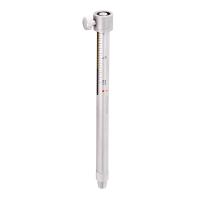
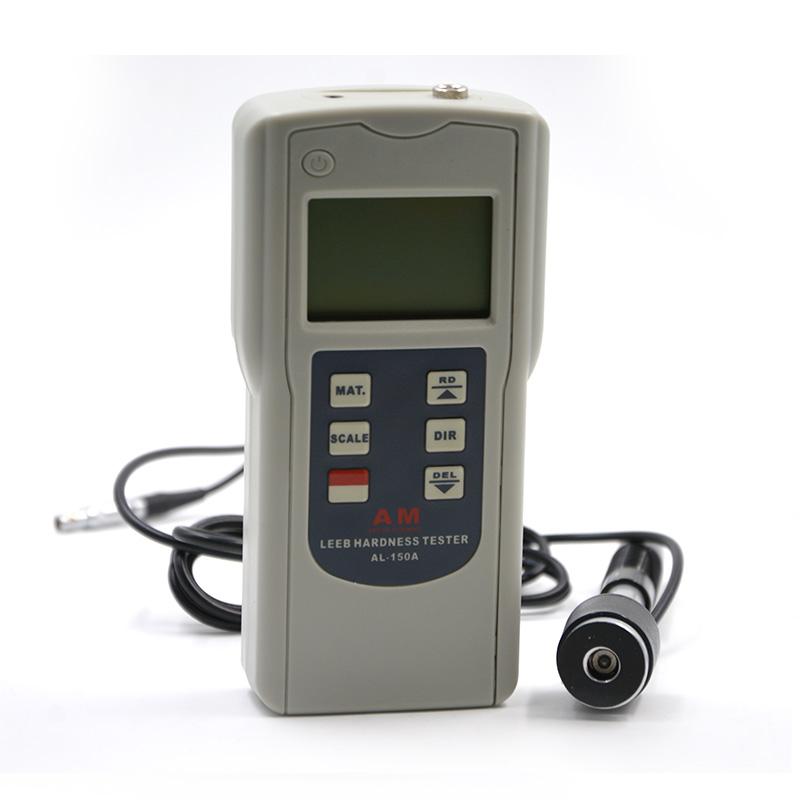
In order to ensure that the Leeb Hardness Tester is used correctly and avoid disputes arising from hardness test data, some key principles for the correct use of the Leeb Hardness Tester are shared to promote the correct understanding and application of hardness measurement in the industry.
1. Uniformly use Leeb hardness value for comparison
When using a Leeb Hardness Tester to detect the hardness of a workpiece, the Leeb hardness value should be used for comparison. Although the national standard GB/T17394 was promulgated in 1998, there are still companies using the traditional hardness marking method in process drawings, resulting in data confusion. To ensure accuracy, it is recommended that companies use the same Leeb hardness value for comparison to avoid data differences caused by the use of different Hardness Tester models and standards.
2. Correctly select the parameters related to the conversion value
At present, domestically sold and produced Leeb Hardness Testers all have an automatic conversion function, and the displayed converted hardness value is determined by two parameters: the type of impact device and the material being tested. Different types of impact devices will result in different hardness values, so when selecting an impact device, the regulations in GB/T17394 should be strictly followed to ensure the accuracy of the measurement results. In addition, for materials with different elastic modulus, attention needs to be paid to adjusting the conversion value to obtain more accurate hardness results.
3. Properly handle samples
The handling of the specimen is directly related to the accuracy and repeatability of the measured hardness value. Before the test, the surface of the sample should be properly treated to remove the oxide layer and expose the metallic luster on the test surface. In addition, samples with smaller mass and thinner thickness should be processed in accordance with the provisions of GB/T17394 to prevent low measured hardness values ââdue to sample movement and deformation.
4. Use standard Leeb hardness block for calibration
Before each test, the user should calibrate the Leeb Hardness Tester to ensure the accuracy of the Hardness Tester. The standard Leeb hardness block is the standard for Leeb hardness measurement. Regular calibration can improve the measurement accuracy of the Hardness Tester and ensure the reliability of the test results.
Based on the above principles, the correct use of Leeb Hardness Tester requires comparison of standards, selection of appropriate parameters, reasonable handling of specimens, and calibration before each test to ensure the accuracy and reliability of measurement results. Only on the basis of the correct use of Leeb Hardness Testers can we avoid hardness data disputes caused by the use of different Hardness Testers and standards and provide reliable hardness testing support for engineering practice.