introduction
In the fields of scientific research, manufacturing and quality inspection, constant temperature and humidity testing Test Chamber is a widely used instrument and equipment. It can not only simulate and control temperature and humidity, but also provide precise environmental conditions to meet the needs of constant temperature and humidity environments in different fields. This article will conduct an in-depth study of the principle, structure, application scenarios and future development trends of the constant temperature and humidity detection Test Chamber, providing readers with a comprehensive understanding of this key tool.
The principle of constant temperature and humidity detection Test Chamber
The working principle of the constant temperature and humidity detection Test Chamber is based on the basic principles of thermodynamics and aerodynamics. It achieves constant temperature and humidity environmental conditions by accurately controlling the internal air. Constant temperature and humidity detection Test Chambers are usually equipped with high-precision temperature sensors, which monitor the temperature inside the chamber in real time through a feedback control system, and adjust the heating or cooling system to maintain the set temperature. Constant humidity systems usually use humidity sensors to monitor the humidity level in the box and adjust the humidity by controlling the humidification or dehumidification system to achieve constant humidity environmental conditions. In order to ensure uniform distribution of temperature and humidity throughout the entire Test Chamber, constant temperature and humidity detection Test Chambers are usually equipped with a powerful air circulation system to fully mix the air in the chamber and eliminate temperature and humidity gradients. The core of the entire system lies in the precise control system, which uses an efficient feedback mechanism to adjust temperature and humidity in real time and accurately to ensure the stability of the environmental conditions inside the box.
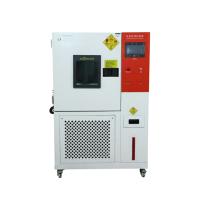
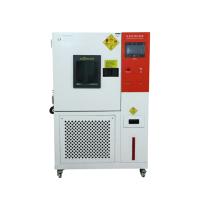
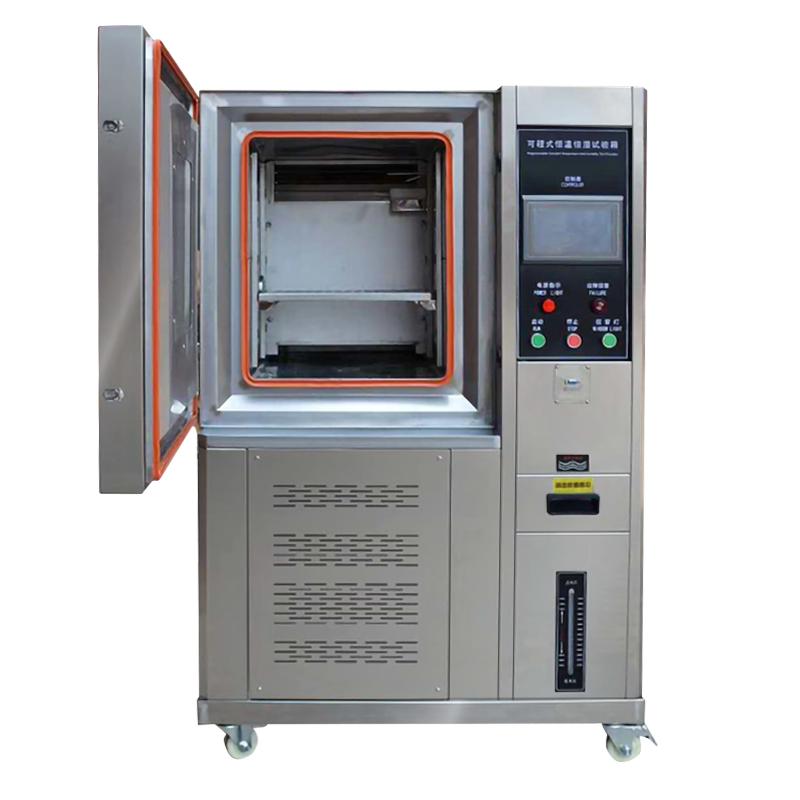
Constant temperature and humidity testing Test Chambers are usually composed of an outer shell, an insulation layer, an inner wall, etc. The outer shell is generally made of high-strength, corrosion-resistant materials to ensure structural stability and long-term durability. In order to prevent the influence of temperature and humidity fluctuations on the environment inside the box, the test box is usually equipped with an insulation layer to effectively isolate the external temperature and humidity. The internal space is usually divided into test areas and control areas. The test area is the space where samples are placed, and the control area is equipped with a temperature and humidity control system and an air circulation system. In order to prevent temperature and humidity fluctuations and external air from entering, the door of the constant temperature and humidity testing chamber usually adopts a double-layer structure and is equipped with an efficient sealing system. Including temperature sensor, humidity sensor, heating system, refrigeration system, humidification system, dehumidification system and other components, forming a high-precision control system. In order to ensure uniform distribution of temperature and humidity, a powerful air circulation system is usually installed in the Test Chamber to fully mix the air and avoid local temperature and humidity gradients.
Application scenarios of constant temperature and humidity detection Test Chamber
In the production and testing process of electronic components, chips, etc., constant temperature and humidity detection Test Chambers are used to simulate the working environment under different temperature and humidity conditions to ensure the stability and reliability of the product. In the pharmaceutical industry, constant temperature and humidity testing chambers are used to store and test pharmaceuticals to ensure their stability under specific temperature and humidity conditions. During food processing and storage, constant temperature and humidity detection Test Chambers are used to simulate food storage conditions under different environmental conditions to ensure food quality and safety. In the field of materials science and engineering, constant temperature and humidity detection Test Chambers are used to test the performance and stability of materials under different temperature and humidity conditions. In the production and testing process of automobile parts, the constant temperature and humidity detection Test Chamber is used to test the performance of automobile parts under different environmental conditions.
With the advancement of technology, constant temperature and humidity detection Test Chambers will be used in more fields, including biomedicine, aerospace, chemical industry, etc. Future constant temperature and humidity detection Test Chambers will pursue higher temperature and humidity control accuracy and system stability to meet the application needs of more demanding environmental conditions. With the development of artificial intelligence technology, future constant temperature and humidity detection Test Chambers may introduce intelligent technology to achieve automated control and remote monitoring. Future designs may focus more on energy efficiency, using more environmentally friendly, energy-saving cooling and heating systems. The operating interface of the device may be more intuitive and simpler to improve the user experience.
Conclusion
As a key environmental simulation tool, the constant temperature and humidity detection Test Chamber is widely used in various fields, providing reliable temperature and humidity control conditions for scientific research and production. With the continuous development of science and technology, future constant temperature and humidity detection Test Chambers will continue to innovate to better meet the needs of different industries for environmental simulation and promote the continuous progress of scientific research and industrial development.