introduction
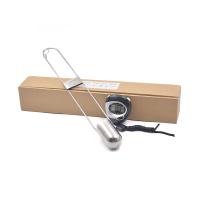
Printing processes play a vital role in modern production, and the viscosity of printing ink is a key parameter that affects print quality. Especially in PET (polyester) material printing, due to its surface characteristics and wide application, accurate control of viscosity is crucial to obtain high-quality printed products. This article will deeply explore the principles, technical characteristics, application fields and future development trends of PET printing ink viscometer, and show readers the role of this key instrument in improving printing quality.
During the printing process, viscosity is a basic physical property of printing ink, which affects the fluidity and coating properties of the ink in the printing machinery system. Specifically, for PET material printing, the control of viscosity is directly related to the uniform distribution, adhesion and pattern clarity of the ink on the PET surface. Therefore, by using a precision PET printing ink viscometer, the viscosity of printing ink can be accurately monitored and regulated, thereby improving printing quality and production efficiency.
working principle
PET printing ink viscometer usually adopts the rotary viscosity testing principle. It calculates the viscosity of the ink by rotating a rotor or disk of a certain shape in the ink and measuring the required torque or rotation speed. PET printing ink viscometer is capable of dynamic viscosity testing, which measures the viscosity of the ink at different shear rates. This provides a more complete understanding of the rheological properties of the ink under different printing conditions. Since temperature has a significant impact on viscosity, PET printing ink viscometers are usually equipped with a temperature control system to ensure the accuracy of viscosity testing at different operating temperatures. The advanced PET printing ink viscosity meter has a real-time monitoring function, which can continuously monitor the viscosity changes of the ink during the printing process to achieve instant feedback and adjustment.
Performance characteristics
The PET printing ink viscometer has high-precision measurement capabilities and can accurately and reliably test the viscosity of the ink.
The advanced instrument has multi-functional functions, such as dynamic viscosity testing, temperature control, real-time monitoring, etc., to meet the diverse needs of different users for viscosity testing.
The PET printing ink viscometer is simple in design and easy to operate, allowing users to quickly get started and conduct viscosity testing and data analysis.
Some advanced PET printing ink viscometers are highly automated and can realize automatic testing, data recording and report generation to improve work efficiency.

Application areas
In PET packaging printing, accurate control of viscosity is crucial to ensure the clarity, adhesion and durability of printed patterns. PET printing ink viscometer can provide high-quality printing solutions for the packaging industry. PET materials are widely used in surface printing of electronic products, such as mobile devices, tablet computers, etc. Through the use of PET printing ink viscometer, effective control of the printing quality of electronic products can be achieved. PET label printing requires clear patterns and full colors, and accurate viscosity control is the key to achieving high-quality label printing. PET printing ink viscometer provides necessary technical support for the label printing industry. In the field of advertising printing, for PET printing of outdoor billboards, indoor exhibitions, etc., the visual effect and durability of printed matter can be improved through the use of viscometer.
In the future, PET printing ink viscometers may become intelligent, realizing real-time transmission and remote monitoring of data through networking technology, improving the intelligence level of the instrument. In response to different user needs, future PET printing ink viscometers may place more emphasis on multi-functional performance, such as more comprehensive viscosity testing modes, wider applicable fields, etc. In the future, PET printing ink viscometer may focus more on improving the level of automation, reducing manual intervention, and improving the efficiency and accuracy of testing. Future instrument design may pay more attention to environmental protection and energy conservation, using greener materials and more energy-saving technologies, in line with the trend of sustainable social development. With the continuous development of science and technology, PET printing ink viscometer may find use in a wider range of application fields, such as new material printing, three-dimensional printing and other fields.
Conclusion
As a key testing instrument in the printing industry, PET printing ink viscometer plays an irreplaceable role in improving printing quality and reducing production costs. By having an in-depth understanding of the principles, technical characteristics, application fields and future development trends of PET printing ink viscometer, we can better grasp the role of this key instrument in the printing process and provide strong support for the progress and innovation of the printing industry.