introduction
In the rapid development of science and technology, materials science has always been a field that has attracted much attention. Silver film, as an important functional material, is widely used in electronics, optics, nanotechnology and other fields. The performance of the silver film is closely related to its thickness. Therefore, the silver film thickness meter, as a key testing instrument, provides scientific researchers with a means to deeply understand the properties of the silver film at the microscopic level. This article will deeply explore the principles, technical characteristics, application fields and future development trends of silver film thickness meters, revealing the explorer of this microscopic world to readers.
Fundamental
The basic principle of the silver film thickness meter is to determine the thickness of the silver film by measuring the interaction between the silver film and light. First , place the sample containing silver film in the testing instrument to ensure that the surface of the sample is smooth and even. A light source of a specific wavelength is used to illuminate the surface of the silver film. This wavelength is usually in the range of visible light or near-infrared light. The reflection and transmission of light on the surface of the silver film will be affected by the thickness of the silver film. Silver films with different thicknesses react differently to light. Use a spectrometer or other optical detection equipment to analyze the reflection spectrum or transmission spectrum, and calculate the thickness of the silver film based on specific optical theories. Perform data processing and analysis to obtain the thickness information of the silver film.

Technical features
Advanced silver film thickness meters usually have high resolution and can accurately measure the microscopic thickness of silver films, even to the nanometer level.
Silver film thickness meters usually support multi-wavelength measurement and are suitable for testing needs of different materials and thickness ranges, improving the flexibility of the instrument.
Advanced testing instruments are equipped with automated operating systems that automate the testing process through computer control, improving testing efficiency and accuracy.
The silver film thickness meter is a non-destructive testing equipment. The sample will not be damaged during the testing process and the integrity of the sample is maintained.
The silver film thickness meter is not only suitable for silver films, but can also be used to measure the thickness of other film materials, such as gold films, oxide films, etc., and has wide applicability.
Some silver film thickness meters have real-time monitoring functions and can provide real-time data feedback during the test process, helping researchers better understand the properties of the samples.
Application areas
In the manufacture of electronic devices, silver films are often used as conductive layers or connecting layers. Silver Film Thickness Gauges can be used to ensure the uniformity and thickness of the conductive layer meets design requirements. In the field of optics, silver films are often used in coatings for reflection, transmission or to enhance optical properties. Silver Film Thickness Gauges have key applications in the preparation of optical films. In nanotechnology research, the thickness of the silver film has a significant impact on the performance of the material. Silver Film Thickness Gauges can be used to deeply study the optical and electrical properties of nanostructures. In various coating preparations, especially when high-precision optical coatings are required, the silver film thickness meter can be used to monitor and control the thickness of the film to ensure coating quality. Silver films are widely used in materials science, and silver Film Thickness Gauges can be used to study the relationship between film thickness and properties of different materials.
Future silver film thickness meters may pursue higher performance and improve resolution, sensitivity and measurement accuracy to meet increasing research needs. Silver film thickness meters may develop in the direction of multi-functional integration, which is not only limited to silver film testing, but can also be applied to more types of thin film material testing. Future instruments may be more intelligent, have more powerful data processing and analysis capabilities, lower the threshold for use, and improve experimental efficiency. The silver film thickness meter may be more widely used in different fields, including biomedicine, environmental science, etc., to expand its application fields. Future designs may pay more attention to green environmental protection, using more environmentally friendly materials and more energy-saving technologies, in line with the trend of sustainable social development.
Conclusion
As an explorer of the microscopic world, silver Film Thickness Gauges play an irreplaceable role in materials science research, electronic device manufacturing, and optical fields. By in-depth understanding of its principles, technical characteristics, application fields and future development trends, we can better understand this explorer of the microscopic world, provide scientific researchers with more advanced and convenient testing methods, and promote the advancement of materials science and related fields. Growing. The silver film thickness meter will continue to reveal the mysteries of the microscopic world to us in the future and contribute to the continuous advancement of science and technology.

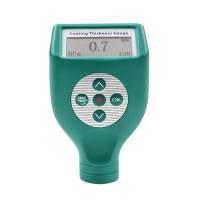
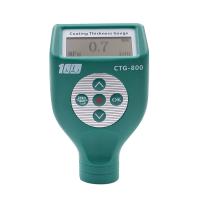
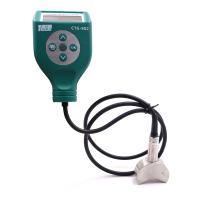
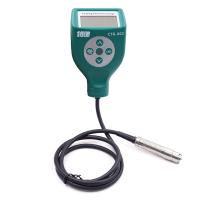
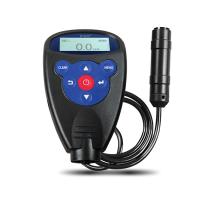

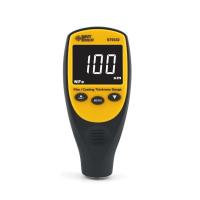
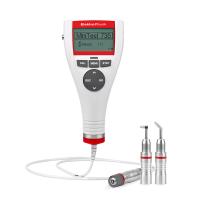

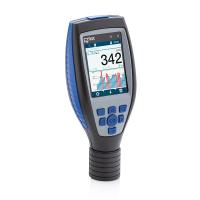


![Germany PHYNIX Surfix easy I FN easy to use built-in probe dual-use type Film thickness meter [Discontinued]](http://img.nbchao.com/imgs/200/2017/12/26/1635250685670740.jpg)