Summary
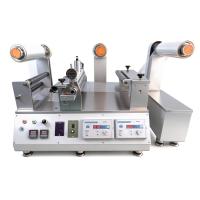
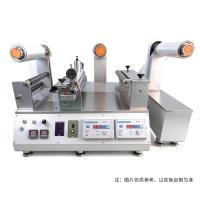
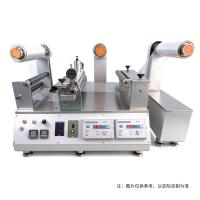
Laboratory continuous hot melt adhesive coating machines are widely used in different fields, and their efficiency and accuracy in the coating process have received widespread attention. This article will delve into the technical principles, application fields and key selection factors of laboratory continuous hot melt adhesive coating machines, aiming to provide scientific researchers and engineers with a comprehensive guide to understand this equipment.
introduction
The laboratory continuous hot melt adhesive coating machine is an advanced equipment that uses hot melt adhesive technology for material coating. Compared with traditional coating methods, the machine has higher accuracy and efficiency, making it widely used in the field of scientific research. This article will first introduce the working principle and application fields of the laboratory continuous hot melt adhesive coating machine to provide readers with a comprehensive understanding.

2. Technical principles
The technical principle of the laboratory continuous hot melt adhesive coating machine mainly involves the properties of the hot melt adhesive and the control mechanism during the coating process. Hot melt adhesive is an adhesive that changes into a fluid state at high temperatures. By precisely controlling the melting temperature and coating speed, the laboratory continuous hot melt adhesive coater can achieve uniform coating on the material surface. This section will detail the selection of hot melt adhesives and the control system of the coater.
2.1 Selection of hot melt adhesive
In a laboratory continuous hot melt adhesive coater, choosing the right hot melt adhesive is crucial to obtaining high-quality coating results. Different research purposes and material requirements require different types of hot melt adhesives. Generally speaking, hot melt adhesive should have the following characteristics:
Good fluidity: ensures even coating on the material surface at high temperatures.
Good adhesion: Ensure that the applied hot melt adhesive can adhere firmly to the material and will not fall off easily.
Temperature stability: Able to maintain a stable melting temperature during the coating process to avoid unstable coating quality due to temperature fluctuations.
2.2 Control system of coating machine
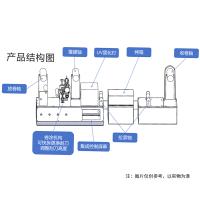
The control system of a laboratory continuous hot melt adhesive coater is crucial to ensuring the accuracy and stability of coating. The control system generally includes modules such as temperature control, coating speed control, and pressure control.
Temperature control: By precisely controlling the heating system of the coating machine, it is ensured that the hot melt adhesive maintains a stable temperature during the coating process. This can be achieved by using advanced temperature sensors and PID control algorithms.
Coating speed control: Coating speed directly affects coating thickness and uniformity. By using advanced motors and speed regulating devices, the coating speed can be accurately controlled to adapt to different materials and coating requirements.
Pressure control: During the coating process, precise control of pressure can ensure that the hot melt adhesive evenly covers the surface of the material, avoiding the problem of bubbles or uneven coating.
3. Application fields
Laboratory continuous hot melt adhesive coating machines are widely used in the field of scientific research, involving materials science, nanotechnology, biomedicine and other fields. The following are application cases of this machine in some typical fields:
3.1 Materials Science
The application of laboratory continuous hot melt adhesive coating machines in materials science is mainly reflected in the functional coating of materials and the preparation of composite materials. By precisely controlling the coating process, functional coatings with specific properties can be prepared to improve the material's resistance to wear and corrosion.
3.2 Nanotechnology
In the field of nanotechnology, laboratory continuous hot melt adhesive coating machines are widely used to prepare composite films of nanomaterials. By uniformly coating nanoparticles on a substrate, nanofilms with excellent optical, electrical and other properties can be prepared, providing an important means for the research of nanotechnology.
3.3 Biomedicine
In the field of biomedicine, laboratory continuous hot melt adhesive coating machines are widely used for surface modification of biomedical materials. By coating the surface of biomedical materials with highly biocompatible coatings, the biocompatibility of the materials can be improved, the rejection of the materials by tissues can be reduced, and an effective means can be provided for the research and development of biomedical devices.

4. Key factors for selection
When selecting a continuous hot melt adhesive coater for the laboratory, there are several key elements to consider to ensure the equipment can meet your specific experimental needs.
4.1 Coating width and speed
Coating width and speed are one of the key parameters to consider when selecting. Determine the required coating width and coating speed according to experimental needs, and select a coating machine model that can meet these requirements.
4.2 Temperature control accuracy
Different experiments require different coating temperatures, so the temperature control accuracy of the equipment is very important. Choose a coating machine with a high-precision temperature control system to ensure temperature stability during the coating process.
4.3 Control system flexibility
The control system of the coating machine should have a certain degree of flexibility and be able to adapt to the requirements of different materials and experimental conditions. Consider whether the equipment supports multiple coating modes and whether it has a control system with adjustable parameters.
4.4 Safety and ease of operation
The laboratory working environment requires equipment with good safety and ease of operation. Choose a coating machine with safety protection functions and a user-friendly operating interface to ensure the safety of experimental personnel and the stable operation of the equipment.
in conclusion
Laboratory continuous hot melt adhesive coating machines play an important role in the field of scientific research. Their efficient and precise coating technology provides strong support for progress in materials research, nanotechnology, biomedicine and other fields. When selecting, key factors such as coating width, speed, temperature control accuracy, flexibility of the control system, safety and ease of operation need to be comprehensively considered. By having an in-depth understanding of the technical principles and application fields of laboratory continuous hot melt adhesive coating machines, scientific researchers and engineers can better select and use this advanced equipment and promote the continuous progress of scientific research.