Summary
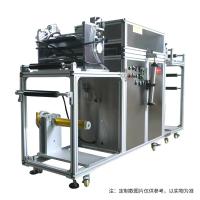
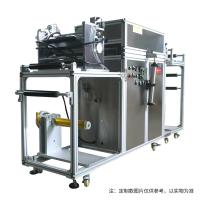
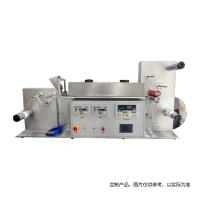
As an advanced coating equipment, laboratory proofing coater plays an important role in scientific research and industry. This article will conduct a detailed comparison of different types of laboratory proofing coaters, including their technical principles, advantages and disadvantages, and applicability in different application fields. Through in-depth analysis, it aims to provide scientific researchers and engineers with a comprehensive guide to selection and application.
Part One: Introduction
A laboratory proofing coater is a device used for coating and proofing on a laboratory scale. It is widely used in materials science, textile industry, electronic device preparation and other fields. Different types of laboratory proofing coaters have their own unique technical characteristics and application advantages. This article will provide an in-depth comparative analysis of different types of laboratory proofing coaters, such as roller coating, spray coating and blade coating.
Part 2: Roller coating laboratory proofing coater
2.1 Technical principles
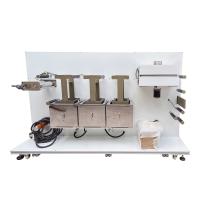
The basic principle of the roller coating laboratory proofing coater is to evenly coat the coating on the surface of the substrate through the rotation of the roller. Among them, the paint is loaded on the surface of the roller, and the substrate controls the thickness of the coating layer by adjusting the gap between the rollers. This method is simple and efficient, and is suitable for large-area and uniform coating requirements.
2.2 Advantages and Disadvantages
1) Advantages: Suitable for scenarios that require high coating speed. Able to achieve relatively uniform coating, suitable for applications requiring high surface quality.
2) Disadvantages: Not suitable for coatings requiring special textures or fine patterns. Compared with other methods, the equipment of the roller coating method is relatively complex and the maintenance cost is high.

Part 3: Spray coating method laboratory proofing coater
3.1 Technical principles
The spray coating method laboratory proofing coater uses a nozzle to spray the coating on the surface of the substrate in the form of droplets or mist. By adjusting parameters such as spray pressure, spray angle, and paint flow rate of the nozzle, the thickness and uniformity of the coating layer can be controlled. This method is suitable for high-precision coating requirements, and has unique advantages especially in nanomaterial coating.
3.2 Advantages and Disadvantages
1) Advantages: Suitable for experiments that require high accuracy of coating layers. It can adapt to different types of coatings and substrates and has high flexibility.
2) Disadvantages: It requires a high degree of mastery of spraying parameters. Suitable for small batch, high-precision experiments, not suitable for large-scale production.
Part 4: Laboratory Proofing Coater with Blade Coating Method
4.1 Technical principles
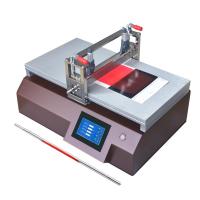
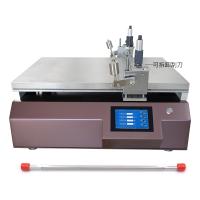
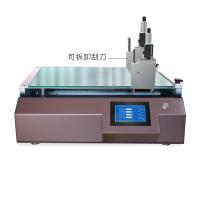
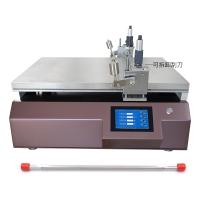
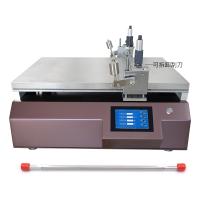
The laboratory proofing coater of the scraping method uses a scraper to evenly spread the coating on the surface of the substrate. The shape and material of the scraper will directly affect the thickness and uniformity of the coating layer. This method is suitable for experiments that require higher quality coating layers, such as the preparation of thin films.
4.2 Advantages and Disadvantages
1) Advantages: It can achieve higher coating layer accuracy and is suitable for experiments that require high coating quality. Scrapers of different shapes and materials can be selected according to experimental needs.
2) Disadvantages: It is suitable for small batch, high-precision experiments, but not suitable for large-scale production. Requires high operating skills and experience.
Part 5: Application fields and selection suggestions
5.1 Application fields and selection suggestions of roller coating method
The roller coating method is suitable for large-area, uniform coating scenarios, and is commonly used in the textile industry, coating preparation and other fields. When selecting, you need to consider the coating width and speed requirements, as well as the maintenance cost of the equipment.
5.2 Application fields and selection suggestions of spraying method
The spray coating method is suitable for high-precision, small-batch experiments, and is commonly used in fields such as nanomaterial coating and electronic device preparation. When selecting, you need to consider the spraying accuracy and adaptability, as well as the difficulty of operation.
5.3 Application fields and selection suggestions of scraping coating method
The scraping coating method is suitable for experiments that require high quality coating layers, and is commonly used in fields such as film preparation. When selecting, you need to consider coating accuracy and flexibility, as well as operational difficulty.
Part 6: Conclusion
Laboratory proofing coaters are important equipment in scientific research and industrial fields. Different types of coaters have their own characteristics and are suitable for different experimental needs. The roller coating method is suitable for large-area, uniform coating; the spray coating method is suitable for high-precision, small-batch experiments; and the scraper coating method is suitable for experiments that require high quality of the coating layer. When selecting, factors such as coating width, speed, coating accuracy, operating difficulty, and equipment cost need to be comprehensively considered to ensure the selection of the laboratory proofing coater that best suits experimental needs and promote the continuous progress of scientific research.