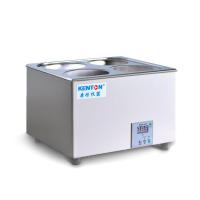
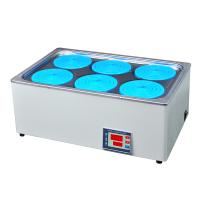
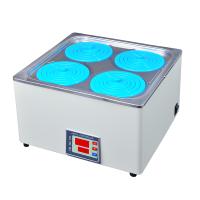
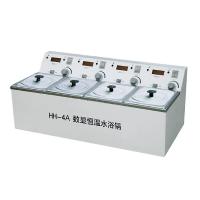
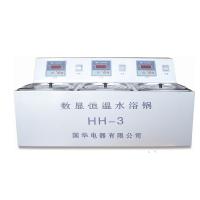
Experimental Water Bath is one of the common experimental equipment in scientific research laboratories. It is widely used in experiments in the fields of chemistry, biology, medicine and other fields. It is used to heat solutions, reactants or samples, and control their temperatures to complete various experiments. operate. This article will deeply discuss the principle, structure, usage, maintenance and application of experimental Water Baths in scientific research experiments to help readers fully understand and correctly use this important experimental equipment.
Fundamental
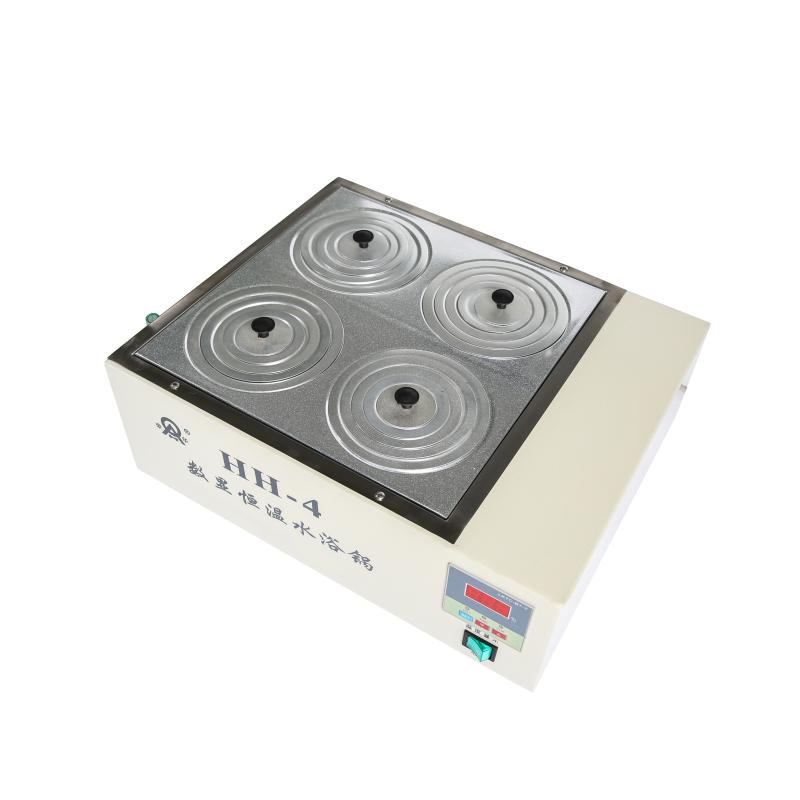
The experimental Water Bath conducts heat to the sample or reagent in the container by heating the Water Bath, so that it reaches the required temperature. The basic principle is to utilize the high heat capacity and thermal conductivity of water to achieve the purpose of heating the sample by heating the Water Bath. A Water Bath usually consists of a heater, a temperature control device, a Water Tank and a shell.
Structural features
The heater of the experimental Water Bath usually uses an electric heating tube or a Heating Plate, which converts electrical energy into thermal energy to heat the water in the Water Bath. The temperature control device usually uses a thermostat or microcomputer control system, which can accurately control the temperature of the Water Bath and maintain it within the set range. The sink is the main container of the Water Bath, used to hold water and sample containers. It is usually made of stainless steel or corrosion-resistant materials. The shell is the external structure of the Water Bath, usually made of metal or plastic materials, and has certain protection and insulation functions.
Instructions
Before using the Water Bath, you need to prepare the required reagents, samples, and containers, and place the Water Bath on a level, stable surface. Pour an appropriate amount of water into the sink, then place the sample or reagent to be heated in the sink, turn on the power, set the required temperature and start the heater. During the heating process, the water temperature is monitored through the temperature control device, and the power of the heater is adjusted as needed to keep the temperature of the Water Bath stable near the set value. When the Water Bath reaches the set temperature, you can start the experimental operation and adjust the temperature and heating time of the Water Bath according to the experimental needs. After the experiment is completed, first turn off the heater and disconnect the power supply, then carefully remove the sample or reagent, pour out the water in the Water Bath and clean it, and finally dry the Water Bath and store it in a dry and ventilated place.
maintenance
Clean the sink and housing regularly to avoid the accumulation of dirt and sediment and keep the Water Bath clean and hygienic. Pay attention to safety during use and avoid the Water Bath from tilting or overturning to avoid accidents. Regularly check the heater, temperature control device and power cord of the Water Bath to ensure that they are working properly, and repair or replace them in time if they are faulty. Avoid using highly corrosive reagents or samples to avoid damage to the Water Bath.
Conclusion
As an important experimental equipment in scientific research laboratories, experimental Water Baths have the advantages of rapid heating, stable temperature, and easy operation. They play an important role in experiments in the fields of chemistry, biology, medicine, etc. By having an in-depth understanding of its principles, structure, usage, maintenance and application scenarios, we can better master and correctly use this important experimental equipment and improve experimental efficiency and quality.