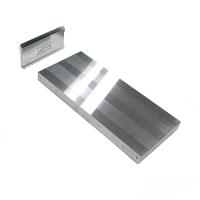
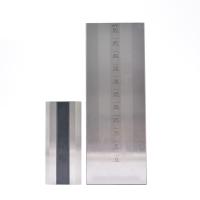
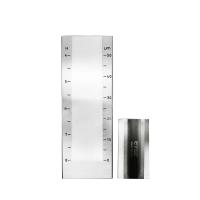
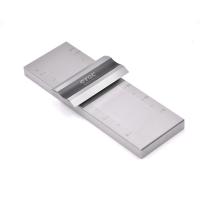
Ink plays a vital role in the printing industry, and the quality of the ink directly affects the quality of the finished product. In order to ensure that the quality of the ink meets the requirements, careful testing and control are required. The ink fineness scraper meter is a commonly used tool for measuring the viscosity and fluidity of ink to ensure the stability and applicability of the ink. This article will deeply explore the principle, structure, usage, advantages and application of the ink fineness squeegee meter in the printing industry.
Principle structure
The principle of the ink fineness scraper meter is based on Newtonian fluid mechanics, that is, the viscosity and fluidity of the ink are measured under specified conditions by a scraper. The squeegee meter controls the thickness of the ink by adjusting the gap between the squeegee and the substrate. The gap is usually set within a certain range to ensure the accuracy of the measurement results. During the measurement process, the scraper moves at a fixed speed, and the fluidity and viscosity of the ink are judged by measuring the required scraping time. Different types of inks have different fluidities and viscosities, so it is necessary to select the appropriate squeegee meter and test conditions according to the actual situation.
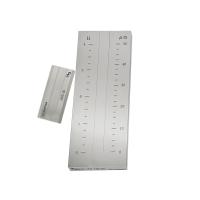
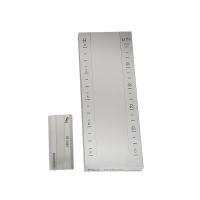
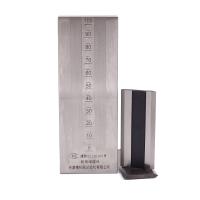
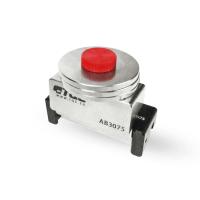
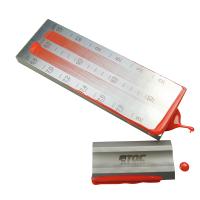
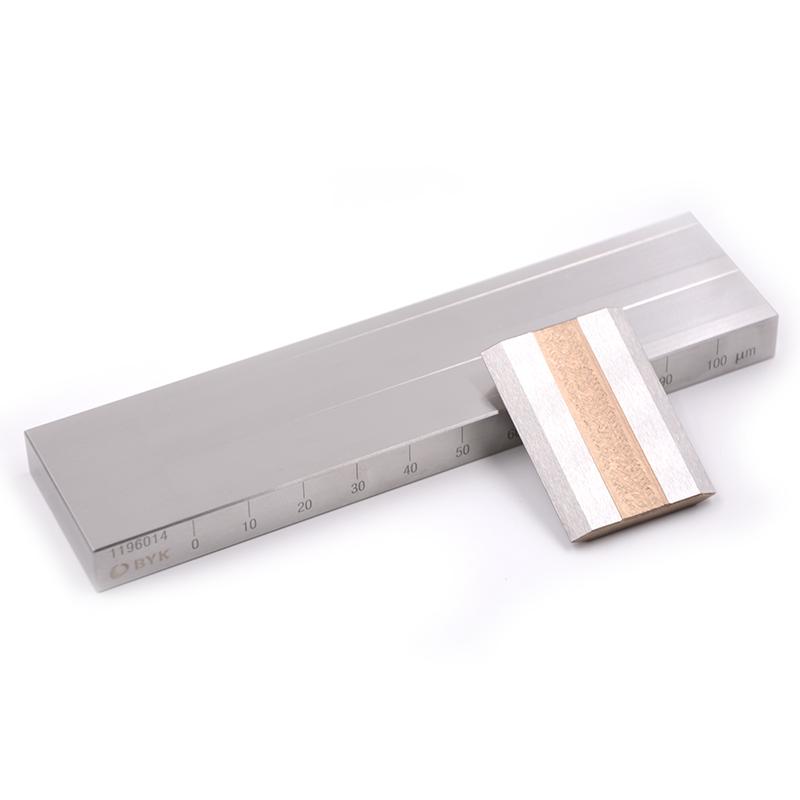
The ink fineness scraper meter usually consists of the following parts. The scraper is a tool used to scrape ink during the test. Its shape and size will affect the thickness and fluidity of the ink. The base is the support structure of the scraper meter, used to support and fix the scraper and provide a stable testing environment. The scale is used to measure the squeegee time to derive the viscosity and flowability data of the ink. The adjustment device is used to adjust the gap between the scraper and the substrate to adapt to different types and requirements of ink testing.
Instructions
Preparation: Prepare the scraper meter and the ink to be tested, making sure the scraper and substrate are clean and flat.
Adjust the gap. According to the type and requirements of the ink, adjust the gap between the scraper and the substrate, usually between 0.1mm and 1.0mm.
Coat the ink, evenly apply the ink to be tested on the scraper, and ensure the thickness and uniformity of the scraper.
For the squeegee test, start the squeegee meter, scrape the squeegee across the substrate at a fixed speed, and record the squeegee time.
Data analysis, based on scraping time and ink type, analyzes the fluidity and viscosity of the ink to evaluate the quality and applicability of the ink.
The ink fineness squeegee meter plays an important role in the printing industry. By measuring the viscosity and fluidity of the ink, it evaluates the quality and applicability of the ink and ensures the printing effect and stability of the printed matter. By adjusting the ink formula and printing process parameters, the fluidity and adaptability of the ink are improved, the printing process is optimized, and the quality and production efficiency of printed matter are improved. In the process of new product development, different ink formulas are tested and evaluated through an ink fineness scraper meter to select appropriate ink materials to meet customer needs. As a commonly used quality inspection tool, the ink fineness scraper meter is used to inspect and evaluate the quality of printed matter to ensure that product quality meets standard requirements.
As a key tool for ink quality control, the ink fineness squeegee meter plays an important role in the printing industry. By measuring the viscosity and fluidity of the ink, the quality and applicability of the ink can be evaluated to ensure the quality and stability of printed matter. At the same time, the ink fineness scraper meter is easy to operate, accurate and reliable, suitable for various production scenarios and personnel, and provides an effective quality control method for printing companies. It is hoped that through the introduction of this article, readers can have a more in-depth understanding and application of the ink fineness squeegee meter and improve the quality of printed matter and production efficiency.