introduction
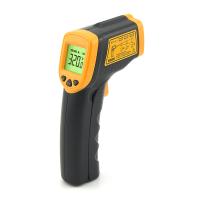
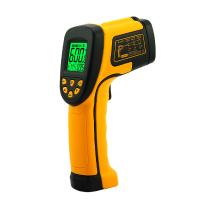
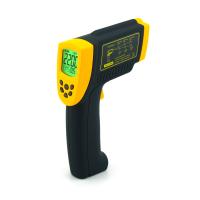
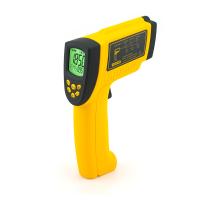
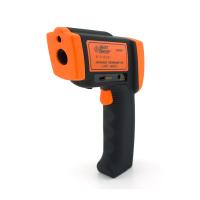
As a non-contact temperature measurement device, infrared thermometer has been widely used in industrial, medical, environmental protection and other fields. It uses the principle that infrared radiation energy is proportional to the temperature of the object's surface, and determines its temperature by measuring the infrared radiation energy on the object's surface. It has the advantages of fast, accurate, and non-contact. This article will introduce the technical principles, application scenarios and development trends of infrared thermometers.
Technical principles
The working principle of the infrared thermometer is mainly based on the following aspects: the black body radiation law. According to the black body radiation law, the higher the temperature, the greater the infrared energy radiated by the surface of the object. Infrared thermometers use this principle to determine the temperature of an object by measuring the infrared radiation energy on its surface. Infrared sensor, the infrared thermometer has a built-in infrared sensor, which is used to receive and measure the infrared radiation energy on the surface of the object. Temperature calculation algorithm, the infrared thermometer uses the built-in temperature calculation algorithm to convert the received infrared radiation energy into the temperature value of the object surface. Environmental compensation. Infrared thermometers usually compensate for the ambient temperature to ensure the accuracy of measurement results.

Application scenarios
Infrared thermometers are widely used in various fields. In the industrial production process, infrared thermometers are often used to measure the temperature of mechanical equipment and production lines to monitor the operating status of equipment and prevent equipment failures. In the medical field, infrared thermometers are often used for body temperature measurement, especially in public places or during epidemics, and can be used for rapid, non-contact body temperature screening. During construction, infrared thermometers can be used to measure the temperature of concrete, asphalt and other building materials to ensure construction quality. In the field of environmental monitoring, infrared thermometers can be used to measure atmospheric temperature, water temperature, surface temperature, etc., and are used in meteorological prediction, water resources management, etc.
development trend
With the development of artificial intelligence, Internet of Things and other technologies, infrared thermometers will become more intelligent, equipped with functions such as automatic identification and data analysis, improving convenience and efficiency of use. Infrared thermometers in the future will tend to be multi-functional in design, capable of not only measuring temperature, but also humidity, wind speed and other parameters to meet the needs of different scenarios. In the future, infrared thermometers will have remote monitoring functions, which can realize remote data transmission and monitoring through the Internet, improving monitoring efficiency and convenience. With the advancement of technology and the expansion of application scenarios, infrared thermometers will be used in more fields, such as smart homes, transportation and other fields.
As a fast, accurate, non-contact temperature measurement device, the thermometer has broad application prospects in industrial, medical, environmental protection and other fields. In the future, with the application of intelligent technology and the development of multi-functional design, infrared thermometers will become more intelligent and multi-functional, and be used in a wider range of application fields. It is hoped that through the introduction of this article, readers can have a more comprehensive understanding of the principles, applications and development trends of infrared thermometers, and provide reference and guidance for their practical applications.