As a common component in industrial production, castings are widely used in automobiles, aerospace, machinery manufacturing and other fields. However, due to the complexity and particularity of the casting process, castings often have some defects or hidden dangers during the production process, such as pores, slag inclusions, cracks, etc. These defects will not only affect the performance of the castings, but may also cause parts to deteriorate. Failure or even safety accident. In order to ensure the quality and reliability of castings, flaw Detectors for castings came into being. This article will conduct an in-depth analysis and discussion of the principles, classification, characteristics and application of flaw Detectors for castings in industrial production.
Fundamental
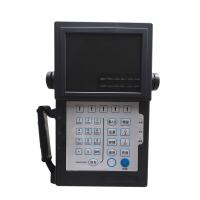
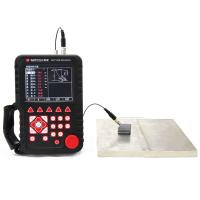
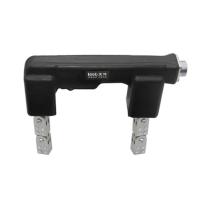
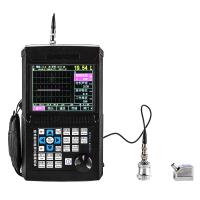
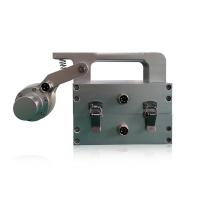
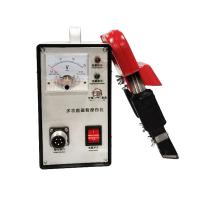
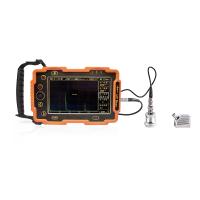
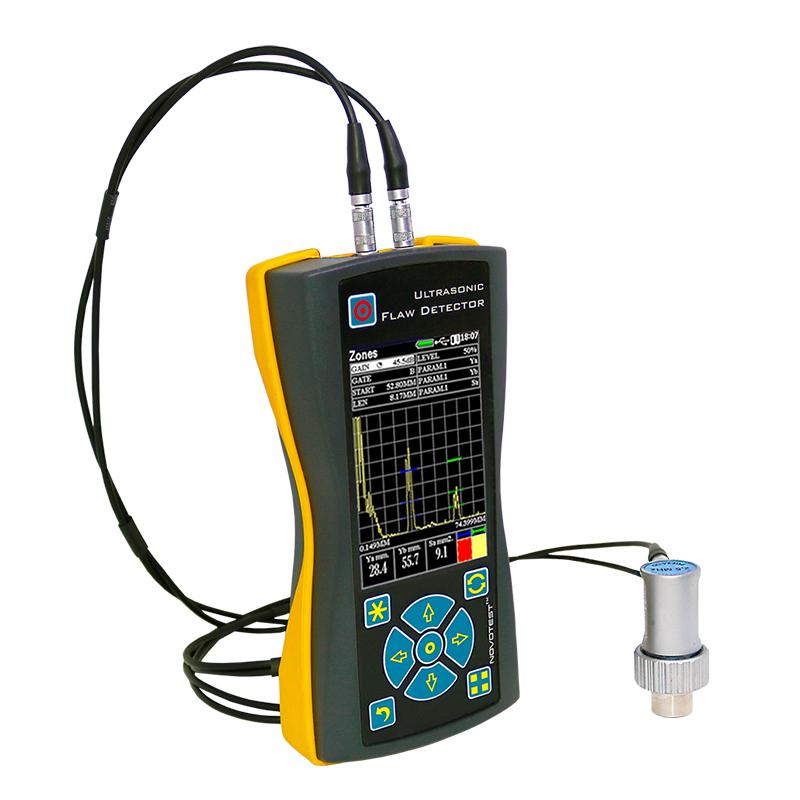
According to different detection principles and application methods, flaw Detectors for castings are mainly divided into the following types. Magnetic particle flaw Detector is mainly used to detect cracks and other surface defects on the surface of castings. It is suitable for surface defect detection of castings, welding parts, etc. Ultrasonic flaw Detector is suitable for detecting various defects inside castings, such as pores, slag inclusions, cracks, etc., and has high detection sensitivity and accuracy. X-ray flaw Detector can detect deep defects inside castings and is suitable for quantitative analysis and evaluation of internal defects in castings.
The flaw Detector for castings is a special equipment used to detect internal defects in castings. Its working principle is mainly based on magnetic particle testing, ultrasonic testing, X-ray testing and other principles. In magnetic particle testing, under the action of a magnetic field, magnetic powder is spread on the surface of the casting, and defects are discovered and determined by observing the accumulation of magnetic powder at the defect location. Ultrasonic testing detects defects inside castings through the propagation and echo of ultrasonic waves, and determines the location and nature of defects based on the sound speed, reflection intensity and other characteristics of ultrasonic waves. X-ray inspection uses the penetrability of X-rays to irradiate castings with X-rays, and detect and analyze defects within the castings by observing the X-ray transmission images.
Features
The flaw Detector for castings has high sensitivity and high resolution, and can accurately detect and locate internal defects in castings. The flaw detection process is simple and fast, and the inspection of castings can be completed in a short time, improving production efficiency. During the flaw detection process, the casting will not be damaged, the integrity of the casting will be maintained, and the scrap rate will be reduced. Different types of flaw Detectors for castings are suitable for castings of different materials, sizes and shapes, and have good applicability and versatility. It can record and analyze inspection data, support data export and report generation, and facilitate quality control and production management.
Industrial applications
In the automobile manufacturing process, casting flaw Detectors can be used to detect the quality of key components such as automobile engines, gearboxes, and steering gears to ensure the safety and reliability of the automobile. In the aerospace field, casting flaw Detectors can be used to detect the quality of key components such as aircraft engines and spacecraft structural parts to ensure the flight safety of aircraft. In the machinery manufacturing industry, casting flaw Detectors can be used to detect the quality of various mechanical equipment, tools, parts, etc., to ensure the normal operation of mechanical equipment. In the energy field, casting flaw Detectors can be used to detect the quality of castings in energy equipment such as nuclear power plants and thermal power plants to ensure the safe and stable operation of energy equipment.
With the continuous advancement of science and technology and the development of industrial production, flaw Detectors for castings will continue to improve and expand in terms of accuracy, efficiency, and application scope. In the future, flaw Detectors for castings will be more intelligent, using advanced control systems and human-computer interaction technology to improve detection efficiency and accuracy. Flaw Detectors for castings will develop multiple modes and functions to meet the testing needs of castings of different materials, shapes and sizes. The detection efficiency and accuracy will be continuously improved to achieve faster and more accurate detection of casting defects.
As an indispensable testing equipment in industrial production, the flaw Detector for castings has important application value. With the continuous innovation of technology and the continuous expansion of application fields, flaw Detectors for castings will play an increasingly important role in industrial production and promote the continuous progress and development of industrial production.