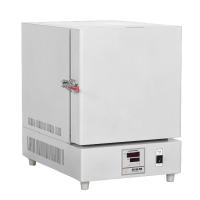
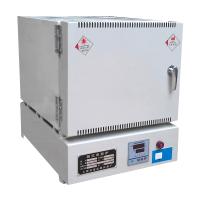
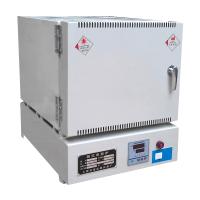
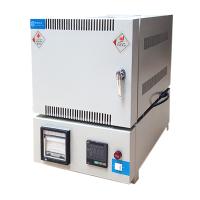
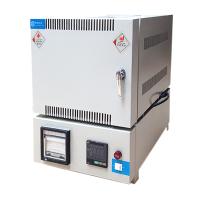
In the field of high temperature processing, the muffle furnace, as an important experimental equipment, plays a vital role. Its wide range of applications covers material sintering, ceramic sintering, metal smelting and other fields, providing essential support for scientific research, industrial production and teaching. This article will deeply explore the principles, applications and future development trends of muffle furnaces.
Principle analysis
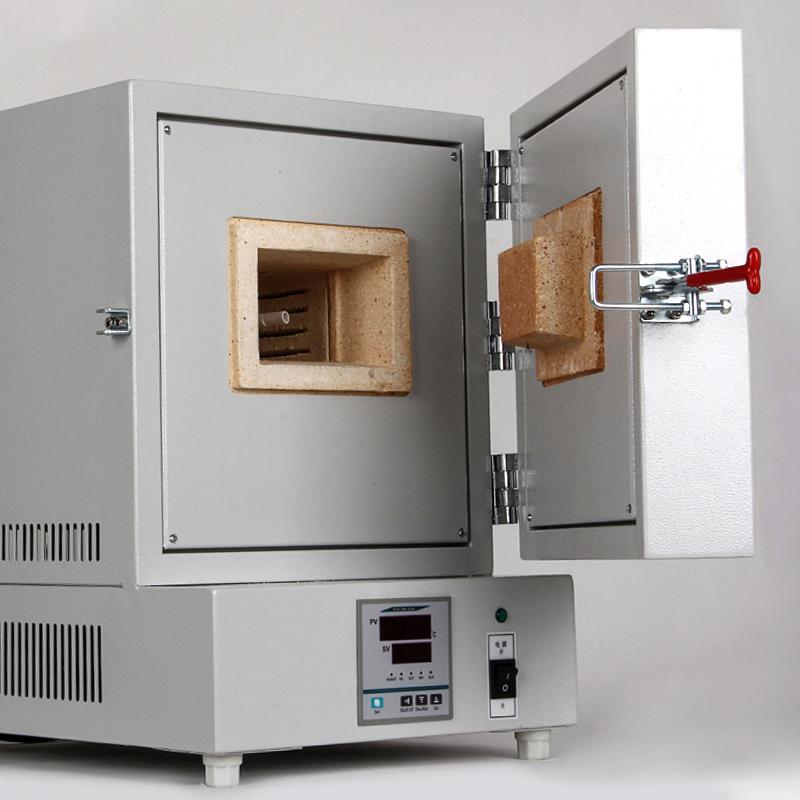
The muffle furnace is a device used for high-temperature processing. Its principle is based on resistance heating or arc heating. It heats the sample by generating high temperature. Its main components include heating elements, heating chamber, temperature control system and other parts.
In the resistance heating mode, the muffle furnace places resistance wires or graphite heating elements in the furnace and passes current to cause the heating elements to generate heat, thereby heating the air and samples in the furnace. In the arc heating mode, the muffle furnace heats the sample by generating an electric arc. The arc generated between electrodes is usually used for heating.
Application areas
Muffle furnaces are widely used in many fields. First of all, in the fields of materials science and engineering, muffle furnaces are often used in experiments such as material sintering and crystal growth. By controlling the high-temperature environment, the structure and properties of materials can be controlled, thereby studying the physical, chemical properties and application performance of materials. Secondly, in the ceramic industry, muffle furnaces are widely used in the sintering and molding processes of ceramic products. By controlling the furnace temperature and heating time, the sintering process of ceramic products can be precisely controlled to ensure product quality stability and consistency. In addition, muffle furnaces also play an important role in the fields of metal smelting and sintering. Through high-temperature treatment, metal ores can be smelted and purified, and metal alloys can also be sintered and formed.
With the continuous advancement of science and technology, muffle furnaces are also constantly undergoing technological innovation and improvement. In the future, with the development of materials science and engineering technology, muffle furnaces will pay more attention to precise control and stability of high-temperature environments. By adopting advanced temperature control systems and heating elements, rapid response and precise adjustment to high-temperature environments are achieved, thereby improving heating efficiency and sample processing quality. In addition, with the development of intelligent manufacturing technology, muffle furnaces will also achieve a higher level of automation and intelligence. By using advanced sensor technology and control systems, remote monitoring and control of the muffle furnace can be achieved. At the same time, automatic collection and analysis of experimental data can be achieved, improving experimental efficiency and data reliability.
Conclusion
As an important high-temperature processing equipment, the muffle furnace is widely used in many fields. By in-depth understanding of its principles, strengthening technological innovation, and continuously improving heating efficiency and sample processing quality, we can better meet the needs of scientific research, industrial production, and teaching, and promote the development and progress of related fields. It is believed that in the near future, with the continuous advancement of science and technology, muffle furnaces will play a more important role in the field of high temperature processing and provide stronger support for scientific research and engineering practice.