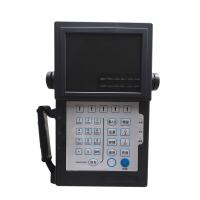
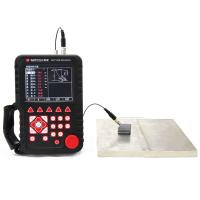
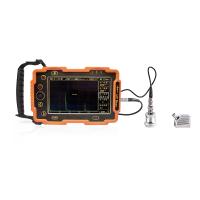
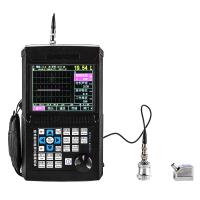
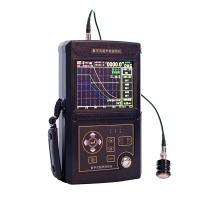
In the fields of industrial production and scientific research, non-destructive testing technology plays an important role. Ultrasonic flaw Detector, as one of them, has become a powerful tool for detecting internal defects in materials due to its high efficiency and accuracy. This article will delve into the working principle, application fields and importance of ultrasonic flaw Detectors in industrial production.
working principle
Ultrasonic flaw Detectors use the propagation characteristics of ultrasonic waves within materials to detect defects in materials. It works similar to medical ultrasound. When ultrasonic waves propagate to different media or defect boundaries in the material, phenomena such as reflection, refraction, and scattering will occur. These phenomena can be received by the ultrasonic flaw Detector and converted into images or sound wave signals to determine whether there are defects inside the material.
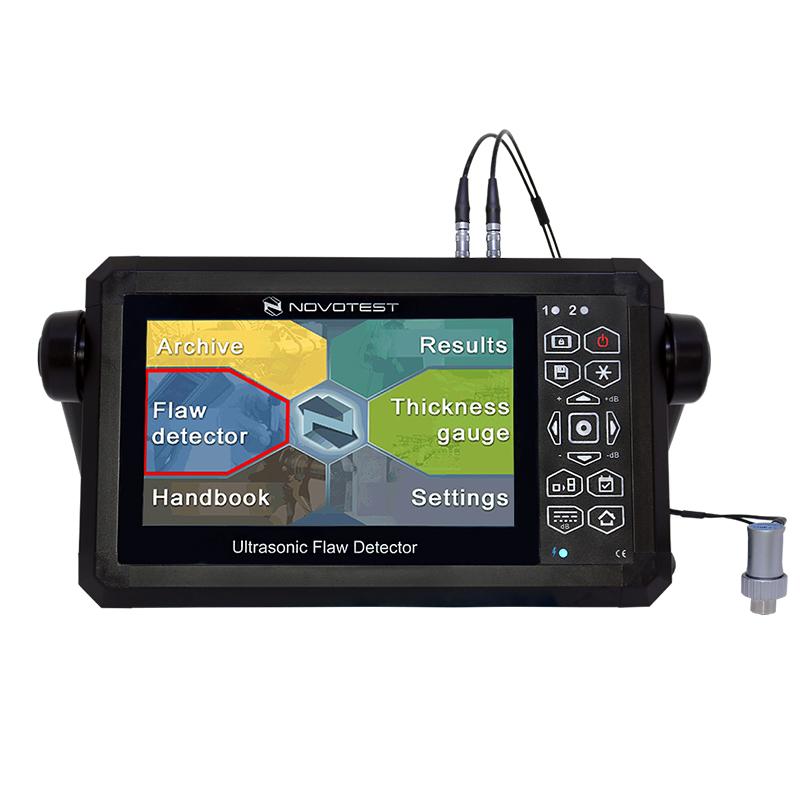
Application areas
Ultrasonic flaw Detectors are widely used in industrial fields. It is mainly used to detect defects in various materials, such as cracks, pores, inclusions, etc. In industries such as metal manufacturing, aerospace, automobile manufacturing, and construction engineering, ultrasonic flaw Detectors are widely used to detect and evaluate material quality. In addition, it is often used for the inspection of special structures such as pipelines, welds, and railway tracks to ensure their safe operation.
In industrial production, product quality is the key to the survival and development of an enterprise. Internal defects in materials are often one of the main causes of product quality problems. Ultrasonic flaw Detectors can quickly and accurately detect defects in materials, helping companies find and solve problems in a timely manner and improve product quality and production efficiency. At the same time, through ultrasonic flaw Detector detection, losses caused by quality problems can be reduced, production costs can be reduced, and the competitiveness of enterprises can be enhanced.
Conclusion
In general, ultrasonic flaw Detector, as a non-destructive testing technology, has the potential to play an important role in industrial production. It can not only help companies improve product quality and reduce production costs, but also ensure the safe operation of special structures. With the continuous development of science and technology, it is believed that ultrasonic flaw Detectors will show their importance in more fields and provide more possibilities and opportunities for industrial production.