This article explores the application of electrochemical sensors in monitoring harmful gases in ambient air. First, the applicable scope and method principles of harmful gas monitoring are introduced, and then the detection methods, interference and elimination, and precautions for common harmful gases such as carbon monoxide, hydrogen cyanide, phosgene, hydrogen fluoride, ammonia, and sulfur dioxide are discussed in detail. Finally, the prospects of electrochemical sensors in environmental monitoring are prospected.
With the acceleration of industrialization and the continuous advancement of urbanization, environmental pollution is becoming increasingly serious, among which air pollution is a problem that cannot be ignored. The emission of harmful gases not only directly threatens people's health, but also causes serious damage to the ecological environment. Therefore, real-time monitoring of harmful gases in ambient air is of great significance. As a commonly used monitoring method, electrochemical sensors play an important role in this field.
1. Scope of application and principle of method
This article describes the electrochemical sensor method for measuring nine harmful gases in ambient air, including chlorine, hydrogen sulfide, hydrogen chloride, carbon monoxide, hydrogen cyanide, phosgene, hydrogen fluoride, ammonia and sulfur dioxide. The electrochemical sensor uses the electrochemical activity of the target substance to oxidize or reduce it and generate an electrical signal within a certain range that is proportional to the concentration of the target substance, thereby achieving the measurement of the target substance concentration.
2. Detection methods of common harmful gases
2.1 Carbon monoxide (CO)
Carbon monoxide can be detected by potentiostatic or coulomb Detectors. Constant potential electrolysis generates electrolysis current through electrolysis reaction, the size of which is proportional to the concentration of carbon monoxide. Coulomb Detectors use the redox reaction of carbon monoxide and iodine pentoxide at a certain temperature to measure concentration.
2.2 Hydrogen cyanide (HCN)
Hydrogen cyanide can diffuse to the surface of the working electrode through the permeable membrane, and an oxidation reaction occurs in the electrolyte to generate electrolysis current. The output value is proportional to the concentration.
2.3 Phosgene (Cl2)
Phosgene enters the electrolytic cell through the permeable membrane, and an oxidation-reduction reaction occurs in the electrolyte to generate current. The size of the current is proportional to the concentration.
2.4 Hydrogen fluoride (HF)
Hydrogen fluoride enters the electrolytic cell and undergoes an oxidation reaction to generate electrolysis current, and the output value is proportional to the concentration.
2.5 Ammonia (NH3)
Ammonia gas enters the electrolyzer and reacts to produce a limiting current, the size of which is proportional to the concentration.
2.6 Sulfur dioxide (SO2)
Sulfur dioxide enters the electrolytic cell and undergoes an oxidation reaction to generate a diffusion current, the size of which is proportional to the concentration.
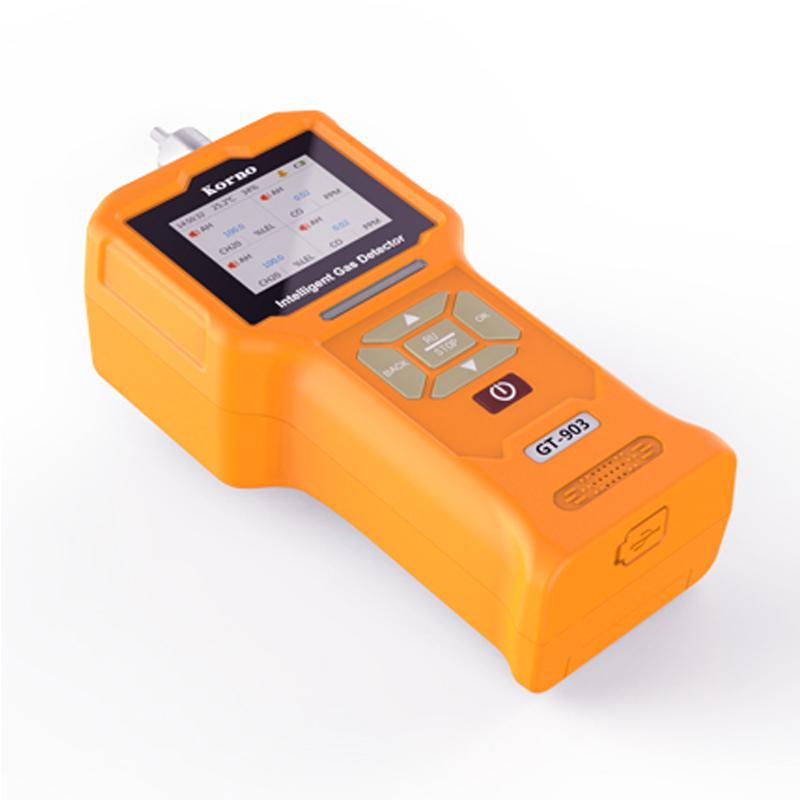
3. How to choose a sensor?
Selecting a suitable electrochemical sensor requires consideration of several factors, including monitoring needs, target gas characteristics, environmental conditions, and budget. The following are general steps and considerations for selecting an electrochemical sensor:
3.1 Determine monitoring needs
Determine the types and concentration ranges of harmful gases that need to be monitored. Determine the environment to monitor, including indoors, outdoors, industrial sites or other special environments.
3.2 Consider target gas characteristics
Each harmful gas has different characteristics, including molecular size, chemical activity, concentration range, etc., so it is necessary to select a sensor suitable for detecting the gas. Consider cross-reactivity and interference with the target gas, as well as sensor sensitivity and selectivity for other gases.
3.3 Consider environmental conditions
Consider the temperature, humidity, pressure and other factors of the monitoring environment and select a sensor that can work stably under these conditions. For special environments, such as places with high temperature, high humidity or corrosive gases, it is necessary to choose sensors with high temperature resistance, waterproof and anti-corrosion properties.
3.4 Determine monitoring equipment characteristics
Consider the sensitivity, resolution, response time, accuracy and other technical indicators of monitoring equipment to meet monitoring needs. Consider the stability and reliability of the sensor and choose products with good quality and long life.
Electrochemical sensors play an important role in monitoring harmful gases in ambient air. By discussing the detection methods, interference and elimination of various harmful gases, and precautions, they can help improve the accuracy and reliability of monitoring and protect people's lives. health and ecological environment safety.
