Abstract: High-speed coating processes are widely used in modern industry, but the determination of the coating window is crucial to achieve a stable coating process. This paper experimentally studies the effects of the coating gap and coating material viscosity on the coating window, and establishes a coating window prediction model, which provides a theoretical basis for the optimization of high-speed coating processes.
introduction
The high-speed coating process is an important industrial production technology and is widely used in various fields, such as printing, coating, electronic manufacturing, etc. However, due to the fast coating speed, the stability of the coating window is often affected, resulting in reduced coating quality and reduced production efficiency. Therefore, it is of great significance to study how to optimize the coating window and achieve stable and efficient operation of high-speed coating processes.
Experimental methods and materials
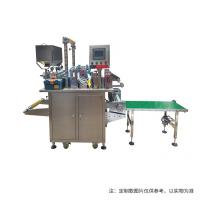
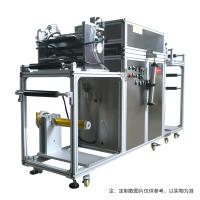
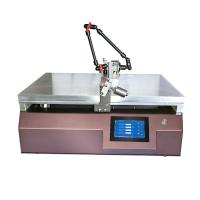
This study used three aqueous solutions containing carboxymethylcellulose to which 0.5 wt% disodium phenylbiphenyl disulfide was added. First, disodium phenylbiphenyl disulfide was diluted in deionized water and then mixed with the corresponding aqueous carboxymethylcellulose solution. Subsequently, the viscosity of different solutions was measured using a rotational rheometer. In the experiment, a high-precision developed coating machine was used for experiments, and the characteristics of the coating window were studied by adjusting the coating gap and controlling the coating speed.

Results and discussion
Experimental results show that the coating gap and viscosity have a significant impact on the formation and stability of the coating window. The combined model allows prediction of the coating window for the investigated material system and coating gap over the investigated range of coating speeds (up to 500 m min^-1). The decrease in viscosity results in a decrease in the minimum wet film thickness, an increase in the dimensionless coating gap and a decrease in the capillary number. Furthermore, the reduction in the coating gap results in a reduction in the minimum wet film thickness, an increase in the dimensionless coating gap, and a reduction in the capillary number. Therefore, the coating gap must be adjusted to achieve the target wet film thickness and thus the target layer thickness for the different material properties used in different coating applications. For the most viscous material system, CMC-A, a typical primer coating target wet film thickness of 20â25 microns can be achieved using a coating gap of 105 microns at a coating speed of 500 m min^-1. For the material system CMC-C with a 2.5 times lower viscosity, at corresponding shear rates, the same target wet film thickness can be achieved at a coating speed of 500 m min^-1 using a coating gap of 180 microns.
in conclusion
By studying the effects of the coating gap and coating material viscosity on the coating window, a coating window prediction model was established, which provided an important reference for the optimization of high-speed coating processes. The results of this study show that the coating window can achieve a stable coating process under the control of the coating gap and the viscosity of the coating material. In the future, methods for optimizing coating parameters can be further explored to improve the stability and production efficiency of the coating process and promote the development and application of coating technology.