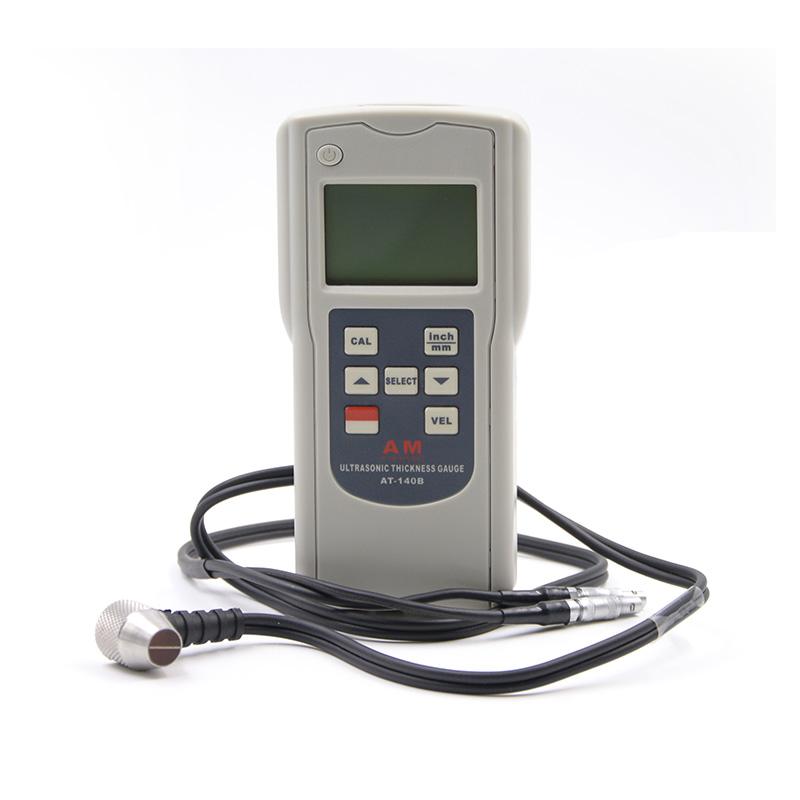
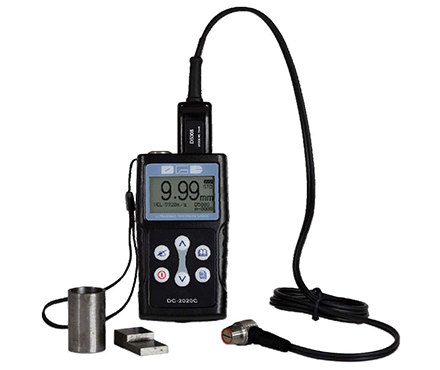
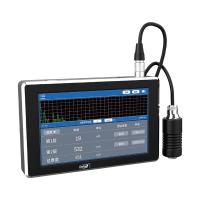
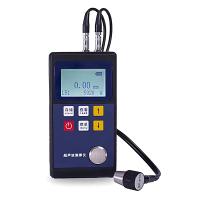
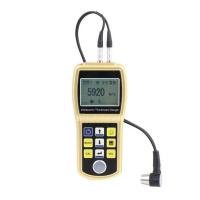
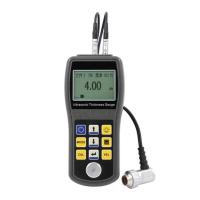
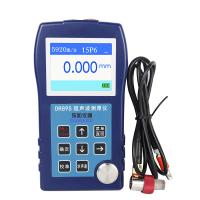
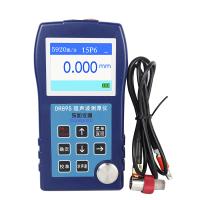
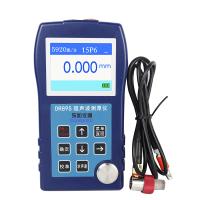
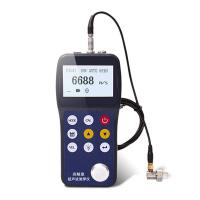
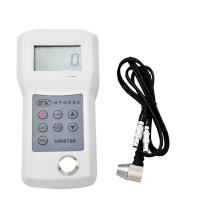
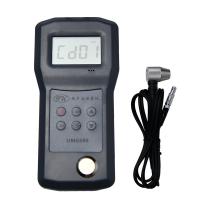
Copper plates are widely used in industrial production, and their thickness is one of the important factors affecting product quality. In order to accurately measure the thickness of the copper plate, the copper plate ultrasonic Thickness Gauge came into being. This article will deeply explore the principles, applications, and selection of copper plate ultrasonic Thickness Gauges, and give you a comprehensive understanding of this important testing tool.
principle
The copper plate ultrasonic Thickness Gauge measures the thickness of the material through the propagation speed of ultrasonic waves. The instrument emits ultrasonic pulses to the surface of the copper plate through an ultrasonic probe. The ultrasonic pulse passes through the copper plate and is reflected back, and its travel time is proportional to the thickness of the copper plate. Based on the emission time and reception time of the ultrasonic pulse, the thickness of the copper plate is calculated. The copper plate ultrasonic Thickness Gauge is equipped with a calibration system that can automatically calibrate according to the sound speed and density of the material to ensure the accuracy of the measurement results.
application
Copper plate ultrasonic Thickness Gauges are widely used in industrial production. They are mainly used to measure the thickness of copper plates, copper tubes and other materials to ensure product quality and specifications. Used to measure the thickness of copper plates in building structures to ensure the safety and stability of the building. Used to measure the thickness of aerospace materials such as aircraft and rockets to ensure flight safety. Used to measure the thickness of copper plates in automobile parts to ensure the performance and safety of the car.
Selection
When choosing a copper plate ultrasonic Thickness Gauge, you need to choose a measurement range suitable for the working scenario to ensure that it can meet actual needs. Choose the appropriate instrument according to the accuracy requirements of the product to ensure the accuracy of the measurement results. Consider the functional configuration of the instrument, such as automatic calibration, data storage and other functions, and choose an instrument that suits your needs. Choose products from well-known brands to ensure product quality and after-sales service.
In general, the copper plate ultrasonic Thickness Gauge, as an important testing tool, plays an irreplaceable role in industrial production. With the development of science and technology and the continuous improvement of application requirements, its application prospects in the field of engineering measurement will be broader.