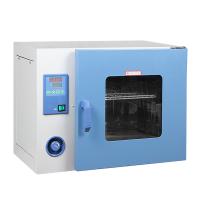
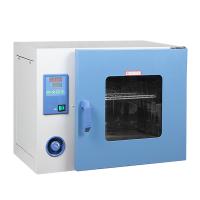
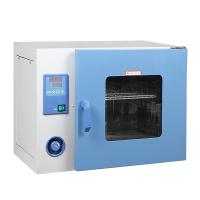
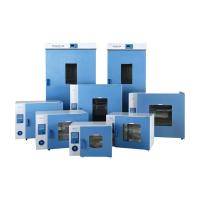
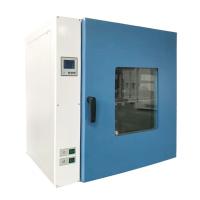
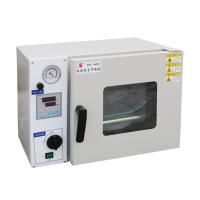
In the field of modern science and technology, small Drying Ovens, as an important experimental equipment, play an important role in various laboratories, research institutions and industrial production. This article will introduce the principles, applications and selection of small Drying Ovens to help readers better understand and choose a Drying Oven that suits their needs.
Fundamental
The basic principle of a small Drying Oven is to achieve drying of materials by controlling temperature, humidity and ventilation. Its main components include heating elements, temperature sensors, humidity sensors and control systems. When the set temperature and humidity reach a stable state, the heating element will provide constant heat to heat the air in the box to the set temperature, and at the same time, the humidity will be discharged out of the box through the ventilation system to achieve drying of the material.
Application scope
Small Drying Ovens are widely used in various fields. In laboratories in the fields of chemistry, biology, materials, etc., small Drying Ovens are often used for experimental operations such as sample drying, evaporation, heating, and constant temperature storage. In the food processing industry, small Drying Ovens are often used for drying, dehydrating and preserving food, such as the production of dried fruits, dried meat, etc. In the pharmaceutical industry, small Drying Ovens are used for drying, drying and storage of pharmaceuticals to ensure the quality and stability of pharmaceuticals. In the electronics industry, small Drying Ovens are used for drying and dehumidifying electronic components to prevent them from being damaged by moisture. In the field of materials science, small Drying Ovens are used for drying, curing and heat treatment of materials to improve their performance and stability.
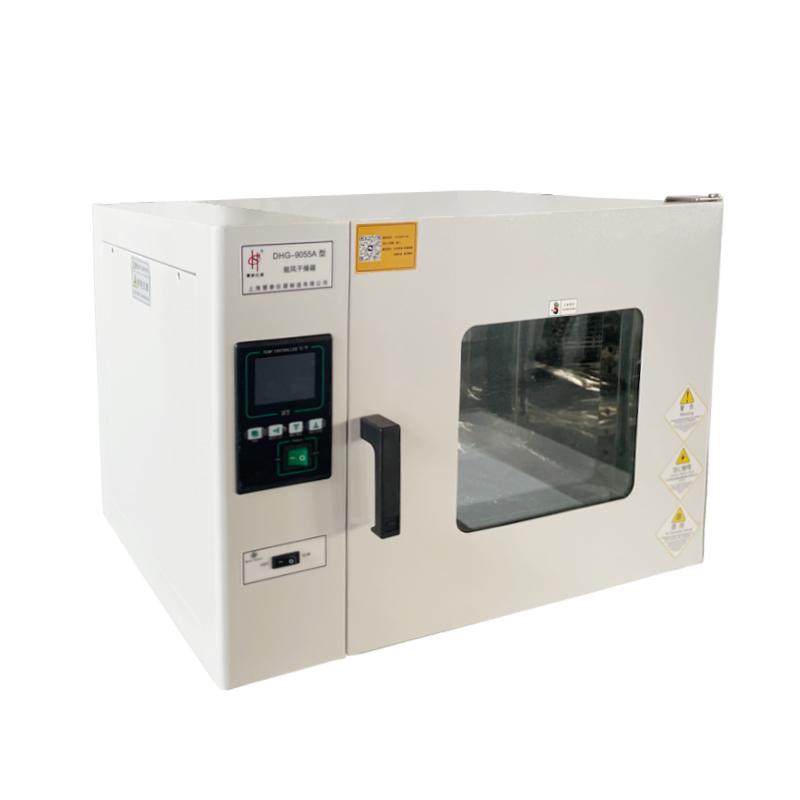
Selection guide
Choose a Drying Oven with a suitable temperature range according to actual needs. Generally, the temperature range of a conventional small Drying Oven is between room temperature and 200°C. A Drying Oven with humidity control function needs to be selected according to experimental needs to achieve precise humidity adjustment and control. Select a drying box of appropriate size based on the size and quantity of experimental samples to ensure that the samples can be fully exposed to dry air. Consider the temperature and humidity control accuracy of the Drying Oven, and select a Drying Oven with high control accuracy and good stability to ensure the accuracy and repeatability of experimental data. Choose a drying box with safety and stability to ensure safe and reliable operation during use.
To sum up, as an important experimental equipment, small Drying Ovens are widely used in various scientific research and production fields. By understanding its principles, applications and selection guide, readers can better choose and use a Drying Oven that suits their needs, providing better support and guarantee for experiments and production.