As the core equipment of material mechanical property testing, tensile testing machine is an important support for quality control and new material research and development in the manufacturing industry. In 2026, driven by the upgrading of the manufacturing industry, the iteration of new materials and the strategy of domestic substitution, the industry is ushering in the dual transformation of technological innovation and market demand, accelerating the evolution from traditional testing equipment to high-precision, intelligence and customization, and the market pattern will also usher in structural adjustments.
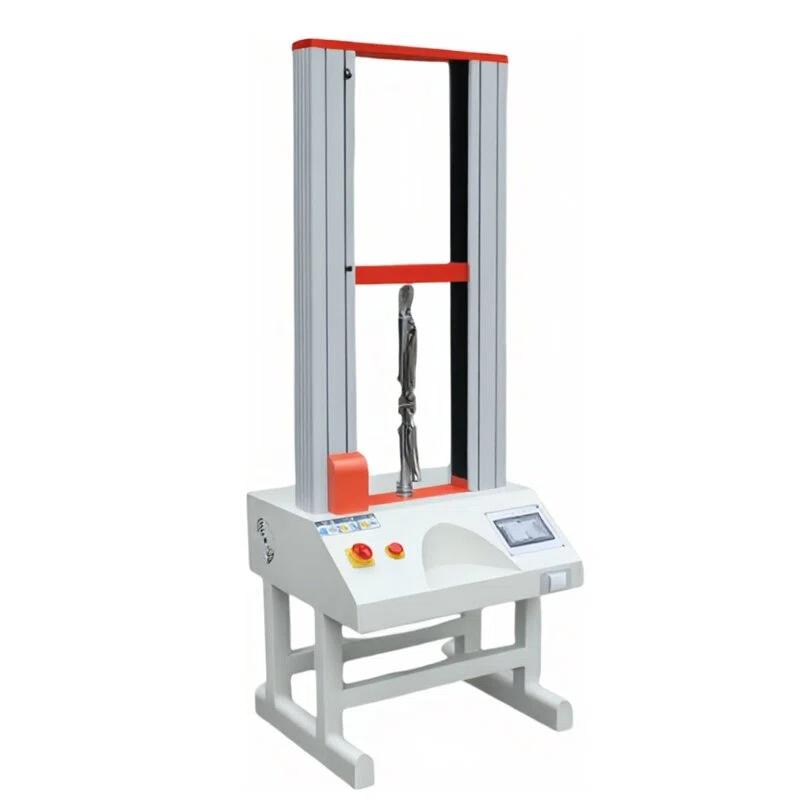
Technological innovation has become the core driving force for the development of the tensile testing machine industry in 2026, and core technological breakthroughs are concentrated in four major directions. High-precision sensor technology has been upgraded, and the value error of domestic equipment has gradually been reduced to less than ±0.5%, and the force resolution can reach 1/300000 F.S., meeting the testing needs of high-end materials such as composites and nanomaterials. Servo drive technology is iteratively upgraded, servo motor + ball screw, linear motor drive system is widely used, speed control accuracy is increased to ±0.5%, can be adapted to low-speed stretching and high-speed tearing and other multi-scenario tests. The intelligent software system has become standard, with real-time display of test curves, automatic data calculation, custom export of reports and historical data traceability, and some high-end equipment can also realize custom loading waveforms to meet the needs of dynamic fatigue testing. Modular design has become the mainstream, and the equipment supports the customization of components such as frames, fixtures, extensometers, etc., and can integrate high and low temperature chambers to achieve material performance testing in extreme environments, greatly improving equipment adaptability.
Changes in market demand have promoted the continuous optimization of the industry structure, showing three significant characteristics. First, the rapid growth of high-end demand, aerospace, new energy vehicles, biomedical materials and other emerging fields, the demand for dynamic tensile testing machines and high-precision electronic universal testing machines has surged, driving the market share of high-end products to further increase, and it is expected that the market share of high-end electronic tensile testing machines will exceed 60% in 2026. Second, the demand for customization has become the norm, and the differentiated requirements of different industries for testing accuracy and function have prompted enterprises to launch targeted customized solutions, such as special equipment such as interlayer peel strength testing of composite materials and dynamic fatigue testing of rubber seals. Third, domestic substitution extends to the high-end, domestic enterprises have achieved breakthroughs in core performance through technological innovation, and the localization rate is expected to increase to more than 75%, gradually breaking the monopoly of foreign brands in the mid-to-high-end market, and enterprises in the core areas of the Yangtze River Delta and Pearl River Delta have become the main force of domestic substitution.
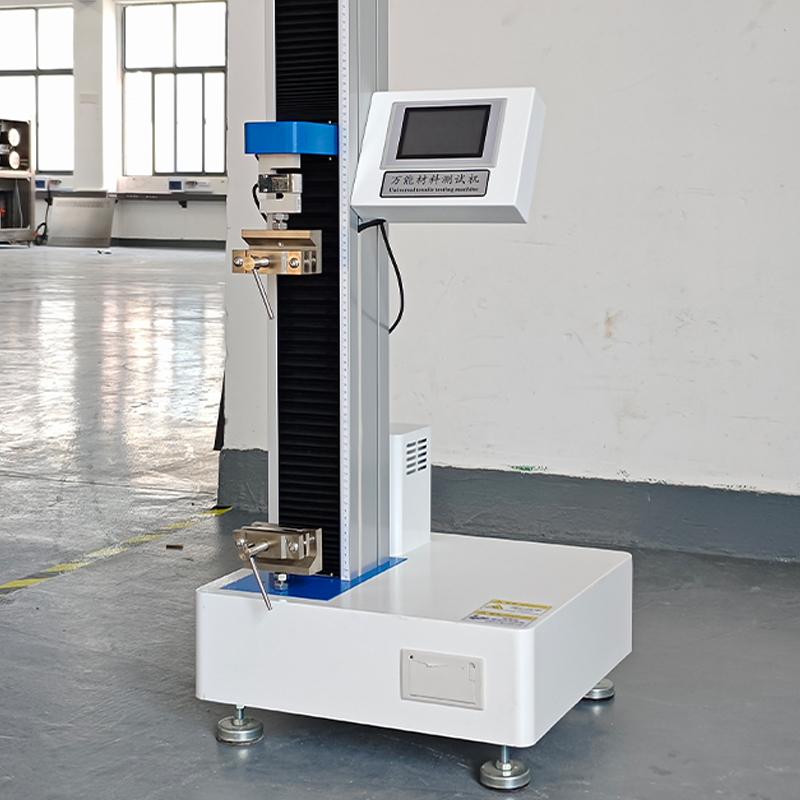
Policy support and the improvement of industry standards provide a strong guarantee for the development of the industry. Policies such as "Made in China 2025" promote the intelligent and green development of the manufacturing industry, provide tax incentives and financial subsidies to the R&D investment of high-end equipment manufacturing enterprises, and help core technologies tackle; The industry standard system continues to improve, national standards and industry standards are constantly updated, and equipment accuracy, test methods, and inspection rules are standardized to ensure the accuracy and comparability of test data. At the same time, the concept of green manufacturing has been deeply applied, and equipment energy efficiency improvement and digital carbon reduction have become new competitive dimensions, promoting the transformation of the industry to high-quality development.
In 2026, the tensile testing machine industry is in a critical stage of technological upgrading and market restructuring, with technological innovation and market demand forming a two-way drive. In the future, with the deep integration of artificial intelligence, the Internet of Things and equipment, intelligent diagnosis, remote operation and maintenance, and test data assetization will become new growth points in the industry, while the localization of core components and the improvement of industry concentration will become the market development trend. Only by continuing to increase R&D investment, focusing on core technologies, and improving the level of product intelligence and customization can domestic enterprises take the initiative in global market competition and promote the industry to achieve a leap from "Made in China" to "Made in China".
