The tensile testing machine is the core equipment for the mechanical property testing of metal materials, and the rationality of the selection directly determines the detection accuracy of key indicators, of which the range and accuracy are the core of adapting to the testing requirements. This paper combines standards and practical operations to explain the selection method, range and accuracy requirements in detail to help avoid misunderstandings.
Testing machine type selection (by metal strength)
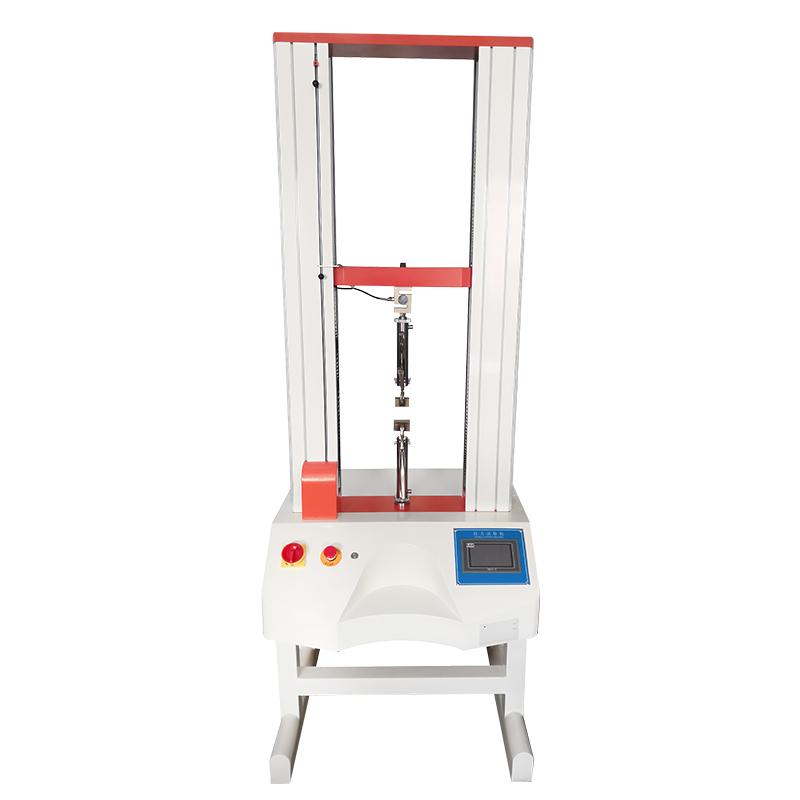
1. Electronic universal type: suitable for medium and low strength metals (copper strips, aluminum profiles, ordinary steel, etc.), servo motor drive, high precision, wide speed regulation, convenient operation, suitable for routine testing of small and medium-sized enterprises, can accurately capture small force changes in the yield stage of materials.
2. Hydraulic universal type: suitable for high-strength, large-size metals (heavy steel plates, aviation alloys, etc.), stable output of high force, strong rigidity of the fuselage, anti-deformation resistance, and meet the rigorous testing needs of high-end manufacturing and scientific research.
Core requirements for range selection
1. Core principle: first calculate the maximum test force of the specimen, and then reserve 20%~30% redundancy (30%~50% reserve for brittle metals) to avoid overload or insufficient accuracy of small force testing.
2. Calculation formula: maximum test force (kN) = tensile strength of material (MPa) × cross-sectional area of the specimen (mm²) ÷ 1000; selection range = maximum test force × (1.2~1.3).
3. Conventional adaptation: 50~200kN range for medium and low-strength metals, 200~1000kN range for high-strength thick materials; Multi-material testing is selected according to the maximum testing force to ensure that the testing force of other materials falls within the range of 5%~100%.
Accuracy selection criteria (according to GB/T 228.1-2021, level 1 and above accuracy)
1. Force value accuracy: 0.5 level for conventional industrial testing (value error ≤±0.5%); The scientific research level is 0.3 and above, and the force resolution is ≥ 1/300000 F.S.
2. Displacement accuracy: The electronic universal model is better than the hydraulic model, and the routine test requires ≥± 0.05%; When it is necessary to calculate the elastic modulus and yield strain, it is equipped with a level 1 or above extensometer (0.5 level is selected for high-precision scenes), and the resolution ≥ 0.001mm.
3. Auxiliary requirements: The control system needs high-frequency sampling to ensure that the instantaneous changes in the force deformation of the specimen are captured and the data repeatability is improved.
Supplementary precautions for selection
For metal testing, priority is given to the use of double-column frames (strong rigidity and deformation resistance), with wedge or hydraulic fixtures, to ensure that the specimen is firmly clamped, the force is uniform, and the test data is reliable.
In summary, the selection of metal material tensile testing machine should be based on material characteristics, range matching as the core, accuracy standard as the key, combined with the reasonable selection of test scenarios, to provide support for quality control and research and development.
