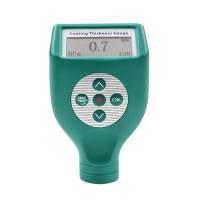
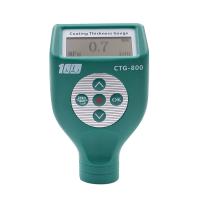
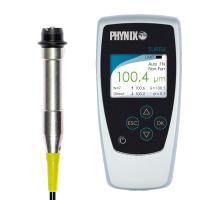
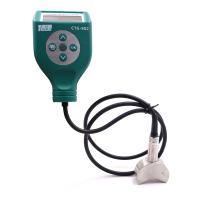
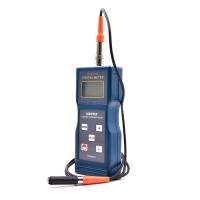
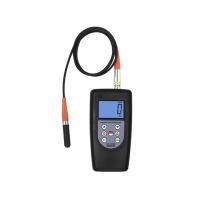
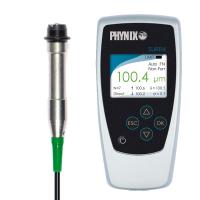
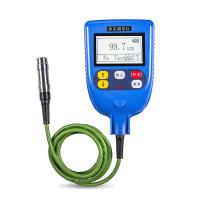
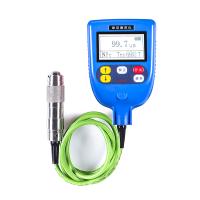
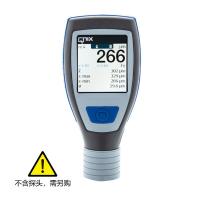
The electronic coating Thickness Gauge is an important device used to measure the thickness of metal surface coatings and is widely used in industrial production and quality control. This article will introduce the working principle, application fields and key points of selection of electronic coating Thickness Gauges.
principle
The working principle of electronic coating Thickness Gauge is based on the principle of electromagnetic induction and radiation absorption. Its main components include transmitting device, receiving device and signal processing system. When the coating Thickness Gauge comes into contact with the surface of the object to be measured, the transmitting device emits electromagnetic waves or rays of a specific frequency. Electromagnetic waves or rays blocked by the coating will be absorbed to varying degrees, and the thickness of the coating can be calculated based on the degree of absorption. The receiving device receives the electromagnetic waves or rays after coating, and transmits the signals to the signal processing system, and outputs the coating thickness data after processing.
application
In the automobile manufacturing process, electronic coating Thickness Gauges are often used to measure the thickness of anti-corrosion coatings on automobile surfaces, such as sprayed primers and topcoats. By measuring the coating thickness, the uniformity and quality of the coating can be ensured, improving the durability and appearance quality of the car. In the metal processing industry, electronic coating Thickness Gauges are widely used to measure coatings, coatings, etc. on metal surfaces. For example, measuring the coating thickness of electroplated parts to ensure they meet specified anti-corrosion and mechanical performance requirements. In the aerospace industry, coating thickness is critical to the safety and performance of aircraft and spacecraft. Electronic coating Thickness Gauge can be used to measure the thickness of aircraft surface coatings, such as anti-corrosion coatings, heat-insulating coatings, etc., to ensure the flight safety and performance stability of the aircraft. In the coating industry, electronic coating Thickness Gauges can be used to detect coating thickness during coating construction to ensure the quality of coating construction and the performance of the coating. In addition, it can also be used for coating thickness testing during quality control and product development.
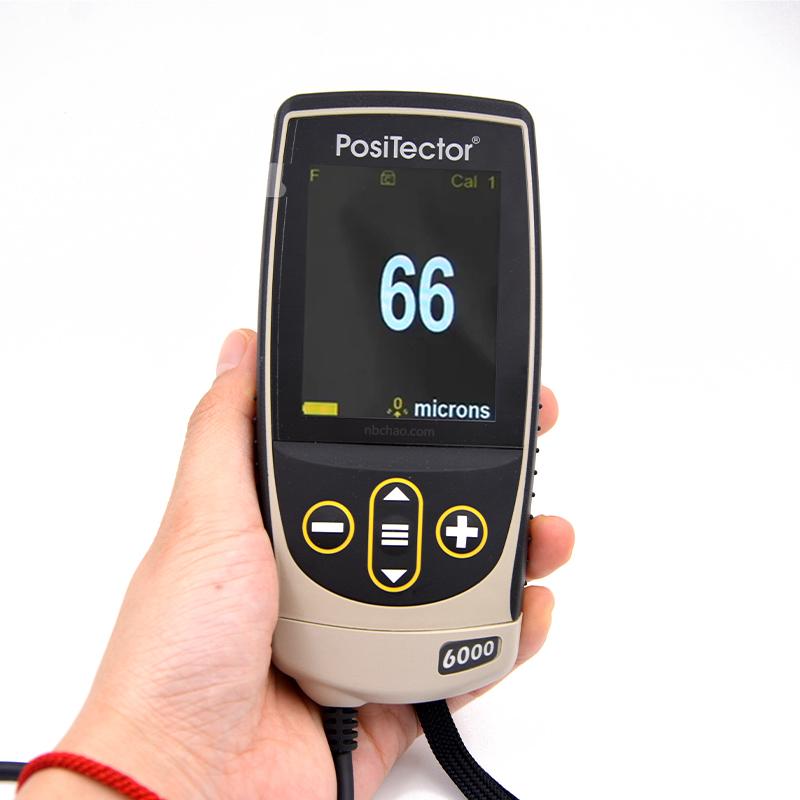
Key points for selection
Different application scenarios have different requirements for the range and accuracy of coating thickness measurement. Therefore, when selecting, you need to consider whether the measurement range and accuracy meet actual needs. The probe types of electronic coating Thickness Gauges include magnetic probes and induction probes. Selecting the appropriate probe type requires an evaluation based on the nature and surface condition of the object being measured. Modern electronic coating Thickness Gauges are usually equipped with data processing software that can process and analyze the measurement data and output corresponding reports. When selecting, you need to consider whether the data processing and output methods meet actual needs. For applications that require coating thickness measurements in the field, portability and ease of operation are important considerations. Therefore, choosing an electronic coating Thickness Gauge that is portable and easy to operate can improve work efficiency.
To sum up, the electronic coating Thickness Gauge, as an important quality testing equipment, plays an important role in automobile manufacturing, metal processing, aerospace and other fields. The correct selection of a suitable electronic coating Thickness Gauge is of great significance for improving production efficiency and product quality.