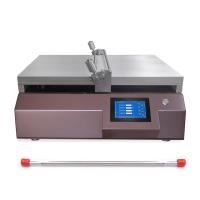
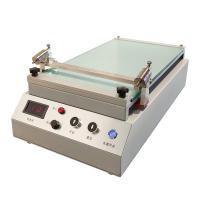
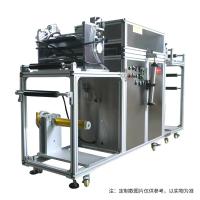
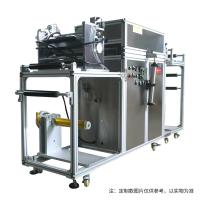
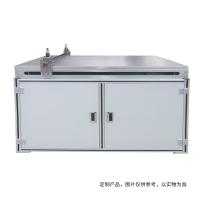
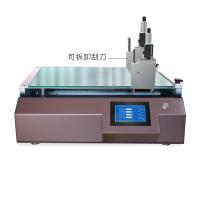
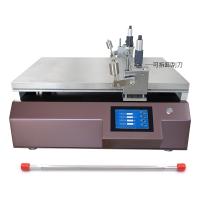
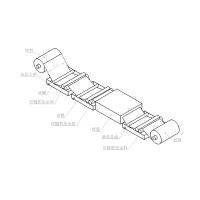
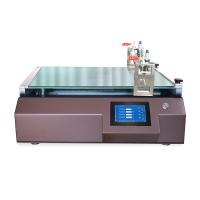
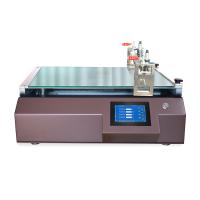
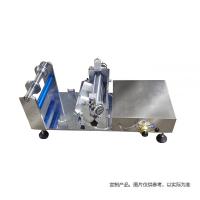
In this issue, the oral film slurry sent by the customer is used for testing: the oral film is prepared on a glass plate. An orolytic film is a film that dissolves in the mouth and is often used in oral dissolving tablets or oral health products. The traditional preparation methods of oral dissolved film mainly include solution casting, solution rotary coating, etc., but these methods have problems such as low production efficiency and high cost. Therefore, more and more researchers use flat plate coating machines to prepare oral dissolvable films on glass plates for product performance testing and research. Of course, it is also necessary to choose equipment with high coating accuracy, after all, the requirements for accuracy of oral dissolution film are still relatively high.
![Application case of small coater preparing oral dissolvable film on glass plate [with video] with Figure 1](http://img.nbchao.com/upload/editor/image/20240415/1713172946284028865.jpg)
Due to the high viscosity of the sample and the fact that vacuum adsorption and heating are not required, the Nanbeitiao technology is prepared directly on the glass plate using a small coater with a scraper. From the point of view of the effect of the final coating film, it is very ideal.
![Application case of small coater preparing oral dissolvable film on glass plate [with video] with Figure 2](http://img.nbchao.com/upload/editor/image/20240415/1713172957340084529.jpg)
The following is the operation video of this experiment, you can see the operation process and steps of our North and South tide technology in detail:
The use of a small coater to prepare the oral dissolution film on the glass plate can realize the automation and precise control of the coating process, and can greatly improve the production efficiency. At the same time, due to the use of water-soluble polymers and solvents, the oral film dissolves quickly in the oral cavity and does not require additional solvent recovery treatment, which has environmental advantages. However, it should be noted that parameters such as coating thickness and drying temperature need to be strictly controlled during the preparation process to ensure the quality and stability of the oral film.