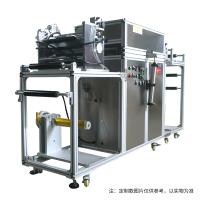
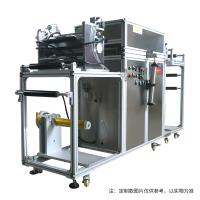
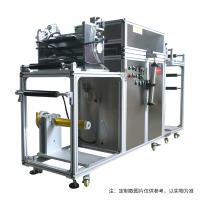
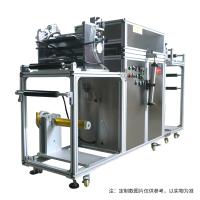
Polyethersulfone (PES) is a high-performance engineering plastic with excellent high temperature resistance, chemical resistance, high mechanical strength, etc., and has a wide range of applications in medical, electronics, aerospace and other fields. Among them, PES membrane is an important application form, which can be used to prepare filtration membranes, separation membranes, electrolyte membranes, etc. As a common film preparation equipment, laboratory coaters play an important role in PES film preparation. In this paper, we will discuss the technical selection of laboratory coaters in the preparation of PES films, and analyze the applicability, advantages and disadvantages of different types of coaters in this field.
Requirements for PES film preparation
In the process of preparing PES films, the coater needs to meet the following requirements:
Uniform coating: The quality and performance of PES films are affected by the uniformity of the coating, so the coater needs to be able to achieve a uniform coating to ensure that the surface of the film is flat and consistent.
Control the coating thickness: The thickness of the PES film has a significant impact on its performance, so the coater needs to have an adjustable coating thickness control function to meet different thickness requirements.
High temperature resistance: PES needs high temperature drying and curing during the preparation process, and the coating machine needs to be able to withstand high temperature and ensure the stability and safety of the coating process.
Precise control: The preparation of PES film requires precise control parameters, and the coating machine needs to have a high-precision control system to ensure the quality and performance of the film.
Technical selection of laboratory coaters
When choosing a laboratory coater for PES film preparation, the following types can be considered:
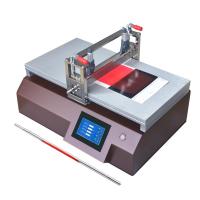
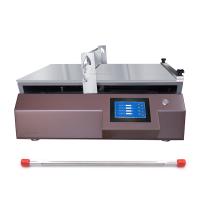
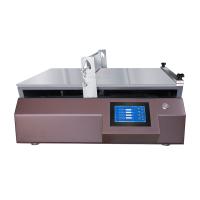
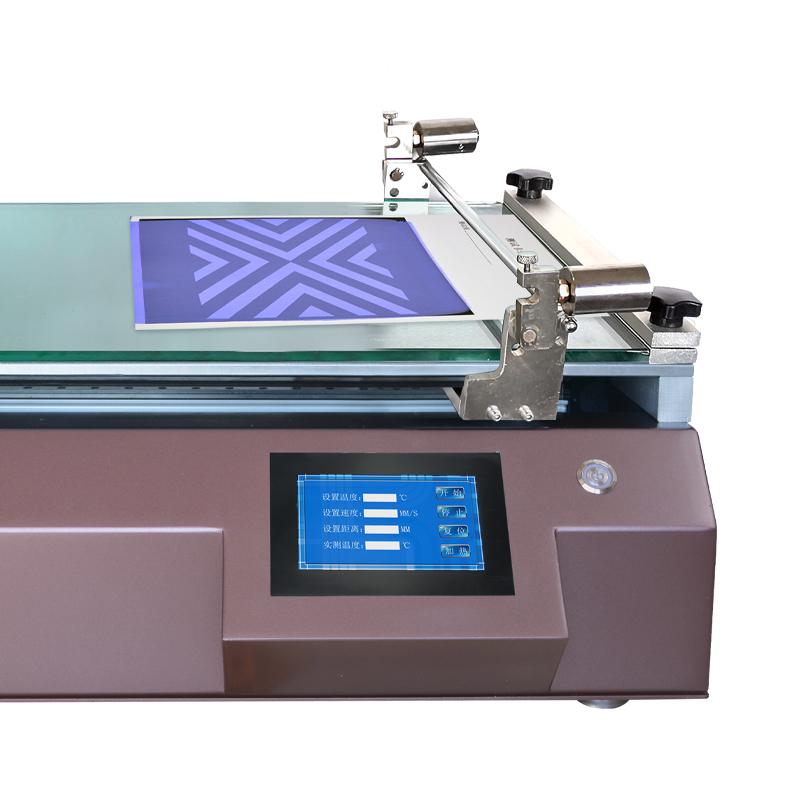
Uniform Coating Machine:Uniform coaters are suitable for applications that require high-precision coating. It evenly coats the glue on the surface of the substrate through a uniform roller, which can achieve very fine coating thickness control, and is suitable for laboratory preparation with high requirements for film quality.
Centrifugal Coater:The centrifugal coater is suitable for coating glues with high viscosity. It applies the glue to the surface of the substrate by rotating centrifugal force, which can achieve rapid coating and drying, and is suitable for laboratory preparation with high production efficiency requirements.
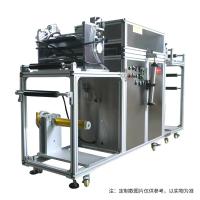
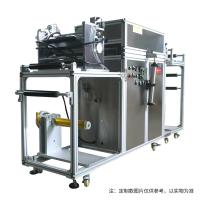
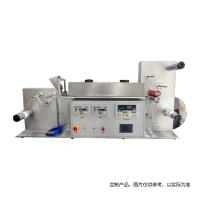
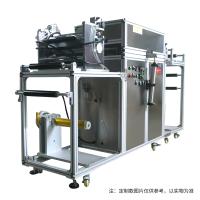
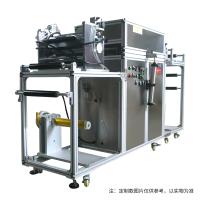
Drum Coater:The drum coater is suitable for substrates with a large coating area. It applies the glue to the surface of the substrate through coating rollers and calenders and cures through multiple rollers, enabling continuous and efficient coating preparation.
Spray Coating Machine:Spray coaters are suitable for applications that require fast coating and drying. It sprays the glue on the surface of the substrate through a nozzle and dries it quickly through a drying device, making it suitable for laboratory preparation that requires high-speed preparation.
Technology selection analysis
When choosing a laboratory coater, it is necessary to consider and analyze comprehensively according to the actual preparation needs and budget:
Preparation Requirements:If fine control and high-precision coating of PES films are required, a uniform coater or centrifugal coater can be selected. If you need to quickly prepare a large area of film, you can choose a drum coater or a spray coater.
Budget:Different types of laboratory coaters have different prices and need to be selected according to the budget of the laboratory. Uniformly coaters are typically more expensive but offer high-precision coating control, while drum coaters and spray coaters are relatively inexpensive and are suitable for labs with limited budgets.
Laboratory Conditions:The space and equipment conditions in the laboratory are also important considerations when choosing a laboratory coater. It is necessary to choose the appropriate size and form of coater according to the size of the laboratory and the layout of the equipment.
conclusion
In the technical selection of PES film preparation, laboratory coating machine is a common and important preparation equipment. Choosing the right type and model of laboratory coating machine can improve the efficiency and quality of PES film preparation and meet the preparation needs of different laboratories. Through the technical selection and analysis of different types of coating machines, it can help laboratories better choose the coating machines that suit their own needs and promote the application and development of PES films in various fields.