summary
Polyacrylonitrile (PAN) films have a wide range of applications in electronics, optics and biomedicine. In this paper, the application of laboratory film coater in the preparation of PAN films is introduced. First, we briefly introduced the applications and characteristics of PAN films. Then, we described in detail the structure and working principle of the laboratory film coater. Next, we describe the experimental process for the preparation of PAN films and discuss the key parameters that affect the quality of the films. Finally, we look forward to the future development direction of laboratory film coaters in PAN film preparation.
1. Introduction
PAN is an important synthetic fiber raw material with good mechanical properties, chemical stability and heat resistance, and is widely used in fibers, membranes and composite materials. As an important functional material, PAN film has a wide range of application prospects in sensors, separation films, optical devices, etc. However, the traditional PAN film preparation method has problems such as high cost, complex process and low production efficiency. As a new type of film preparation equipment, the laboratory film coating machine has the advantages of easy operation, short production cycle and strong controllability, and has great potential in PAN film preparation.
2. The structure and working principle of the laboratory film coating machine
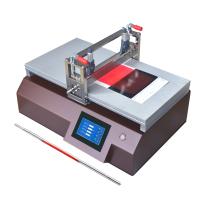
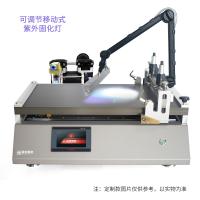
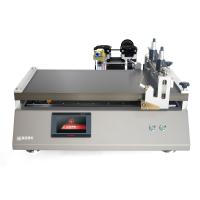
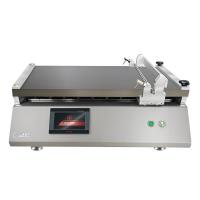
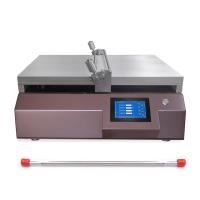
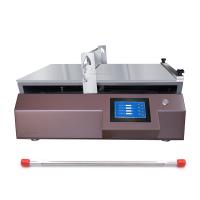
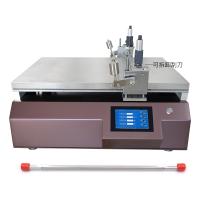
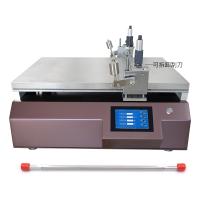
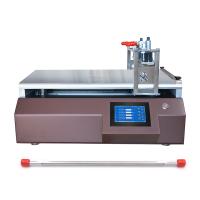
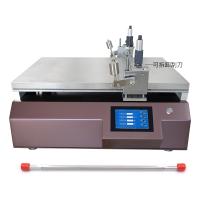
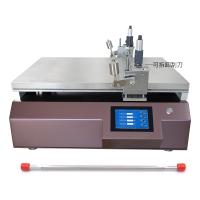
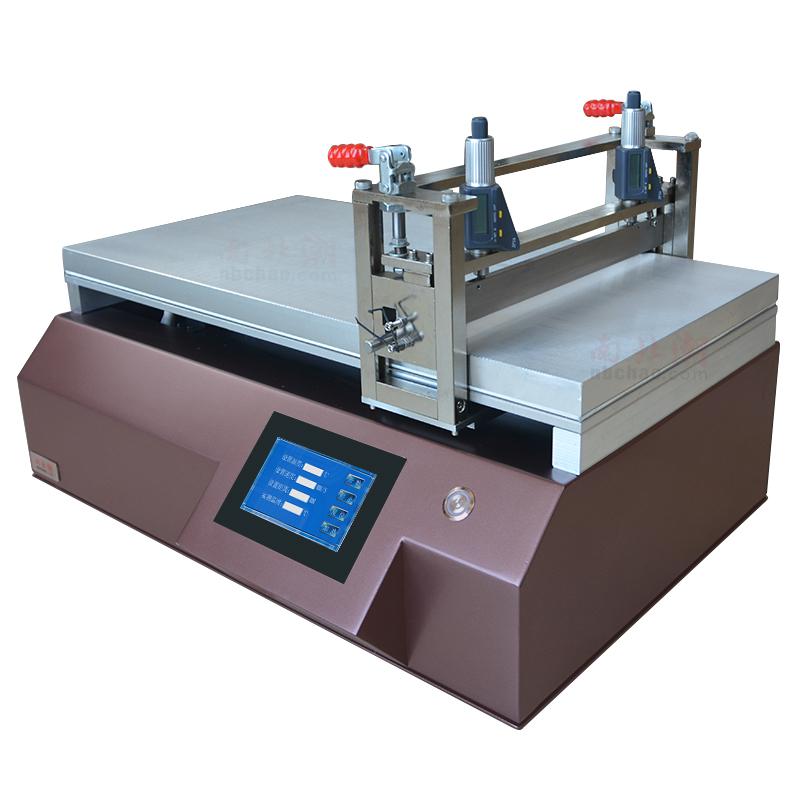
A laboratory film coater is a special equipment used for film preparation, which is usually composed of parts such as a substrate support system, a coating system, a drying system, and a control system. Here's how it works:
Substrate support system: It is used to support the substrate material in the film preparation process to ensure its flatness and stability.
Coating system: The coating system is usually composed of components such as coating head, coating roller, coating groove, etc. During the coating process, a solution or dispersion is evenly applied to the surface of the substrate material to form a coating.
Drying system: The drying system is used to evaporate the solvent or water in the solution or dispersion coated on the substrate material to dry and cure the film.
Control system: The control system is used to adjust the coating speed, temperature, humidity and other parameters to ensure the stability and controllability of the film preparation process.
3. Experimental procedure for the preparation of PAN films
The experimental procedure for the preparation of PAN films mainly includes the following steps:
Select the substrate materials suitable for the preparation of PAN films, such as glass substrates, polyester films, etc., and clean and treat them on the substrate surface to ensure the adhesion of the coating.
Dissolve PAN in suitable solvents, such as N,N-dimethylformamide (DMF), dimethyl sulfoxide (DMSO), etc. An appropriate amount of plasticizers, additives, etc. can be added to the solution to improve the performance of the coating.
The prepared PAN solution is evenly coated on the surface of the substrate material, usually by uniform spin coating or scraping coating.
The solution applied to the substrate material is dried and cured to remove the solvent or moisture in it to form a PAN film.
According to the actual needs, the prepared PAN film can be post-treated, such as heat treatment, surface modification, etc., to improve its performance.
4. Impact of key parameters
In the process of preparing PAN films, parameters such as coating speed, solution concentration, and substrate material properties have an important impact on the quality of the film.
Coating speed: The coating speed directly affects the thickness and uniformity of the coating, and too high or too low the coating speed will lead to the degradation of the coating quality.
Solution concentration: An increase in the concentration of the solution will increase the solid content of the coating, but too high a concentration will increase the viscosity of the solution, which is not conducive to coating.
Substrate material properties: The surface energy level, roughness and other properties of the substrate material will affect the adhesion and flatness of the coating, and the selection of the appropriate substrate material is crucial for the quality of the film.
5. Future Prospects
As a new type of film preparation equipment, the laboratory film coating machine has a broad application prospect in PAN film preparation. Future research can be carried out in the following aspects:
Process optimization: Further optimize the coating process parameters to improve the quality and production efficiency of the film.
New material applications: Explore new PAN materials and their applications in the field of thin films, such as functionalized PAN films, composite materials, etc.
Equipment improvement: Research and development of higher performance and more intelligent laboratory film coating machine to improve its application range and efficiency in film preparation.
conclusion
Laboratory film coating machine plays an important role in the preparation of PAN films, and by reasonably controlling the process parameters and optimizing the equipment structure, PAN films with excellent properties can be prepared, which provides important support for their applications in electronics, optics and biomedicine. With the continuous development of related technologies, the application prospect of laboratory film coating machine in PAN film preparation will be broader.