Scope and description
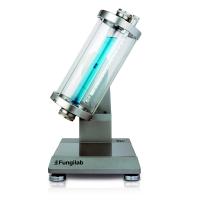
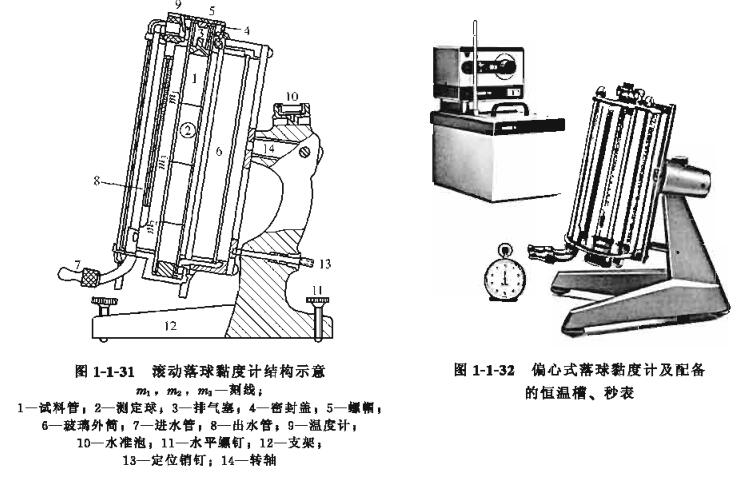
The eccentric falling ball viscometer is the Hoeppler viscometer, also known as the rolling falling ball viscometer. The structure is shown in Figure 1-l-31. Its characteristic is that the tube is inclined at a certain angle, so that the ball slides through the tube and slides down stably. It is optional to avoid the measurement error caused by the vertical line of the ball during the vertical landing process. In addition, the ball slides along the tube wall. When sliding down, silver gray spots can be reflected on the pipe wall, so the viscosity of the opaque wave body can also be measured.
Instruments and Materials
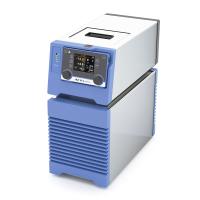
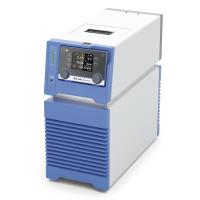
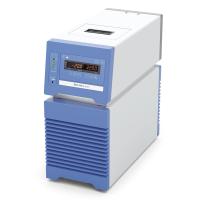
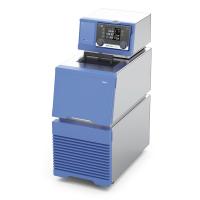
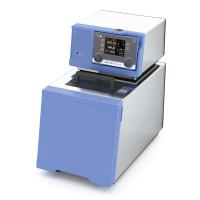
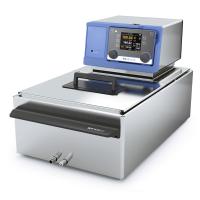
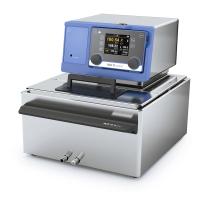
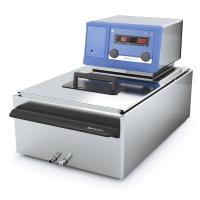
(l) The inner diameter of the sample tube of the eccentric falling ball viscometer is l61n, n, engraved with two annular measurement lines m1 and, a2, the distance between the upper engraved line m and the lower engraved line m2 is (50±1 )mn[or (l00±1)mn], m1, the height of the top of the measuring tube is 60mm, and the distance between m2 and the bottom is about 40mm. Each viscometer is equipped with a Super Constant Temperature Bath with circulating water supply to control the test temperature, as shown in the figure 1-1-32.
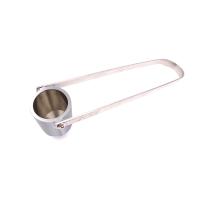
(2) Measuring ball No.1,2l boron glass lNo.3,4 nickel-iron alloy, No.5,6 stainless steel. (3) Stopwatch division value 0.2s.
(4) Tweezers.
test methods
(The 1L viscometer test tube, measuring ball, etc. are first washed several times with absolute ethanol or other organic solvents until they are clean, and then dried with a hair dryer.
(2) Inject the sample along the inner wall of the measuring tube so that the liquid level is about 15nm lower than the top of the measuring tube. Use tweezers to carefully into the sample tube, add a vent plug, tighten the sealing cap, and measure only after the air bubbles in the measuring solution disappear.
(3) Use a rubber tube to connect the glass outer cylinder to the Super Constant Temperature Bath and circulate water to control the temperature of the glass outer cylinder at ±0.1°C, and keep the constant temperature for at least 20 minutes.
(4) Drop the measuring ball back and forth in the sample tube for 2 to 3 times until it reaches the top of the sample tube, then rotate the glass outer cylinder 180°, and lock the viscometer with the positioning pin to prepare for measurement. (5) Start timing when the measuring ball falls to the engraved line m1, and stop timing when reaching the engraved line m2. The moment of starting and stopping the stopwatch should be the moment when the lower edge of the measuring ball is tangent to the engraved line. The time (s) required for the measuring ball to descend through the two scale lines represents the viscosity of the liquid.
The result shows
Measure twice in parallel, take the arithmetic mean value of the two measured values, and the difference between the two measured values should not be greater than 3% of the average value.
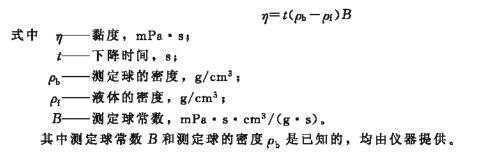
The measured seconds can be converted into absolute viscosity by the following formula: