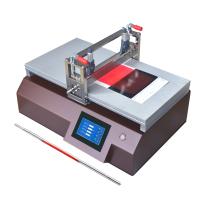
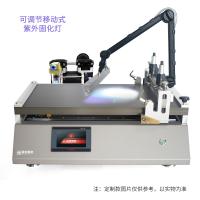
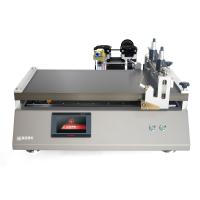
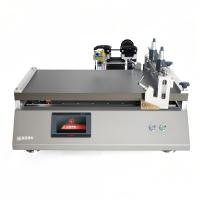
Summary: In this paper, the experimental application of coating viscous liquids on non-woven fabrics using the TBJ-X2-DJ6 scraper vacuum adsorption coating machine equipped with an automatic feeding system is introduced in the laboratory under laboratory conditions. Full dipping of nonwovens is critical for some applications, and this coating demand often requires precise control and efficient execution. This paper discusses in detail the selection basis, operation process and experimental application cases of the coating machine, which provides an important reference for relevant researchers.
Keyword: Laboratory film coating machine, non-woven fabric, viscous liquid, scraper coating, automatic feeding system
introduction
As a common engineering material, non-woven fabrics have a wide range of applications in medical, home, industrial and other fields. In some applications, a viscous liquid needs to be applied to the nonwoven fabric to achieve a specific function or performance. In this paper, we will focus on the experimental application of coating viscous liquids on non-woven fabrics using the TBJ-X2-DJ6 squeegee vacuum adsorption coating machine. The coater is equipped with an automatic dosing system that enables complete dipping of nonwovens, providing an efficient and precise solution for laboratory film coating work.
1. Selection of film coating machine
In the selection of laboratories, there are a few factors to consider:
Coating method: Since the liquid to be applied is a viscous liquid, a coating method that can be fully impregnated is required. Drawdown blade coating is a common and effective way to ensure that the liquid is adequately covered on the substrate.
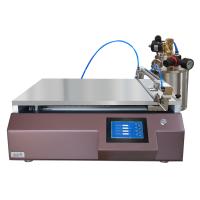
Automatic Feeding System: In order to improve the efficiency of the work and the accuracy of the application, it is important to choose a Film Applicator equipped with an automatic dosing system. The automatic dosing system allows for precise control and continuous supply of the coating liquid, reducing operator intervention and errors in the coating process.
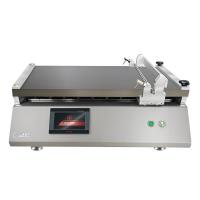
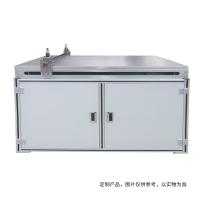
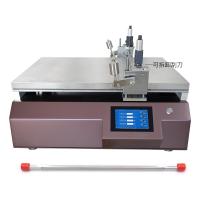
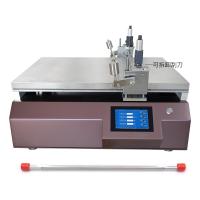
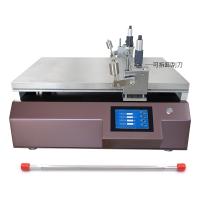
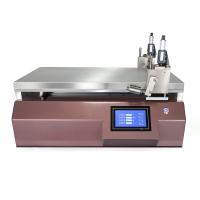
Based on the above considerations, we chose the TBJ-X2-DJ6 squeegee vacuum adsorption coating machine, which is equipped with an automatic feeding system, which is suitable for coating viscous liquids, and has stable coating effect and efficient operation performance.

2. Procedure
When performing laboratory coating work, you need to follow these steps:
1) Clean the working surface of the film coating machine to ensure that it is dust-free. Prepare the viscous liquid required for non-woven fabrics and coatings.
2)According to the experimental requirements, adjust the working parameters of the film coating machine, including coating speed, scraper pressure, etc. Start the automatic dosing system and set the dosing volume and speed of the coating liquid.
3)Place the non-woven fabric on the working surface of the film coater, activate the vacuum adsorption function, and ensure that the substrate can be flat and fixed on the table.Avoid air bubbles and uneven coating.
4)Start the Film Applicator so that the squeegee evenly coats the coating liquid on the non-woven fabric. During the coating process, the liquid will be continuously supplied by the automatic feeding system to ensure the continuity and stability of the coating process.
5)According to the nature of the coating liquid, the curing process is carried out to ensure the stability and durability of the adhesive film.
6)Check the quality of the substrate after coating to ensure that the coating liquid is evenly covered and free of defects and contamination. Store the coated substrate in a dry, dust-free environment to prevent contamination or damage.
3. Experimental application
TBJ-X2-DJ6 squeegee vacuum adsorption coating machine has a wide range of applications in laboratory coating work, especially suitable for the following fields:
Preparation of medical supplies: It can be used to prepare medical supplies, such as medical dressings, surgical clothing, etc., to provide high-quality non-woven products for the healthcare field.
Filter Material Preparation: It can be used to prepare filter materials, such as air filters, water treatment filter elements, etc., with good filtration performance and durability.
Preparation of packaging materials: It can be used to prepare various packaging materials, such as food packaging bags, pharmaceutical packaging materials, etc., to improve the freshness and moisture-proof performance of packaging.
Industrial Applications: Non-woven products for the preparation of industrial use, such as industrial cleaning cloths, automotive interior materials, etc., have good wear resistance and durability, which can meet the needs of different industries.
Household Goods Manufacturing: It can be used to make household items, such as carpets, curtains, wainscoting, etc., to provide a comfortable and beautiful decorative effect for the home environment.
4. Possible challenges and solutions
During the experiment, problems such as uneven coating and failure of the automatic feeding system may be encountered. To address these issues, the following solutions can be taken:
Uneven coating: Adjust the working parameters of the coating machine, such as coating speed, scraper pressure, etc., to ensure that the coating liquid can be evenly applied to the substrate. In addition, the concentration and viscosity of the coating liquid are checked to ensure that it is suitable for the coating process.
Automatic Feeding System Failure:Regularly check the working status of the automatic dosing system, clean the dosing pipes and valves, and ensure that the coating liquid can be continuously supplied. In addition, replace the vulnerable parts in the feeding system in time to ensure the normal operation of the system.
conclusion
TBJ-X2-DJ6 squeegee vacuum adsorption coating machine has important application value in laboratory coating work, especially suitable for coating viscous liquid on non-woven fabrics. The Film Applicator equipped with an automatic dosing system can achieve complete dipping of nonwovens, providing an efficient and precise solution for laboratory film coating work. This paper introduces the selection basis, operation process and experimental application cases of the coating machine, which is believed to have important reference value for relevant researchers in laboratory coating work, and is helpful to promote the development of research and application in related fields.