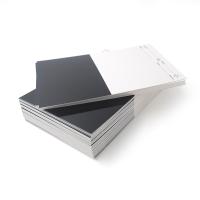
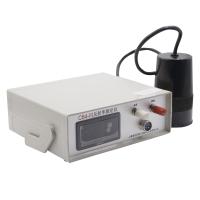
The hiding power of pigments is a crucial property in the painting and coatings industry. It is directly related to the quality and performance of the coating. In this article, we will delve into the optical nature of the opacity of pigments and introduce the effect of pigment particle size on opacity.
The optical nature of opacity
The hiding power of a pigment refers to its ability to reflect light. Its size is mainly determined by the refractive index of the pigment and the size of the pigment particles. Optically, the hiding power is caused by the difference in the refractive index between the pigment and the surrounding medium. When the refractive index of the pigment is equal to that of the binder, the coating exhibits transparent properties; When the refractive index of the pigment is greater than that of the binder, the coating has hiding power. The greater this difference, the stronger the hiding power of the paint.
When the paint is applied to the wall, the hiding power changes with the drying process. Before drying, the difference between the refractive index of the pigment and the water is small due to the presence of water, so the hiding power is low; With the volatilization of water after the formation of the coating film, the difference in refractive index between the pigment and the substrate increases, resulting in the enhancement of hiding power.

The relationship between pigment particle size and hiding power
Pigment particle size is also an important factor affecting the hiding power of paints. For fine pigment particles, there are more pigment interfaces per unit volume. Therefore, the smaller the pigment particle size, the greater the hiding power of the paint. However, there are limited ways to improve the hiding power of a paint simply by reducing the pigment particle size. For a particular wavelength of reflected light, the optimal size of the pigment particle size should be half of that wavelength. If the pigment particles are too fine, the light waves can only be diffracted rather than fully reflected, resulting in reduced hiding power of the paint.
The optimal particle size of the pigment can be calculated by the following formula:

where D is the particle size of the pigment in the paint, λ is the air wavelength, n1is the refractive index of the pigment, n2is the refractive index of the medium.
In summary, the hiding power of pigments is a complex optical phenomenon that is affected by a variety of factors. By understanding the refractive index of pigments, pigment particle size, and the drying process of coatings, we can better control the hiding power of coatings, thereby improving the quality and performance of coatings.