In the coating industry, accurate measurement of the thickness of a dry coating is essential to ensure coating quality. This article will discuss the technical details and criteria for dry coating thickness measurement using non-destructive measuring instruments with magnetic and electromagnetic probes.

Measurement Methods & Standards
a. Measuring equipment and standards
Dry coating thickness on steel substrates is often measured using a magnetic Thickness Gauge, while non-magnetic operating equipment is used for non-ferrous metal substrates. All calibration and measurement of coating Thickness Gauges should be performed in accordance with ASTM D1186 or ASTM D1400.
b. Measurements in multi-layer coating systems
For multi-layer coating systems, especially if each layer has a different composition, determining the thickness of each layer is an important checkpoint. For example, if an inorganic zinc primer/epoxy interlayer/polyurethane topcoat system is prescribed, each layer should be measured to ensure proper thickness. When measuring a multi-layer system with a non-destructive Thickness Gauge, the average thickness of the first layer must be determined before the second coat is applied. The reading after the second layer is applied is obviously the total thickness of the two coats, and the exact thickness of the second layer can only be obtained by subtracting the first layer reading.
c. Recommendations for handling uneven thicknesses
Where possible, it is advisable to provide an indication of the thickness of the coating in areas with thinner or thicker thickness so that the applicator of the coating can make appropriate repairs. Possible methods include brushing with a light coating, a compatible brush, marker, chalk, or other materials that are easy to remove. Crayons or incompatible spray paints are not recommended.
d. Measuring points and standards
Readings of coating thickness are intended to provide reasonable assurance that the specified thickness will be achieved. However, it is not possible to measure every square inch of surface. Both ASTM D1186 and D1400 specify that five separate point measurements should be taken for each 93-square-meter (100-square-foot) area when using a coating thickness meter. Each measurement point consists of taking the average of three measurement readings within a circle with a diameter of 12.7 mm (1/2 inch).
e. Non-destructive dry coating thickness measuring instrument
There are three main types of NDT Thickness Gauges: magnetic tensile gauges (often referred to as "banana-type Thickness Gauges"), electromagnetic transducers, and eddy current probes. Destructive Dry Coating Thickness Instrumentation is discussed separately at the end of the article.
(1) Magnetic tensile meter
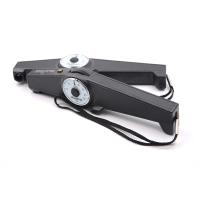
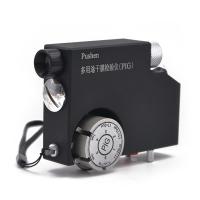
A magnetic tensile force meter usually consists of a lever passed through a dial with a coil spring in the center. One end of the spring is connected to the lever and the other end is connected to the dial.The lever contains a permanent magnet on one side and a balance weight on the other.The spring tension overcomes the attraction of the magnet to the substrate and lifts the magnet away from the surface of the coating. Spring tension calibration allows the point at which the magnet is disconnected from the surface corresponds to the distance of the magnet from the surface.This distance is converted to mil (or micron). The reading represents the gap between the magnet and the substrate, i.e., the coating thickness. However, this reading can be affected by cavitation, rust, embedded contaminants, rolled skins, etc. Therefore, a thorough visual inspection should be included in the work process to ensure that the coating is applied on a clean surface and is not contaminated during the drying process.

(2) Electromagnetic probe
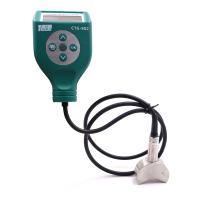
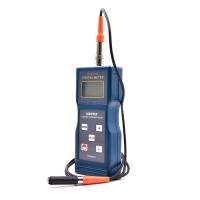
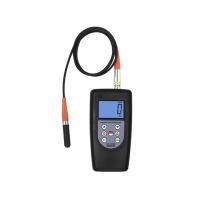
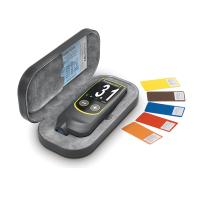
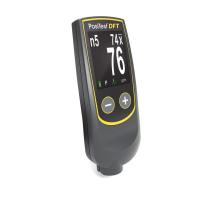
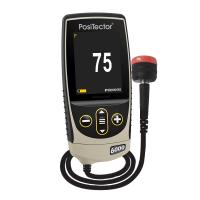
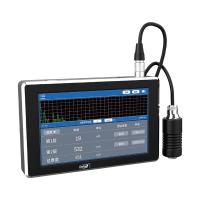
Electromagnetic probes for iron-based surfaces are described in ASTM D1186. These probes are also calibrated prior to use by the non-magnetic (plastic) gasket method.Most coating Thickness Gauges used in the corrosion control industry fall into this category. They are highly accurate (±3 to 5% of reading, depending on the manufacturer), provide a digital display of coating thickness, and eliminate user interpretation of analog scales. These instruments are typically equipped with a microprocessor capable of storing the measured data and performing statistical evaluations of the stored data, including the mean, standard deviation, highest and lowest readings, and the total readings obtained. This data can often be downloaded to a computer and/or printer, which can save a lot of time associated with manual documentation, as well as averaging and determining thickness ranges.Because these instruments are electronic devices, they are more sophisticated than mechanical tensile meters and are also more susceptible to damage in the field. In addition, these instruments are more sensitive to rough surfaces.

(3) Eddy current probe
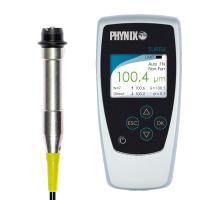
The eddy current probe described in ASTM D1400 measures the thickness of a non-conductive coating applied to a non-ferrous metal-based substrate.The probe is excited by an alternating magnetic field within the metal and the degree of these changes is measured by modifying the electrical properties of the probe coil. The extent of these changes is indicated by the thickness of the coating on the gauge.Eddy current probe instruments are calibrated in a similar manner to electromagnetic probe instruments, using a plastic gasket on a non-ferrous metal substrate. Some instruments combine electromagnetic and eddy current probe functions in one unit.

f. Inspector's Documentation
The inspector should record the date and location of the measurement, the type of coating measured (primer, intermediate coat, topcoat), the type of product and instrument used, the calibration method, and whether the inspection area meets the specifications.
*Destructive coating Thickness Gauges
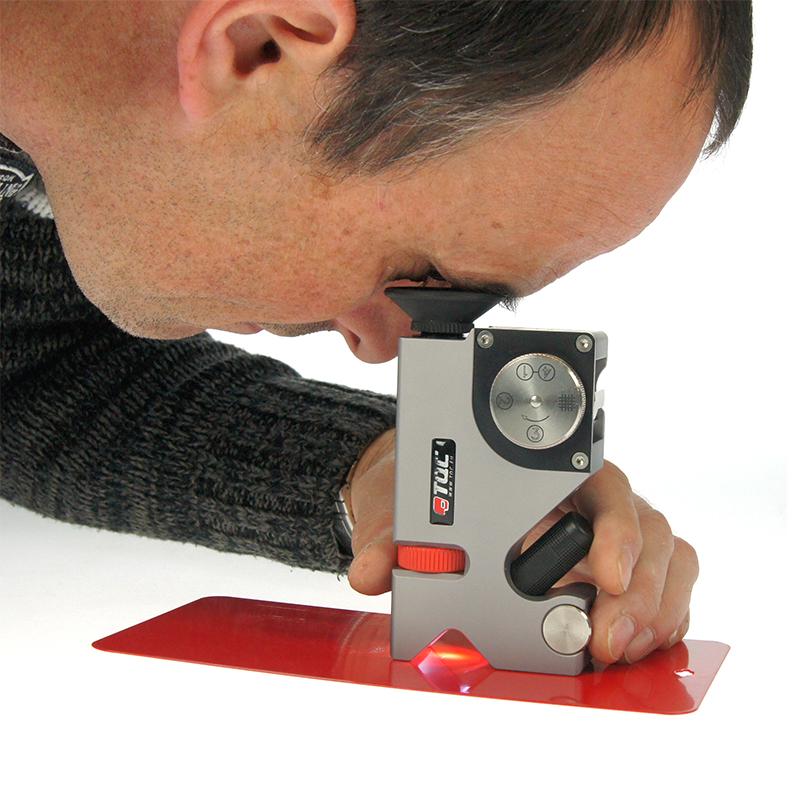
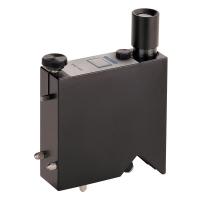
Destructive thickness Testers measure the thickness of almost any coating applied to ferrous and non-ferrous metals, as well as other non-ferrous metal surfaces, including masonry, plastic, and wood. A 50x microscope is generally used to observe coated incisions made by the precision cutting tip provided by the instrument. The principle of destructive Thickness Gauges is based on the basic trigonometry. By cutting the coating at a known angle, and looking perpendicular to the incision, the actual coating thickness can be determined by measuring the width of the incision by a scale in the microscope glasses. This type of instrument can be used to measure the thickness of the underlying coating in a multi-layer system if the layers alternate or the color is different, and eliminates the shortcomings of many magnetic instruments caused by magnetic fields, proximity to edges, irregular surfaces, substrates, and surface profiles. If the coating is not too brittle or too elastic to make a smooth cut, the instrument can be used to measure coating thicknesses up to 1.27 mm (50 mils). However, there are some limitations to destructive Thickness Gauges. The use of this method can appear tedious and slow, and will result in cuts in the coating system that must be repaired. On large field structures with uneven coating thicknesses, the use of this gauge may not be practical. Of course, destructive Thickness Gauges are often used as the final thickness determination tool for a specific selected location.