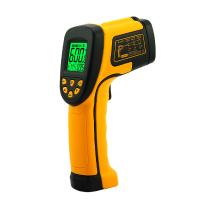
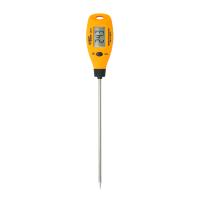
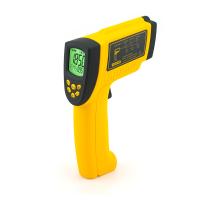
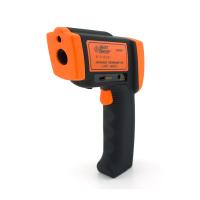
How an infrared thermometer works
Infrared thermometers use infrared radiation emitted by an object to measure its surface temperature, calculating the target temperature based on the wavelength and intensity of the radiant energy. It is mainly divided into monochrome thermometer and two-color thermometer, which are suitable for different measurement needs and surface characteristics of the measured object.
Infrared thermometers measure the temperature of an object by receiving infrared radiation emitted from its surface. Any temperature above absolute zero emits infrared rays, and its energy is closely related to the surface temperature. A thermometer uses an optical system to focus the infrared radiation of a target object onto an infrared Detector, which converts this radiation into an electrical signal. The signal processing part amplifies and processes the electrical signal, and calculates the surface temperature of the target through calibration and algorithms. Different types of infrared thermometers, such as monochromatic thermometers and bichromatic thermometers, determine temperature by measuring the amount or ratio of radiation in different wavelength bands, ensuring suitability for different measurement needs and environmental conditions.
Temperature range and application scenarios
When choosing, make sure that the measuring range of the thermometer covers the target temperature range. For example, portable infrared thermometers typically cover a temperature range of 300°C to 3000°C, and the specific application requirements determine the specific range of the equipment chosen.
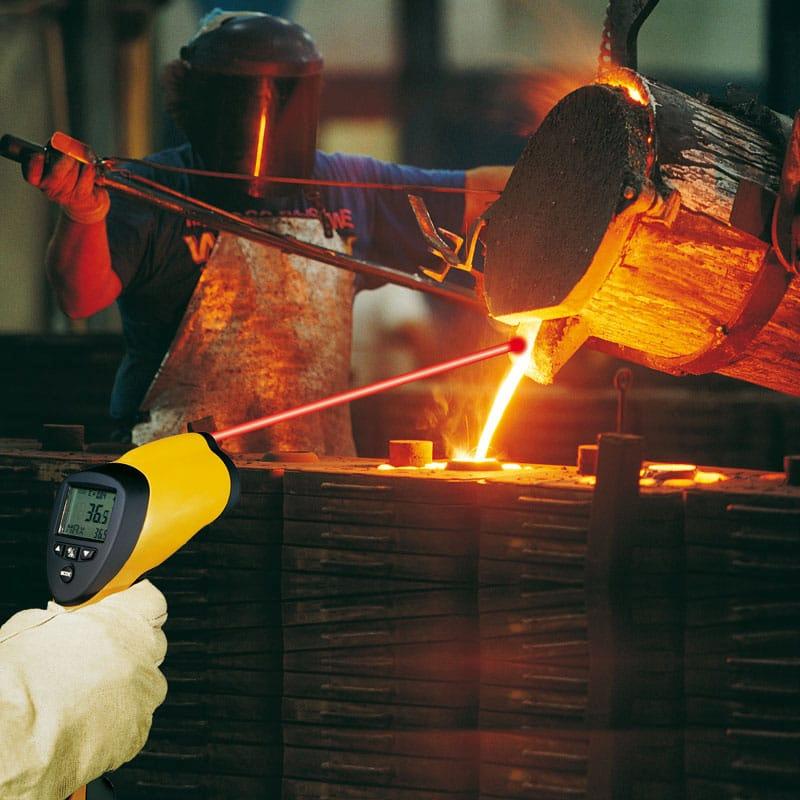
Infrared thermometers typically have a wide range of temperature measurements, from low to high temperatures. Portable infrared thermometers are typically suitable for lower temperature ranges, such as tens to hundreds of degrees Celsius, and are suitable for food safety testing, HVAC system maintenance, and laboratory applications. The high-temperature infrared thermometer can measure temperatures up to thousands of degrees Celsius, and is mainly used in high-temperature industrial scenarios such as metallurgy, glass manufacturing, and power equipment, such as temperature monitoring in furnaces and temperature measurement in the metal melting process. Choosing the right infrared thermometer depends on whether its temperature range covers the needs of the specific application.
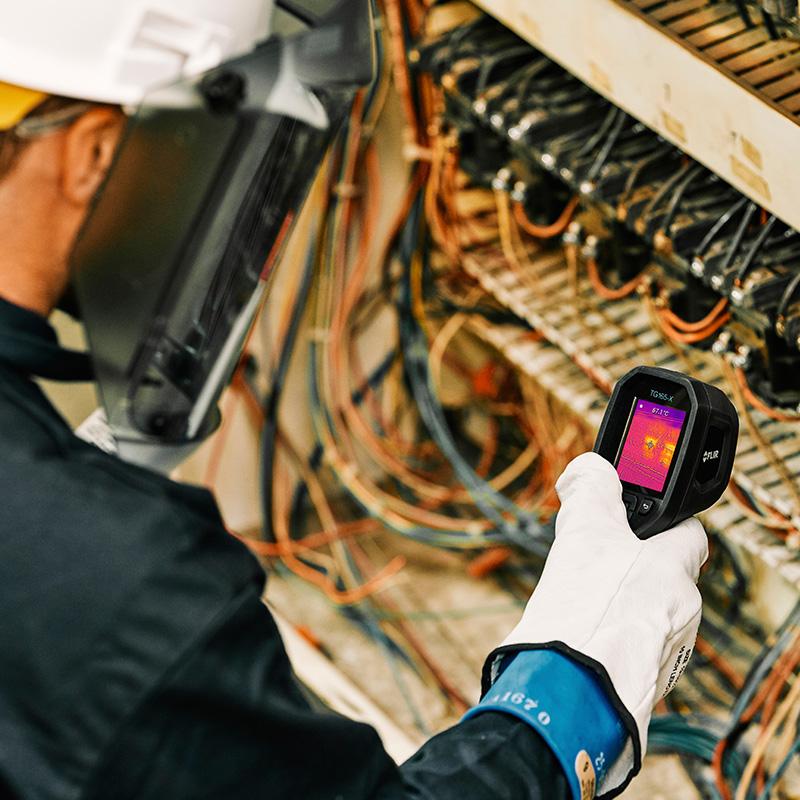
Infrared thermometers typically have a temperature range of -18°C to +600°C, and some models can even measure hot objects up to 3000°C. This wide range of temperature measurement makes infrared thermometers useful in many applications. For example, it is used in industrial production to monitor the operating temperature of machinery and equipment, to detect heat in circuit boards and electronic components, to detect body temperature in the medical field, to detect temperature control in food processing and storage processes in the food industry, and to detect heat distribution on the surface of buildings in construction engineering. Its non-contact nature and fast response make infrared thermometers a commonly used tool in many industries.

Optical resolution and field size
Optical resolution (D:S.)) determines the measurement accuracy of the thermometer at long distances or small targets, and usually requires that the diameter of the target accounts for at least 50% of the field of view of the thermometer. The size of the field of view affects the validity of the measurement and is particularly important for monochrome thermometers.
The optical resolution of an infrared thermometer (usually denoted as D:S) is the ratio of the diameter of the thermometer probe to the target object. The optical resolution determines the smallest target size that the thermometer can accurately measure. In general, a higher optical resolution means that the thermometer can measure smaller targets because the Detector is able to distinguish between different parts of the target object more accurately.
The field of view size refers to the size of the area that the infrared thermometer is able to measure at the same time. For monochrome thermometers, the measured target must be filled with the measurement field of view, otherwise the measurement results will be incorrect. Bichromatic thermometers, on the other hand, are exempt from this limitation, as their measurements are based on the ratio of radiant energy over two different wavelength bands.
Precautions for use
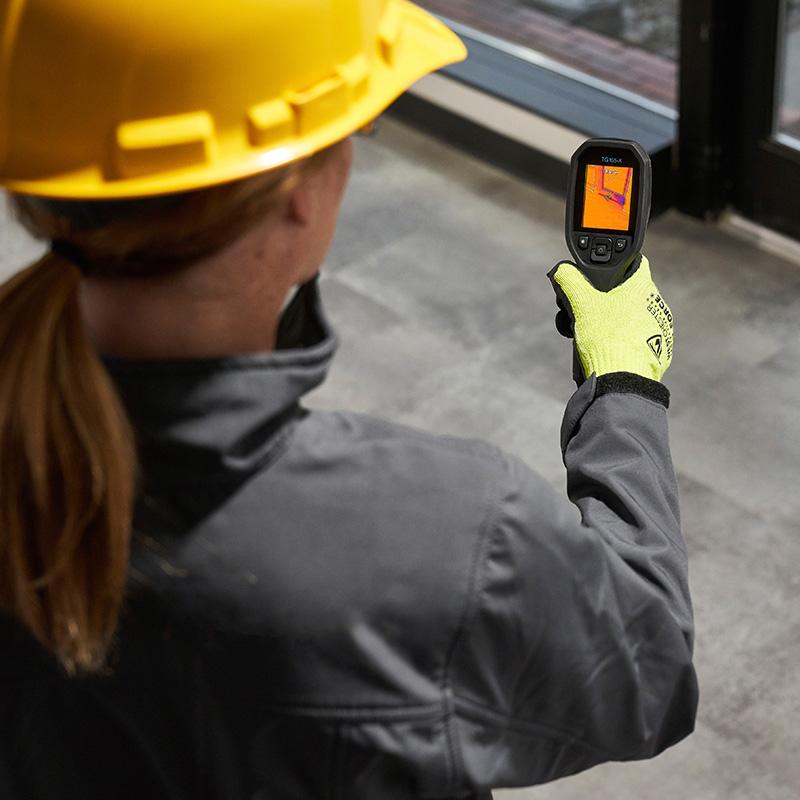
Ensure the stability and reliability of the thermometer in the actual environment, and avoid the influence of direct sunlight or other sources of strong thermal radiation. Pay attention to the cleaning of the optical path to ensure that there are no water droplets or dust affecting the measurement accuracy. For the measurement of metal surfaces or luminous objects, attention should be paid to the effect of surface reflection and possible emissivity correction.The emissivity should be corrected according to the surface characteristics of the measured object to ensure that the measurement results are consistent with the actual temperature. For locations with large changes in ambient temperature, temperature compensation needs to be considered to ensure the accuracy and stability of the measurement.
In summary, choosing the right infrared thermometer requires a number of factors, including temperature range, optical performance, environmental adaptability, and the needs of a particular application. Careful evaluation of these factors can help the operator ensure the accuracy and reliability of the measurement.