Tensile testing of textiles is the key to evaluating their core mechanical properties, as the textile quality is thin and light, and the fibers are easy to slip, and the test effect depends on the accuracy of the testing machine and the adaptability of the fixture. This paper combines characteristics, standards and practical operations, and explains the key points of selection and fixture matching techniques in detail to help avoid errors and accurate detection.
Key points of selection
Core requirements: low force value, large deformation, precise speed control, abandoning the misunderstanding of "strong value first", and selecting around four dimensions.
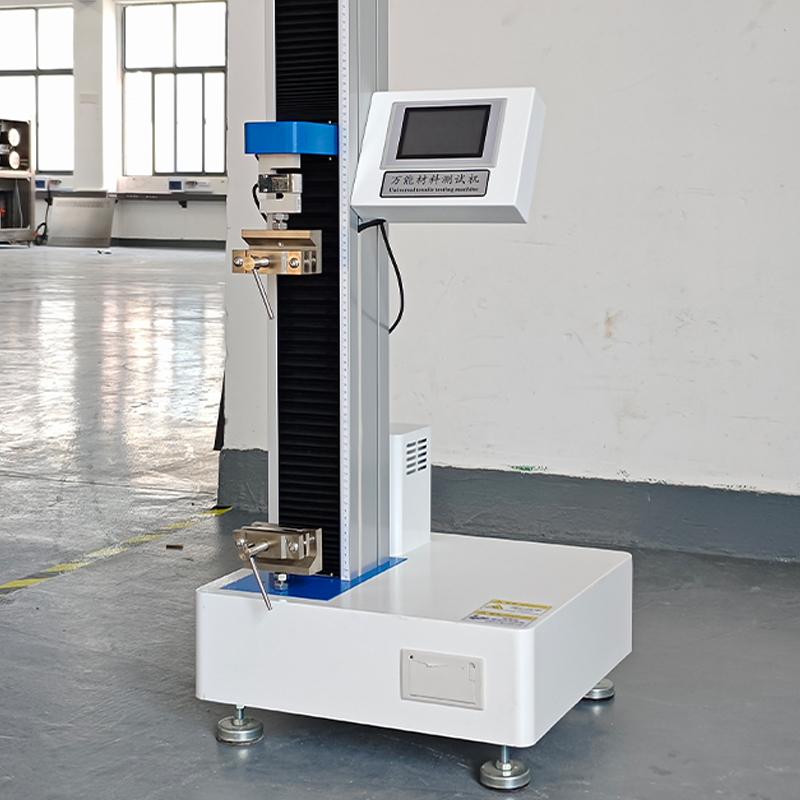
1. Model selection - priority electronic universal tensile testing machine (servo drive, high precision, stable loading), suitable for all kinds of textiles; No hydraulic model required (redundant and poor stability); Choose a small desktop of 0.5~50kN for regular scenarios, which is convenient and space-saving.
2. Range and accuracy - The range is calculated according to the test items, and 20%~30% redundancy is reserved (fabric 5~20kN, yarn 0.5~5kN, light and light fabric 1~10kN); In line with industry standards, level 1 accuracy, force value and deformation accuracy are ≤± 0.5%.
3. Speed regulation requirements - wide speed regulation range, accurate speed control (≤±0.5%), fabric 10~100mm/min, yarn 5~50mm/min, tear test 100~300mm/min, adapt to different project needs.
Fixture matching skills
Core principles: material adaptation, uniform force, anti-slip shift, no damage to the specimen, combined with textile types to accurately match.
1. Match by type
(1) Yarn/silk thread: winding type or wedge-shaped fixture (anti-slip, firm holding, control the blessing force to prevent damage); (2) Fabric/fabric: flat clamp + anti-slip padding (anti-slip shift, anti-crush); (3) Non-woven fabric/light fabric: pneumatic flat clamp (accurate force control to avoid edge damage).
2. Precautions for use
The clamping width is 10~20mm wider than the specimen; the specimen is placed in the center to prevent eccentricity; Regularly inspect and replace worn parts, clean up fiber residues, and ensure test stability.
Selection and matching supplementary points
1. The software must have special functions for textiles, supporting automatic data calculation, curve display and traceability to improve efficiency; The equipment needs to have overload and limit protection.
2. Combined with test project optimization: the tear test is equipped with a special tear fixture, and the flexible test selects a manual dynamic loading model to improve accuracy.
In summary, textile tensile testing needs to be scientifically adapted to testing machines and fixtures, focusing on the core of selection based on material characteristics, and matching the category with fixtures to ensure reliable testing data and support quality control and research and development.