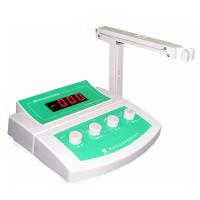
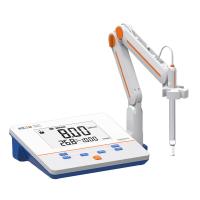
A conductivity Tester is a special device used to measure the conductivity in a solution, which indirectly reflects the concentration and conductive properties of ions in a solution. It ensures the accuracy and stability of measurement results by cleaning and maintaining the electrodes, using standard solutions for regular calibration, and using AC power to reduce polarization effects.
Principle and classification
The principle of measuring conductivity by a conductivity Tester is based on the conductivity effect of ions in solution on an electric current. Unlike measuring resistance, conductivity is the reciprocal of resistance. During the measurement process, the current in the solution causes a redox reaction on the electrode surface, which causes a "polarization" phenomenon, which in turn affects the measurement accuracy.In order to mitigate polarization effects, AC power is often used, usually using a frequency of 1 kHz or 50 Hz. The electrode material is usually a precious metal such as platinum and coated with platinum black to increase the contact area between the electrode and the solution and reduce the effect of polarization.
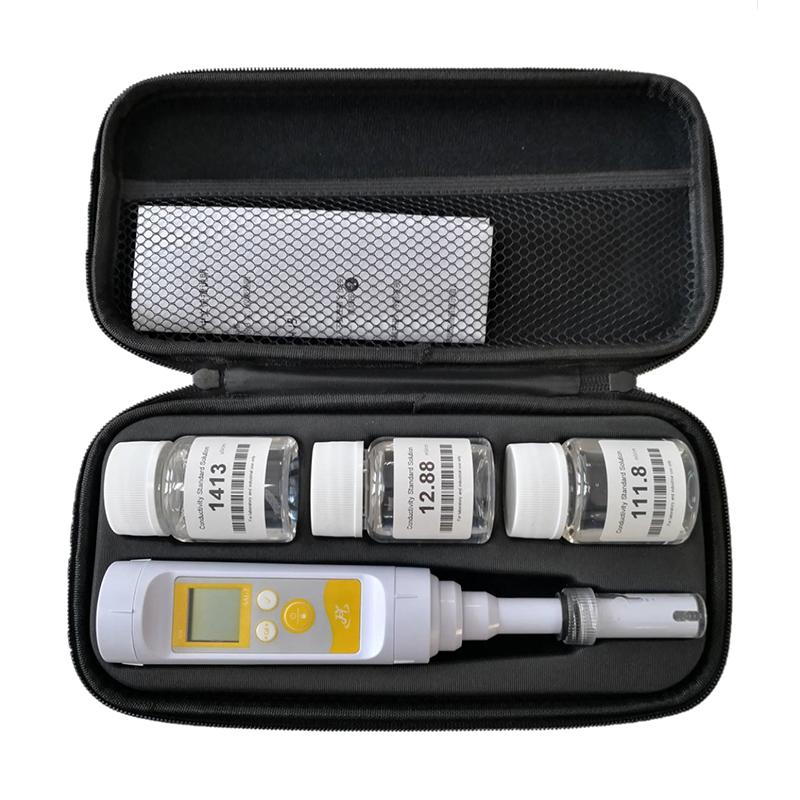
According to the working principle and structure, conductivity Testers are mainly divided into the following three types:
(1) Bridge balanced conductivity meter
Conductivity is measured with a Wheatstone bridge that balances the bridge by adjusting the standard resistance of the proportional arm for accurate measurements. This type is suitable for experimental and industrial applications where high precision is required.
(2) Direct-reading conductivity meter
The conductivity is measured by the AC voltage and the conductivity cell in the series circuit, and the DC signal is output to drive the display, and the conductivity value is directly read. The simple structure of this instrument makes it suitable for real-time monitoring and rapid response needs.
(3) Operational amplification conductivity meter
The op amp is used to process the input signal to correct the nonlinearity errors in the straight-reading conductivity meter and improve the measurement accuracy. It has a high open-loop magnification and common-mode rejection ratio, making it suitable for applications that require high accuracy and stability.
Fields of application
In water quality monitoring, conductivity Testers help evaluate the degree of water pollution and the effectiveness of treatment by measuring the concentration of ions in drinking water, industrial wastewater, and natural water bodies. In terms of chemical reaction monitoring, it can monitor changes in the conductivity of a solution to determine the progress and endpoints of chemical reactions, such as neutralization reactions or redox reactions. meantimeConductivity Testers are widely used in pharmaceutical and laboratory applications, especially in the preparation of ion-free water and other chemical reagents, ensuring that products meet stringent quality standards. In conductivity titration, it can be used for quantitative analysis using conductivity changes, such as determining the concentration of ions in a solution or assessing the content of a reactive substance. In real lifeFor example, conductivity Testers can be used to monitor the effects of acid rain on soils. By measuring the changes in electrical conductivity in rainwater, it is possible to assess the extent to which acid rain affects the concentration of ions in the soil, helping to protect the environment and crop health.
How to choose
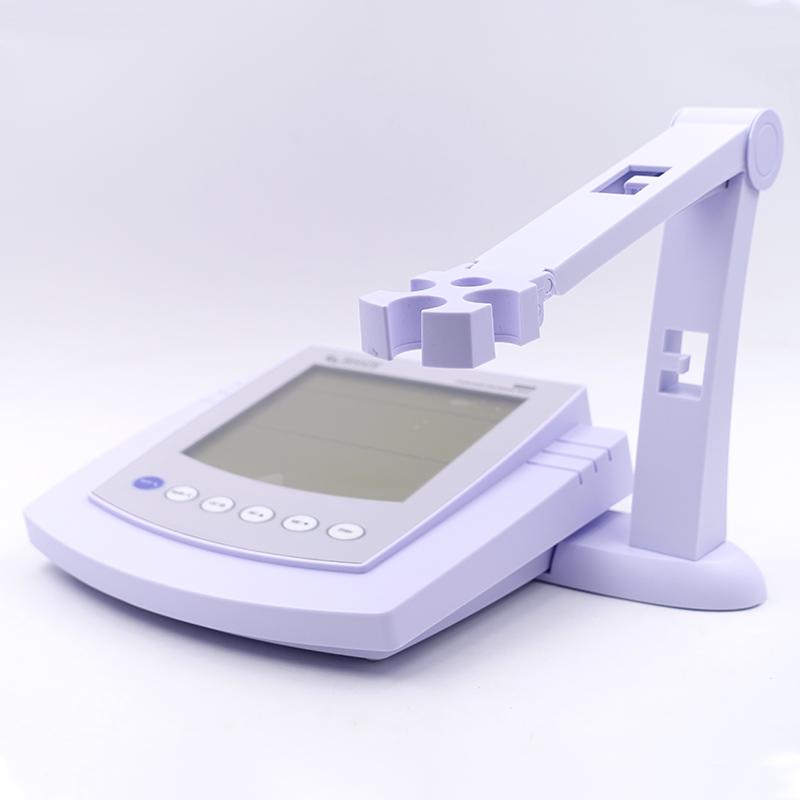
When selecting a conductivity Tester, consider whether its measurement accuracy and range can meet the needs of your specific application, such as the ability to measure low to high conductivity solutions. At the same time, the durability and stability of the instrument are also crucial, especially in long-term use and complex environments, choosing reliable and easy-to-maintain products can improve work efficiency and reduce costs.
Precautions
In order to ensure the accuracy and reliability of the conductivity Tester, the operator needs to pay attention to keeping the electrode clean, avoiding the influence of dirt and chemical residues on the measurement results, regularly checking the electrode wear and performing maintenance; Calibration is performed regularly with standard solutions to ensure accuracy and consistency of measurement results; An AC power supply is used to reduce polarization effects, while attention is paid to the frequency and voltage settings used by the electrodes to minimize the potential impact of polarization on measurement accuracy.