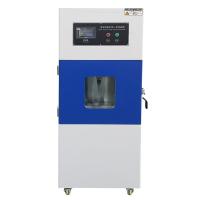
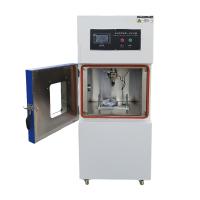
The acupuncture test has important application value in power battery fault diagnosis, mainly focusing on evaluating the integrity and safety performance of the battery housing, so as to identify potential battery faults or safety hazards. The following is the application of acupuncture test in power battery fault diagnosis and its significance.
Application Scenarios and Significance
Evaluate the puncture resistance of the battery housing
By using a standardized, sharp needle to apply a certain amount of force to pierce the battery housing, the housing is evaluated in the event of accidental puncture or injury. The battery housing can be inspected for susceptibility to damage from sharp external objects, which can lead to electrolyte leakage or internal short circuits. This is of great significance for preventing safety accidents that may occur during the use of the battery.
Identify the risk of short circuits inside the battery
When performing a needle prick test, if there is electrolyte leakage or significant deformation on the surface of the battery after the needle is punctured, it may indicate that the internal structure has been damaged. Early detection of structural defects or damage that could lead to internal short circuits can help manufacturers and users take appropriate repair or replacement measures to prevent battery failures from spreading or causing losses.
Quality control and safety certifications
Acupuncture tests are usually carried out in accordance with international standards such as UN38.3 to ensure that the test process and evaluation results are internationally applicable and comparable.As an important part of the quality control of power battery production, the acupuncture test can verify whether the battery shell material and manufacturing process meet the design requirements to ensure that the quality and safety of the product meet the standards.
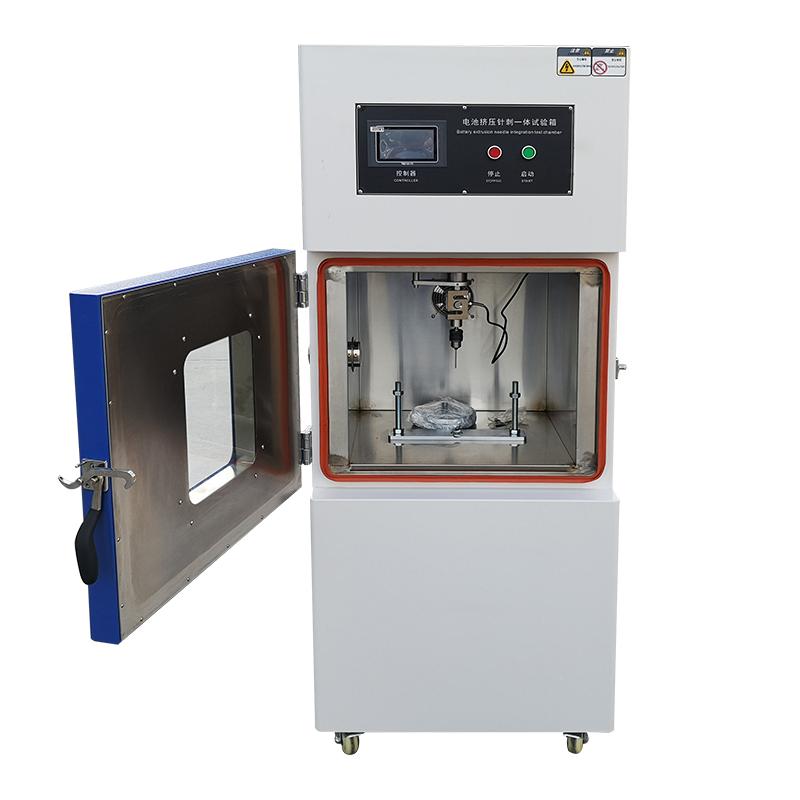
Implementation steps and considerations
1. Select the appropriate test equipment and needles, and ensure that the needles and test equipment that meet the requirements of the standard are used to ensure the accuracy and repeatability of the test.
2. Control the test parameters, including the application force, speed and test position, etc., to ensure the reliability and comparability of the test results.
3. Record and evaluate the test results, record the mechanical parameters and surface changes during puncture, such as electrolyte leakage, shell deformation, etc., for comprehensive evaluation and classification.
4. Maintain test equipment and standardization, regularly maintain and calibrate test equipment to ensure that the test process meets the standardization requirements to ensure the accuracy and reliability of test results.
epilogue
As an important tool in the fault diagnosis of power batteries, the acupuncture test can effectively evaluate the puncture resistance and safety performance of the battery shell, help manufacturers and users find and solve potential safety hazards as soon as possible, and ensure the stability and safety of the battery during use. With the continuous advancement of battery technology and the expansion of application fields, acupuncture testing will continue to play an important role in the quality control and safety certification of power batteries.