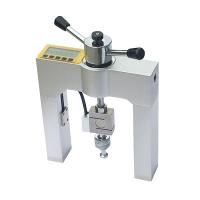
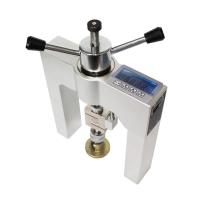
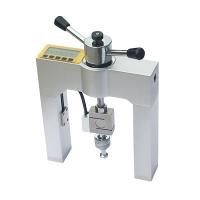
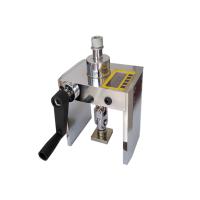
The formula and representation of bond strength can vary according to different applications and test methods, and here are several common formulas and representations for bond strength.
Tensile bond strength
Tensile bond strength is usually expressed as the tensile force per unit area and can be calculated using the following formula:
Tensile bond strength = maximum tensile force in contact area.
Representation: Usually in megapascal (MPa) or Newtons per square millimeter (N/mm²).
Shear bond strength
The shear bond strength is expressed as the force on the shear surface and is calculated as follows:
Shear bond strength = maximum shear force in the contact area
Representation: Measured in megapascals (MPa) or Newtons per square millimeter (N/mm²).
Crimp bond strength
Crimp bond strength is expressed as pressure per unit length (e.g., centimeters or millimeters) and is calculated as follows:
Crimp bond strength = maximum pressure of contact length
Expression: Measured in megapascals per centimeter (MPa/cm) or Newtons per millimeter (N/mm).
Peel bond strength
Peel bond strength is expressed as the peel force per unit length (e.g., centimeters or millimeters) and is calculated as follows:
Peel Bond Strength = Maximum Peel Force of Contact Length
Expression: Measured in megapascals per centimeter (MPa/cm) or Newtons per millimeter (N/mm).
summary
These formulas and representations can be adapted and adapted to specific experimental conditions and the specifications of the test equipment. In practice, bond strength is usually measured taking into account factors such as the contact area or length, the type of stress (tensile, shear, crimping, etc.), the nature of the material (hardness, elasticity, etc.).