Surface roughness refers to the irregularity and undulation of the microscopic morphology of the surface, which has an important impact on the functional properties and appearance quality of the material. In order to accurately assess and control the roughness of surfaces, scientists and engineers have developed a variety of measurement methods, each with its own unique principles and scope of application. This article will take a closer look at several commonly used surface roughness measurement methods, how they work, their advantages and disadvantages, and their application areas.
Optical methods
Optical methods use the interference, scattering, or reflection of light to measure the microscopic topography of a surface, which is non-contact, fast, and highly accurate.
Law of Interference
Principle: Using the interference phenomenon of light, the surface height difference is inferred by measuring the spacing or phase change of the interference fringes.
Advantages: Suitable for roughness measurement of smooth surfaces and transparent materials with sub-nanometer resolution.
Disadvantages: Irregular surfaces with large changes in surface topography may be less accurate.
Diffraction method
Principle: Using the diffraction phenomenon of light, the microstructure of the surface is determined by analyzing the change of the diffraction pattern.
Advantages: Advantages for the measurement of complex shapes and inhomogeneous surfaces.
Disadvantages: Requires complex data processing and analysis, and has a relatively narrow scope of application.
Mechanical methods
Mechanical methods use a mechanical probe or sensor to directly contact a surface to measure the vertical displacement or surface profile of a surface.
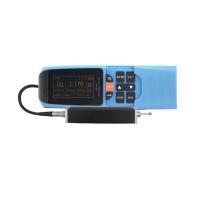
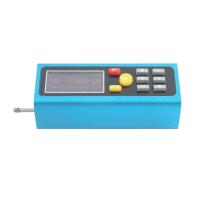
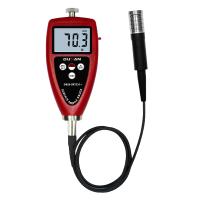
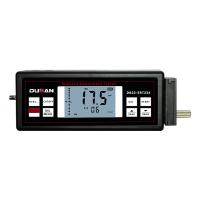
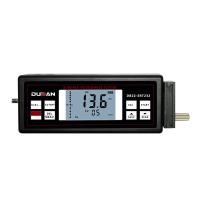
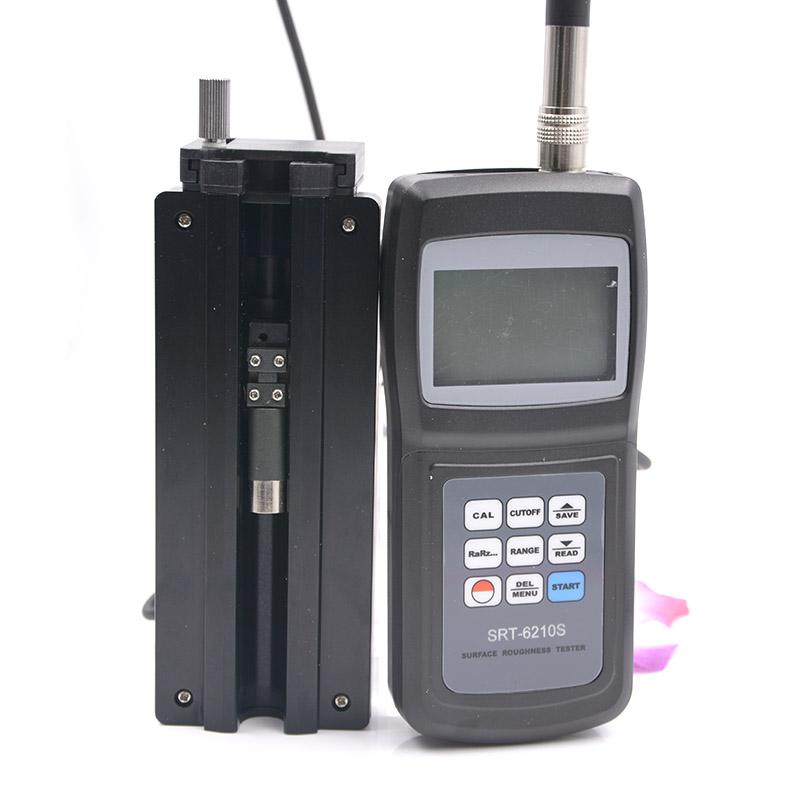
Surface roughness meter
Principle: By moving the mechanical probe on the surface, the motion path and displacement of the probe are recorded, and the undulation and height difference of the surface are inferred.
Advantages: Suitable for various materials and shapes of surfaces, high precision.
Disadvantages: Contact measurement is required, which may cause minor damage to the surface of some materials.
Laser scanners
Principle: A laser beam is used to scan a surface, and the height change of the surface is calculated by measuring the time delay or phase change of the reflected light.
Advantage: Non-contact measurement, suitable for complex shapes and large surfaces.
Disadvantages: Affected by surface reflectivity and beam scanning angle, the complexity of data processing needs to be considered.
Atomic Force Microscopy (AFM)
Atomic force microscopy is a high-resolution, non-contact surface measurement technique suitable for surface roughness measurement at the nanoscale.
Principle: The topography and height characteristics of the surface are measured by using a small force to act on the interaction between the scanning probe and the surface.
Advantages: The ability to measure surface roughness at the sub-nanometer level is of great significance for the study of nanomaterials and nanostructures.
Disadvantages: Complex operation, need for precise control and high equipment costs.
Fields of application
The above surface roughness measurement methods have a wide range of applications in industrial manufacturing, materials science, biomedicine, and environmental science:
Industrial manufacturing, optimize the processing technology, improve the surface quality and functional performance of products.
Materials science, which studies the structure and properties of material surfaces and guides the design and development of new materials.
In biomedicine, surface roughness has an important impact on the biocompatibility and bioactivity of biomaterials.
Environmental science, which evaluates the pollution and adhesion behavior of various materials and surfaces in the environment.
epilogue
Choosing the right surface roughness measurement method depends on the specific application requirements, surface properties, and measurement accuracy and cost considerations. With the continuous advancement of technology, the range of applications and accuracy of various measurement methods is constantly expanding, providing important technical support for more accurate surface quality control and material performance optimization.