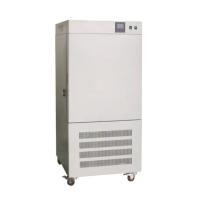
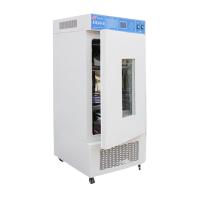
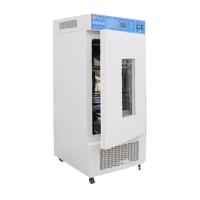
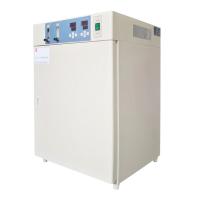
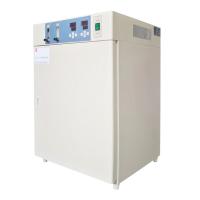
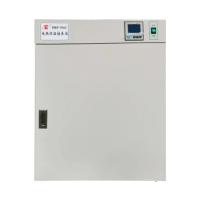
Incubators are indispensable equipment in laboratories and are widely used in microbial, cell and tissue culture, as well as environmental control tests. There are many types, including electric heating Incubators, carbon dioxide Incubators, shaking Incubators and biolight Incubators, each of which has its own unique structural principle and scope of application. Choosing the right Incubator not only improves the accuracy and reliability of your experiments, but also meets the needs of your specific experiment. In this article, we will discuss in depth the working principles, technical indicators, and selection methods of several common Incubators to help researchers make better choices in a variety of experimental environments.
1. Electric Incubator
1. Use
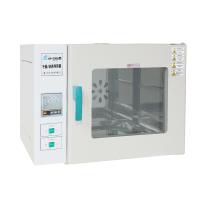
Electrically heated Incubators are mainly used for bacterial and cell culture, seed culture, and other constant temperature tests.
2. Basic principles
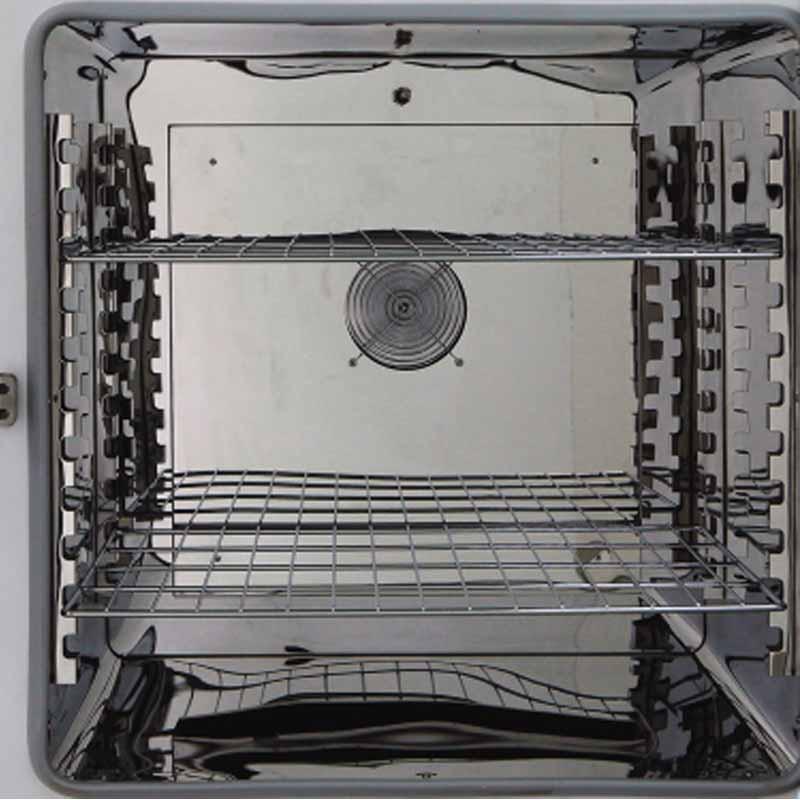
Electrically heated Incubators provide heat through an electric heater that uses natural or forced convection to maintain a constant temperature inside the chamber. Typical electrically heated Incubators, such as the PW/10-002 model, have an outer shell made of thin steel plates, an aluminum liner with ultra-fine glass fibers between the inner and outer layers to keep them warm. Its temperature control system uses transistor switching circuits and mercury conductive meters to control the temperature.
3. How to operate
The operation method includes steps such as installing the conductive meter, adjusting the temperature setpoint, inserting the thermometer, closing the power supply, and heating switch.Different brands and models of electric Incubators have differences in temperature control range, fluctuation, uniformity, etc., and should be selected according to specific needs.
2. Carbon dioxide Incubator
1. Uses
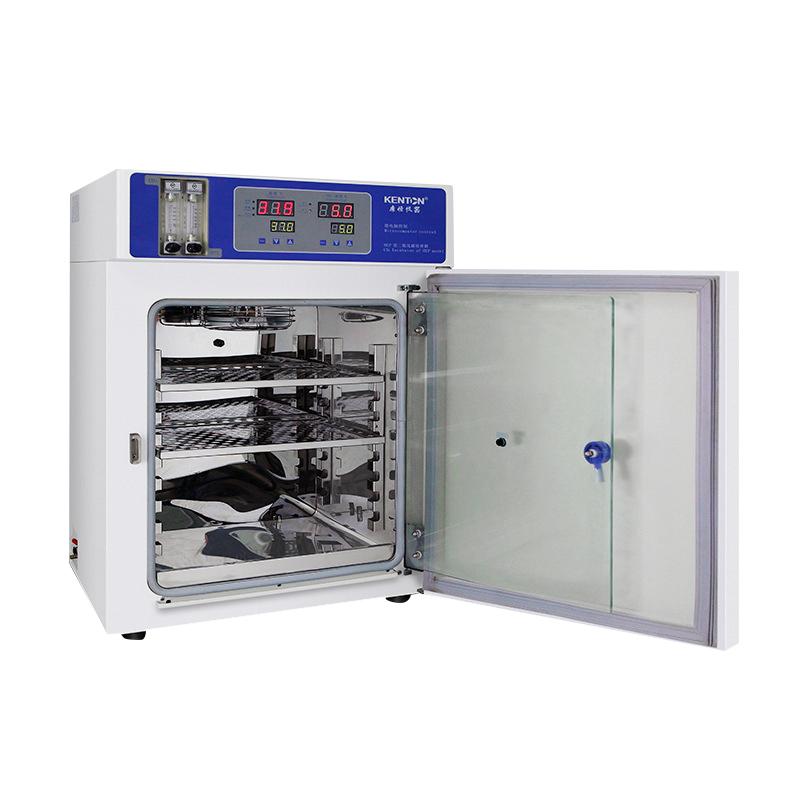
CO2 Incubators are mainly used for biological cell culture, especially for cells that have specific requirements for CO2 concentration.
2. Structural principle
The CO2 Incubator is equipped with automatic and continuous control of temperature and CO2 concentration. Its structure includes air jackets, air ducts, blowers, heaters, etc., and achieves uniform distribution of temperature and CO2 concentration through air circulation. The CO2 concentration controller detects the CO2 concentration using the difference in the thermal conductivity of the gas and regulates the CO2 supply through a solenoid valve.
3. Shaking Incubator
1. Use
Shaking Incubators are used for cell culture, enzymatic reactions, mixing and dissolving solids and liquids, etc. The temperature in the chamber is constant and uniform, and the specimen holder oscillates horizontally.
2. Structural principle
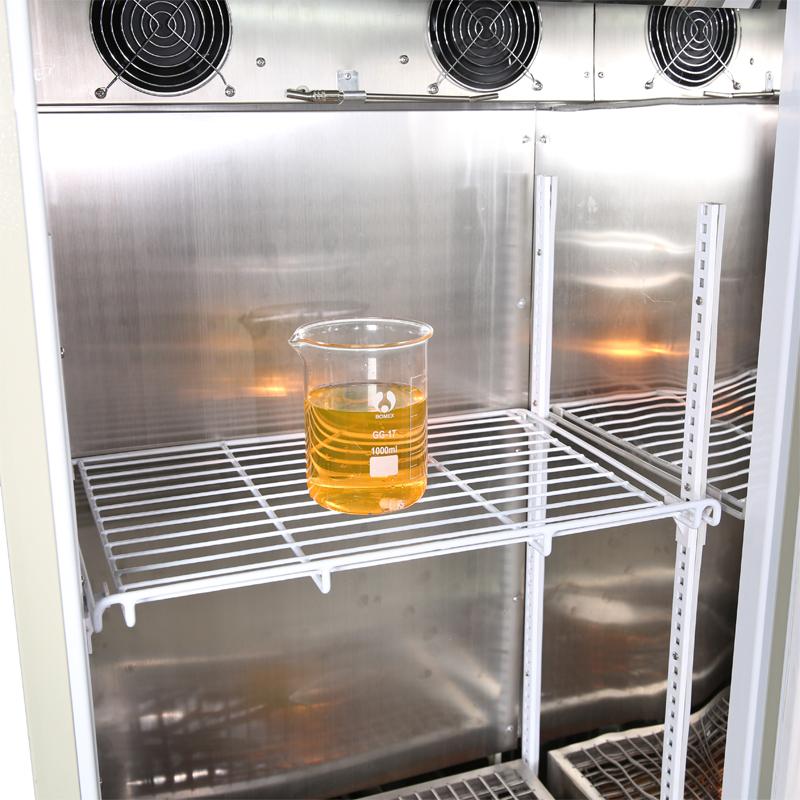
Shaking Incubators, such as PZ/05-01, have a lid and a workshop in the upper part and a mechanical room and an electrical control room in the lower part. The oscillating specimen holder and temperature control system maintain a constant temperature in the studio through air circulation and convection.
Fourth, biological light Incubator
1. Use
Biolight Incubators are mainly used for insect feeding, seed germination, and bacterial culture.
2. Structural principle
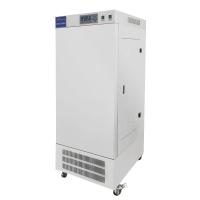
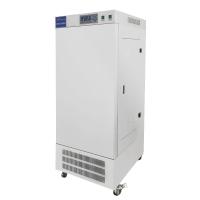
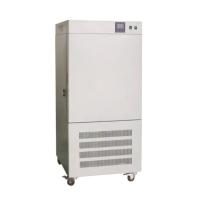
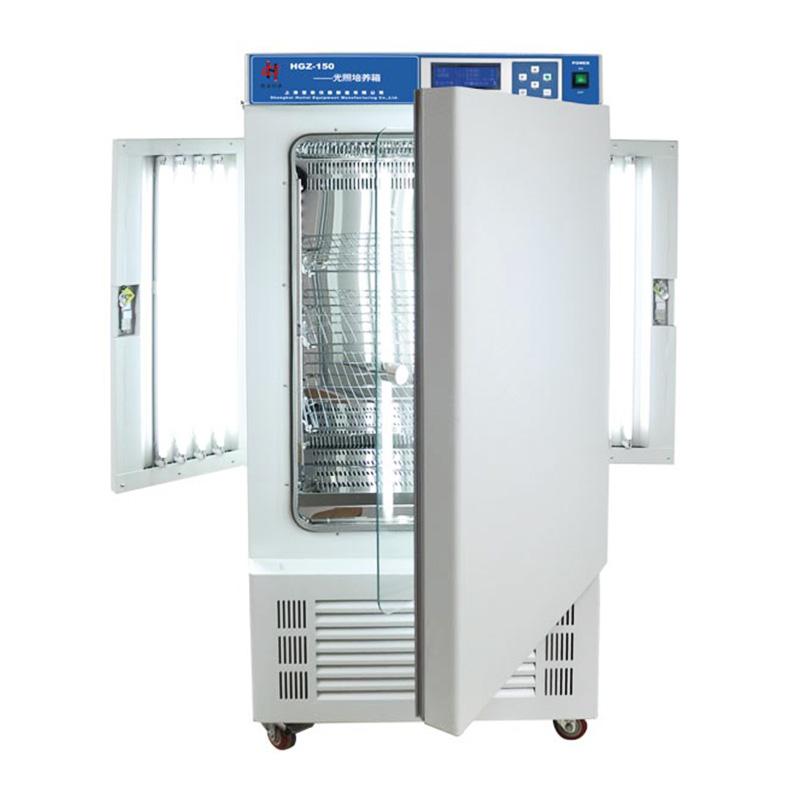
The light Incubator has three environmental factors control: temperature, humidity and light. The upper part of the cabinet is a lamp chamber, separated from the studio by plexiglass, and the bottom heater and exhaust holes form a natural ventilation structure to ensure a uniform temperature. High-reflectivity aluminium panels are used on the walls of the studio to keep the light even.
Fifth, the selection method
When choosing the right Incubator, consider the followingApplication requirements,Temperature control range,Temperature uniformity, temperature fluctuation and volume are severalAspect:
Choose the appropriate Incubator type according to the experimental requirements. For example, a CO2 Incubator is required for cell culture, and a shaking Incubator is required for mixing and dissolving.
Different experiments require different temperature ranges, and when choosing an Incubator, make sure that its temperature control range meets the needs of the experiment.
The temperature uniformity and fluctuation directly affect the experimental results, and the Incubator with good uniformity and fluctuation should be selected.
Choose an Incubator with the appropriate capacity according to the number and size of experimental samples.
Extra functions such as humidity control, light function, etc., choose an Incubator with corresponding functions according to the specific experimental needs.
Through a detailed introduction to the purpose, operating principle and technical specifications of several common laboratory Incubators, we can better understand their important role in scientific research. Whether it's for bacterial culture, cell culture, or environmental testing, the right selection and use of an Incubator is a critical factor in ensuring the success of your experiment. The variety of Incubators allows it to meet the specific needs of different experiments, thus improving the accuracy and reproducibility of experimental results.