introduction
Coatings play a vital role in industrial manufacturing, not only protecting substrates from corrosion, abrasion, and environmental aggressors, but also imparting specific functionality to products, such as heat resistance, electrical conductivity, or slip resistance. Therefore, the quality of the coating has a direct impact on the durability, performance and aesthetics of the product. In industries such as automotive, aerospace, construction, and electronics, coatings are used in a wide variety of applications, from anti-corrosion coatings to functional coatings, all of which play an important role in different scenarios to ensure that products maintain their functionality and reliability under demanding conditions.
As a key evaluation index of coating quality, porosity reflects the compactness and structural integrity of the coating. Too high porosity may lead to a decrease in the corrosion resistance of the coating, increase the risk of penetration by external media, and then affect the protective performance of the coating. Having too low a porosity can improve the density of the coating, but in some applications it can be detrimental in applications where a wear-resistant coating that stores lubricating oil is required. Therefore, proper control and accurate measurement of porosity are essential to ensure the quality of coatings. The purpose of this article is to discuss the definition, influencing factors, measurement methods and its importance in practical applications of coating porosity, so as to help readers gain a deeper understanding of the application and significance of this key quality parameter in industrial manufacturing.
Definition of coating porosity
Coating porosity can be defined mathematically and physically, with the former representing the relative rate of change in the volume of the coating material before and after preparation, and the latter representing the relative rate of change in density. Mathematically, porosity reflects the volume change of the coating during processing, while physically the density change is a measure of the density of the material. Although the definitions are different, both essentially reveal the voids inside the coating that directly affect the mechanical properties and functionality of the coating, so they complement each other when evaluating the quality of the coating.
Effect of porosity on coating properties
As a key measure of the density of the coating, the porosity directly affects the functionality of the coating. Low porosity usually means a denser coating, which is especially important for anti-corrosion coatings, as fewer pores effectively block the penetration of harmful media, thus improving the corrosion resistance of the coating. In this case, a low-porosity coating can better protect the substrate and extend the life of the product. However, too high a porosity will prevent the coating from forming a continuous protective film, resulting in a significant decrease in corrosion protection.
For abrasion-resistant coatings, the effect of porosity on performance is complex. On the one hand, the higher porosity helps to store the lubricating oil, reduces friction, and thus improves the wear resistance of the coating; On the other hand, too high a porosity can lead to a decrease in the strength of the coating, increasing the risk of wear. Therefore, in wear-resistant coatings, the porosity needs to be optimized for the specific application to balance lubrication and strength needs. Overall, coatings for different purposes have different porosity requirements, and it is critical to select the appropriate porosity range to ensure optimal performance of the coating in a particular application.
Factors that affect the porosity of coatings
Coating porosity is affected by a variety of factors, among which material factor is one of the key. The intrinsic microstructure and chemical composition of coating materials of different types and properties determine the size of porosity. For example, metal coatings typically have lower porosity than ceramic or polymer coatings. In addition, the preparation method of the material, such as spraying, dipping or plating, can also significantly affect the porosity. Certain high-temperature sintering or plasma spraying processes can make the coating denser and reduce the formation of pores.
Process parameters are another important factor that affects the porosity of coatings. The temperature and pressure at which the coating is prepared directly determine the solidification rate and compactness of the material. Higher temperatures help the material flow and fill, reducing the formation of pores, while excessive pressure may compress voids in the material and increase the density of the coating. In addition, the thickness of the coating also plays a key role. Thinner coatings may be more likely to form a uniform and dense structure, while thicker coatings may create more voids between layers.
Environmental factors also have an impact on the porosity of the coating. External conditions such as humidity and air pressure can cause uneven curing or condensation during coating preparation, resulting in the formation of pores. For example, in a high humidity environment, water vapor may form tiny voids in the coating, affecting the compactness of the coating. At the same time, lower air pressure may result in larger pores in the coating as it cures. Therefore, controlling the humidity and air pressure conditions in the preparation environment is key to ensuring the quality of the coating.
A method for measuring the porosity of a coating
1. Physical law
(1) Buoyancy method
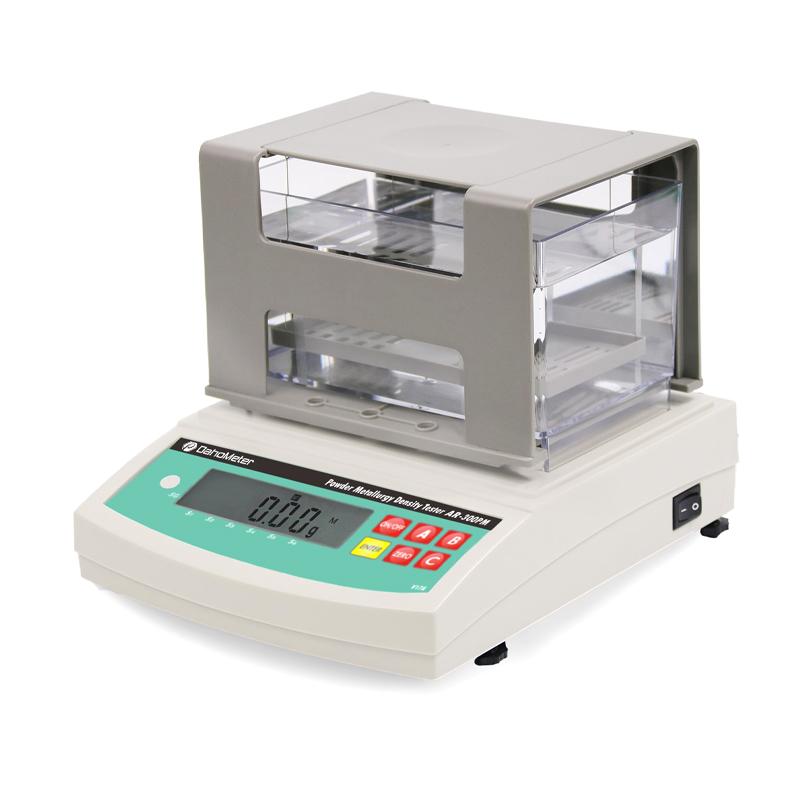
The buoyancy method uses the Archimedes principle to measure the porosity of a coating. First, the coating is peeled off the substrate and immersed in a liquid, and its volume is calculated by measuring the weight difference between the coating in air and in the liquid. Then, in combination with the density of the coating material, the porosity is calculated. This method is suitable for situations where the coating is easily separated from the substrate and requires accurate weight and volume measurements.
(2) Direct weighing method
The direct weighing method calculates porosity by measuring the difference in the mass of the coating before and after preparation. This is done by preparing the coating material into a specific shape and measuring its quality, then processing the coating to a smooth state and re-measuring the quality. The porosity of the coating is calculated from two mass differences and known density and volume. This method is suitable for coatings that can be processed and weighed with precision and is often used in laboratory settings.
2. Chemical method
(1) Filter paper method
The filter paper method measures porosity by applying a mixture of corrosive agent and indicator to the surface of the coating and then applying filter paper to observe spot formation. Coating porosity allows the test solution to penetrate into the substrate and initiate corrosion, producing color changes, and porosity is assessed by counting the number and size of spots. This method is widely used in the porosity determination of metal coatings, especially in quality control in production.
(2) Plastering method
The plaster method is similar to the filter paper method, but uses a paste containing a test solution. The paste is evenly applied to the surface of the coating, penetrates into the pores and reacts with the substrate, creating color spots. The use of pastes makes this method more suitable for curved and irregularly shaped samples. The porosity is calculated by looking at the number of spots on the surface of the paste.
(3) Impregnation
The impregnation method involves immersing a coating sample in a specific test solution so that it reacts with a matrix or middle layer in the pores of the coating to produce colored spots. The porosity is then determined by observing and counting these spots. This method is suitable for testing the porosity of coatings on steel, copper, or copper alloy substrates, especially in the testing of cathode coatings.
3. Electrolytic phase display method
The electrolytic phase imaging method uses the coating sample as the anode and electrolyzes in the electrolyte, causing corrosion of the exposed base metal or intermediate layer in the pores of the coating. The image and number of corrosion spots reflect the porosity of the coating. This method is commonly used for the inspection of various cathodically denominated coatings, and is particularly suitable for evaluating the corrosion protection of coatings. Procedure includes electrolysis, phase development, and corrosion point analysis, and the results are intuitive and easy to quantify.
4. Microscopy method
The microscopic method directly measures the porosity of the coating surface by means of microscopic observation. Light microscopy and electron microscopy can be used to observe the surface or cross-sectional structure of a coating and to identify and count the number and size of pores. Scanning electron microscopy (SEM) can also provide high-resolution images of coating sections or surfaces for accurate assessment of porosity. Microscopy is suitable for a wide range of coatings, especially in high-precision and detailed structural analysis, and is often used in research and development.
5. Replacement method
The displacement method uses a substrate with a negative potential to replace the copper ions in the test solution to produce replacement copper spots in the pores of the coating. The porosity is assessed by counting the number of copper spots on the surface of the coating. This method is suitable for detecting the porosity of nickel and chromium coatings on steel or zinc alloy substrates, especially where high sensitivity is required. The displacement method is an effective way to evaluate the uniformity and protective properties of coatings.
6. Other measurement methods
In addition to the above methods, there are other methods for measuring the porosity of coatings, such as gas adsorption, nuclear magnetic resonance (NMR), and X-ray tomography (CT). Each of these methods has its own advantages and disadvantages, for example, gas adsorption can accurately measure micropores, but the operation is complex; NMR and CT methods can non-destructively analyze the internal structure of coatings, but they are expensive and difficult to operate. These methods are often used in scientific research and where high precision is required, complementing the shortcomings of traditional methods in some applications.
When choosing a method to measure the porosity of a coating, the decision depends on the type of coating material, the thickness of the coating, and the environment in which it will be used. For example, for the evaluation of the corrosion protection properties of metal coatings, the paper filter and paste methods are often preferred due to their sensitivity to fine pores. In applications with high-temperature or abrasion-resistant coatings, microscopy or electrolytic imaging is more suitable for testing the microstructure and compactness of coatings. Environmental factors such as humidity and temperature can also affect the measurement results, so in practice, it is important to choose a method that can be adapted to the specific environmental conditions to ensure the accuracy and repeatability of the measurement.
In the case of thermal spray coatings, for example, different measurement methods offer different advantages when evaluating their porosity. The filter paper method is suitable for rapid screening of penetrating pores in coatings, which is suitable for quality control in large-scale production; The microscopy method enables in-depth analysis of the microstructure of coatings, which is suitable for scientific research or the development of precision coatings. Standards and specifications such as JB/T 7509-1994 and GB 12305.3-1990 provide detailed guidance for specific coating types and measurement methods, ensure consistency of measurement methods and comparability of results, and help the industry standardize the evaluation of coating quality.
Overall, coating porosity is an important indicator to evaluate the quality of coatings, which directly affects the functionality and application effect of coatings. By selecting the appropriate measurement method, combined with specific application scenarios and industry standards, the porosity of the coating can be effectively evaluated and controlled, and the performance of the coating in terms of corrosion protection and wear resistance can meet the expected requirements. With the development of technology, new measurement methods and standards are constantly emerging, providing more accurate and reliable tools for coating quality control, further promoting the wide application and development of coating technology in various industries.

