Water-based coatings are coatings with water as the main solvent, which have the advantages of environmental protection, low toxicity and easy cleaning. Compared to solvent-based coatings, water-based coatings emit significantly less volatile organic compounds (VOCs) during application and have less impact on the environment and human health. In addition, water-based paints dry faster, which can improve production efficiency.
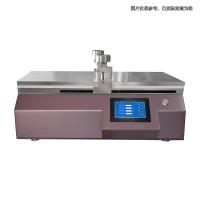
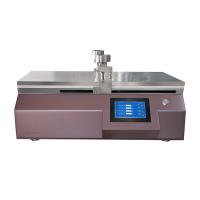
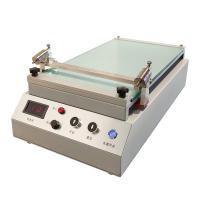
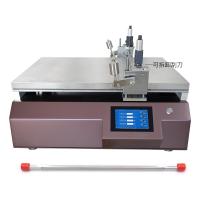
The coating testing machine is of great application significance for applying water-based coatings to paper. It not only improves the surface gloss and abrasion resistance of the paper, but also improves the printability and water resistance of the paper, thus providing a better material choice in the fields of packaging, printing, art and environmental protection. The environmental friendliness and low toxicity of water-based coatings also make them a good choice for paper surface treatment, and through a precise coating process, the performance of the paper can be significantly improved to meet the needs of various applications.
![Application case of laboratory coating testing machine for applying water-based paint on paper [with experimental video] with Figure 1](https://img.nbchao.com/imgs/800/2024/02/28/1710050696643403.jpg)
In this case, a water-based coating was applied to tissue paper, and a wire rod vacuum adsorption automatic film coating machine was used for scraping. The highlight of this case is that the water absorption of paper affects the penetration and distribution of water-based coatings. The highly absorbent paper may cause excessive absorption of the coating, which will affect the uniformity and adhesion of the coating, and it is also necessary to avoid paper wrinkles, so it should be fixed with a vacuum adsorption function, and you can consider placing a film underneath the paper to avoid liquid penetration. In addition, the viscosity of water-based coatings is very low and the leveling is very good, so the scraping speed of the Film Applicator must be relatively appropriate to scrape a relatively complete film.
Here's a video of the process:
From the above experiments, it can be analyzed that in the experiment of applying water-based paint on paper, the adjustment of process parameters is very important for the quality of the coating. The main process parameters include:
The formulation of water-based coatings should be adjusted according to the characteristics of the paper and the coating requirements. The viscosity, concentration and dispersion of the coating have a direct impact on the uniformity and adhesion of the coating. Often, the viscosity of the coating needs to be adjusted to suit different types of paper.
Coating speed and coating thickness are key parameters that determine the quality of the coating. Higher application speeds may result in uneven coatings, while too low speeds may result in reduced productivity. The control of the coating thickness should be determined according to the use of the paper and the properties of the coating.
Drying and curing of water-based coatings after application is a critical step in ensuring the quality of the coating. Different water-based coatings may require different drying and curing conditions, such as temperature, humidity and time. The control of the drying process has a direct impact on the adhesion and durability of the coating.
The temperature during the coating process has a significant impact on the flow and drying speed of the coating. The right coating temperature can help improve the coating effect and increase production efficiency.
In conclusion, the technical application of the experimental coater to apply water-based paint on paper has a wide prospect and practical significance. By selecting the right equipment and optimizing the process parameters, the performance of the paper can be significantly improved to meet the application needs of different fields.