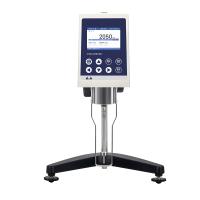
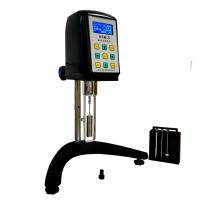
introductionIn the field of electronics manufacturing, the viscosity of circuit board (PCB) solder paste is one of the key parameters that affect the quality of soldering. Solder paste is typically made from a mixture of tin powder and flux, and its viscosity directly affects print quality, solder joint formation, solder reliability, and the final performance of the product. Since the characteristics of solder paste are highly sensitive to environmental conditions such as temperature and humidity, strict control of solder paste viscosity is necessary to ensure the quality of circuit boards during the production process. As a precision viscosity measurement equipment, Rotational Viscometer is widely used in the testing and control of the viscosity of circuit board solder paste because of its easy operation, accurate measurement and strong applicability.
The importance of solder paste viscosity
The influence of the viscosity of the solder paste on the circuit board soldering process is mainly reflected in the following aspects:
The viscosity of the solder paste directly affects its flow and coverage on the template. The proper viscosity ensures a good release of the solder paste at the stencil openings, resulting in a clear, uniform pad overlay. If the solder paste is too viscous, it will lead to incomplete printing, bridging or voiding; If the viscosity is too low, it will collapse, which will affect the accuracy and quality of the solder joint.
The viscosity of the solder paste also affects the shape and consistency of the solder joint. In the reflow soldering process, proper viscosity ensures that the paste remains stable during the melting process and that the solder joints are not displaced or mixed due to excessive flow, while insufficient flow can lead to poor or virtual soldering.
Different electronic products have different performance requirements for solder joints, and the viscosity of solder paste directly affects the mechanical strength, electrical properties and durability of solder joints. Controlling the proper viscosity of solder paste can reduce the occurrence of solder defects and improve the reliability and longevity of the product.
Therefore, the measurement and control of the viscosity of solder paste is an important part of ensuring the quality of circuit board soldering. As a commonly used test equipment, a Rotational Viscometer provides an accurate and stable solution for solder paste viscosity measurement.
How a Rotational Viscometer works
A Rotational Viscometer mainly determines the viscosity of a sample by measuring the resistance experienced by a rotor rotating at a certain speed. Specifically, as the rotor rotates in the sample, the resistance of the sample to the rotor is directly proportional to the viscosity of the sample. The Rotational Viscometer calculates the viscosity value of the sample by measuring the magnitude of the resistance through a built-in sensor. Rotational viscometers are commonly used in cylindrical, conical and parallel plates, each of which is suitable for different sample types and viscosity ranges.
In the viscosity testing of circuit board solder paste, the use of a Rotational Viscometer typically includes the following steps:
Mix the solder paste sample evenly to avoid air bubbles or inhomogeneous components affecting the measurement results.
Select the appropriate rotor and speed based on the estimated viscosity range of the solder paste.
The rotor is immersed in the sample, the device is started, and the change in resistance experienced during the rotation of the rotor is recorded.
The machine automatically calculates and displays the viscosity value of the solder paste and exports the data for further analysis as needed.
Advantages of Rotational Viscometers in solder paste viscosity testing
The application of Rotational Viscometers in solder paste viscosity testing has several distinct advantages:
Easy and fast operation: The Rotational Viscometer is easy to operate, the testing process is fast, and accurate viscosity values can be obtained in a short time. The results are reproducible and reliable, facilitating quality control on the production line.
Adaptable: Rotational viscometers are suitable for a wide range of viscosities, capable of testing solder paste samples from low to high viscosity. At the same time, the rotors are available in a variety of options and the test conditions can be adjusted for different types of solder paste.
Accurate data: Since the viscosity of solder paste is very sensitive to temperature changes, Rotational Viscometers are usually equipped with a temperature control system to keep the sample temperature stable during the test and ensure the accuracy of viscosity measurement.
Easy online monitoring and quality control: Rotational viscometers can be integrated with production lines to achieve real-time monitoring and automated operation, helping enterprises optimize production processes, reduce scrap rates, and improve production efficiency and product quality.
Practical examples of Rotational Viscometers in solder paste viscosity testing
In practical applications, Rotational Viscometers are often used in the quality control laboratories of PCB fabricators and electronic assembly companies to ensure that the viscosity of the solder paste is within the specified range of the process. Here are a few examples:
Solder paste quality control during production – A PCB fabrication plant monitors the viscosity changes of solder paste in real time with an in-line Rotational Viscometer. When the viscosity deviates from the set value, the system automatically alarms and pauses production, prompting the operator to make adjustments. This real-time monitoring method greatly reduces the welding defect rate in the production process and improves the first-pass rate of the product.
Solder paste performance testing in the development of new materials——During the development of new solder paste materials, researchers used a Rotational Viscometer to measure the viscosity of different formulations of solder paste to optimize its flowability, printability, and welding results. By comparing the viscosity values under different temperature and humidity conditions, a good combination of formulations can be found.
Stability analysis of aging solder paste——An electronics assembly company uses a Rotational Viscometer to measure the viscosity change of solder paste under different storage conditions to evaluate the shelf life and suitability of solder paste. With long-term viscosity data monitoring, companies are able to more accurately predict the life of solder paste, reducing waste and material loss.
Key points for the selection of Rotational Viscometer in solder paste viscosity testing
When choosing the right Rotational Viscometer for solder paste viscosity testing, the following factors should be considered:
Measuring range——Depending on the viscosity range of the solder paste, select a viscometer with the appropriate measurement range. In general, the viscosity range of electronic solder paste is between 500-2000 Pa.s, and the viscometer selected should be able to cover this range.
Rotor type and size——Different solder paste types may require different rotors for testing. The conical plate rotor is suitable for low-viscosity samples, while the parallel plate rotor is suitable for high-viscosity samples. When selecting a rotor, the viscosity range of the solder paste and the test accuracy requirements should be taken into account.
Temperature control capability——Solder paste viscosity is extremely sensitive to temperature changes, so the viscometer should have precise temperature control to ensure accurate and consistent measurements.
Ease of operation and data management capabilities——Modern Rotational Viscometers are often equipped with digital displays and data storage capabilities that allow measurement data to be read and recorded in real-time, and choosing a device with these capabilities will help improve productivity.
The SNB-3 viscometer is specially designed for solder paste viscosity testing.

conclusion
The application of Rotational Viscometers in the viscosity testing of circuit board solder pastes has significantly improved the quality control level of the soldering process. By monitoring the viscosity of the solder paste in real time, the flow and printing properties of the solder paste are ensured, ultimately improving the quality of the solder joints and the reliability of the electronics. In the future, with the continuous development of electronic manufacturing processes and the continuous innovation of solder paste materials, Rotational Viscometers will continue to play an important role in the field of solder paste viscosity testing and quality control. In order to ensure good welding results, enterprises should choose appropriate viscometers and test methods based on actual needs and application scenarios to provide a solid guarantee for efficient production.