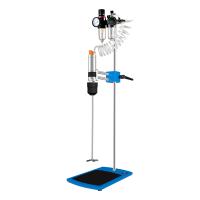
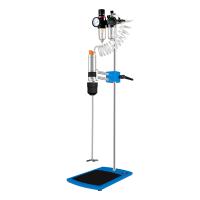
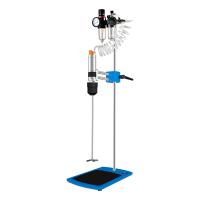
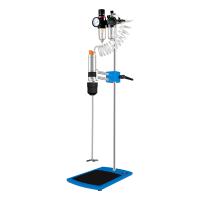
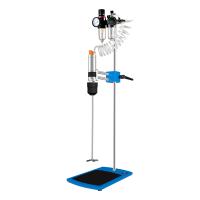
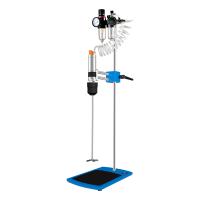
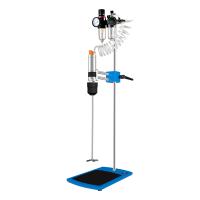
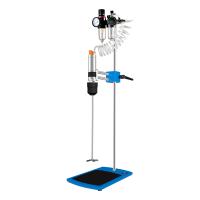
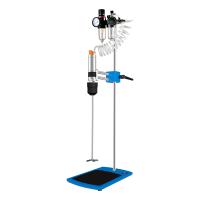
Pneumatic agitators play an important role in industrial production, but during use, various failures may be encountered. Understanding the common causes of these failures and their solutions can effectively improve the stability and efficiency of the equipment. Here are some common faults of pneumatic agitators and how to deal with them.
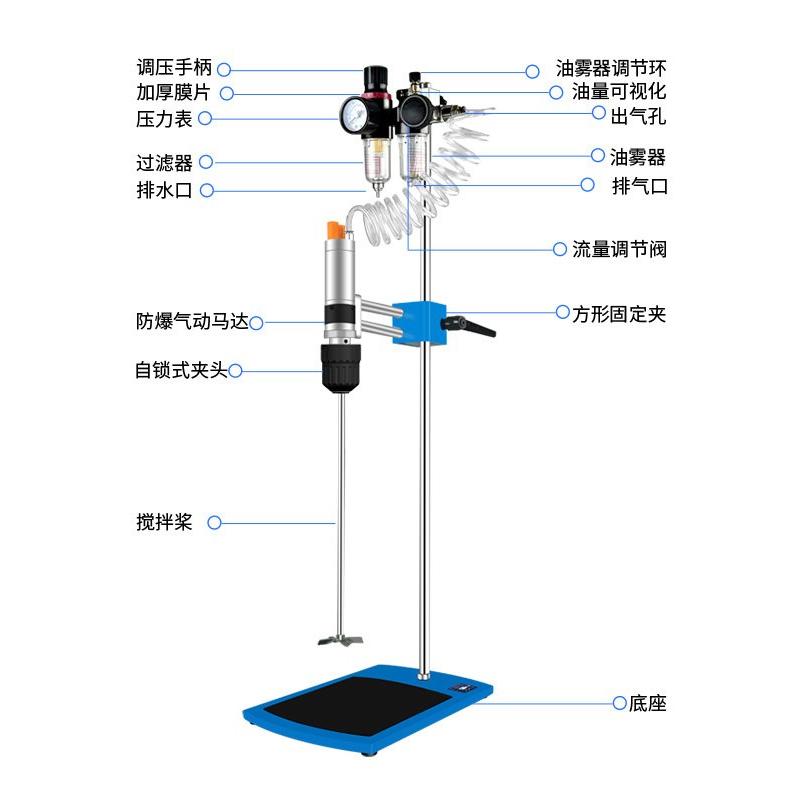
1. Don't give gas
Fault Symptom:When the pneumatic agitator cannot be properly fed, it may cause the agitator to fail to start or work.
Possible causes:The air path is blocked, the air valve is not opened or damaged, and the pneumatic drive is stuck.
Solution(s):First, check whether the air path is blocked, and clean or replace the air path. Second, check that the valve is open properly and, if necessary, open the valve or replace the damaged one. Finally, if the pneumatic drive is stuck, consider replacing the air motor.
2. The speed is reduced
Fault Symptom:The rotational speed of the pneumatic agitator decreases, which affects the mixing efficiency.
Possible causes:Insufficient air pressure.
Solution(s):Check the pressure gauge within one meter near the air motor to make sure the air pressure is between 0.5-0.7Mpa. If the air pressure falls below this range, the air supply needs to be adjusted.
3. Blade breakage
Fault Symptom:The blades are broken, which affects the normal operation of the agitator.
Possible causes:The flare of the rotor blade groove is too large.
Solution(s):Replace the rotor to address blade breakage.
4. The blade is stuck
Fault Symptom:The blades get stuck while working, causing the agitator to not function properly.
Possible causes:Improper clearance of the blade groove or deformation of the blade.
Solution(s):Inspect and replace deformed or ill-fitting blades to restore normal operation.
5. Insufficient torque
Fault Symptom:The torque output of the pneumatic agitator is insufficient, which affects the mixing effect.
Possible causes:Low air pressure, small air supply line diameter, poor exhaust.
Solution(s):Check and ensure that the diameter of the gas supply line and its accessories meets the technical requirements to avoid interception and blockage. At the same time, make sure that the diameter of the exhaust pipe is larger than the intake diameter to ensure a good exhaust effect.
By understanding these common faults and their solutions, you can effectively improve the efficiency of your pneumatic agitator and ensure the smooth running of the production process.