This article describes in detail the methods for determining the foldability of paper and cardboard, including the Schauber foldability test and the use of the MIT fold resistance test. The article covers the definition of bending resistance, instrument structure, operating principle, instrument calibration, and specimen preparation and testing procedures. The Schauber method is suitable for bi-fold testing of paper, while the MIT method is used to determine the number of reciprocating folds of paper. These test methods are used to evaluate the folding resistance of paper under a certain tension and have important quality control implications.
1. Definitions
The folding resistance of paper refers to the number of times that the paper can withstand 180° reciprocating folds under a specific tension. This metric is used to evaluate the durability of the paper when it is folded repeatedly during use. Specifically, this test measures the paper's ability to resist wear and tear during repeated folding. For the Schauber test, the specimen is continuously folded in the machine until it breaks, and the number of double folds the paper is subjected to is recorded; The MIT test, on the other hand, measures the number of times the paper breaks during reciprocating folding by simulating the actual environment in which the paper will be used. Through these methods, it is possible to learn more about the folding resistance of paper in practical applications, so as to guide its application effect in different environments.
2. Instruments
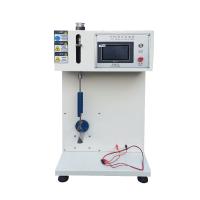
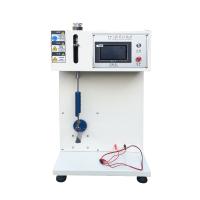
Shober foldability Tester
The transmission part – including the motor, pulleys, toggle arm and protection switch – these components work together to drive the folding process of the instrument and ensure the stability and safety of the operation.
The test section – consists of a spring cartridge, a chuck, a folding knife and a counter. The spring barrel is used to apply the folding force, the chuck fixes the paper pattern, the folding knife performs the folding action, and the counter records the number of folds.
How it works
The Schauber fold resistance meter measures the foldability of a paper by repeatedly folding the paper strip in a standard state until it breaks. The process involves holding the paper strip in the instrument and folding the paper back and forth with a folding knife until the paper breaks. The instrument records the number of folds to evaluate the foldability of the paper.
3. Detailed composition of the instrument
Folding device
Chuck – used to hold the paper pattern and ensure that the position of the paper is stable during folding. It is designed to hold different sizes of paper.
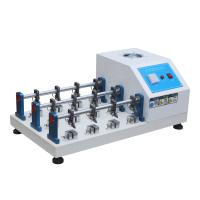
Rollers – used to guide the movement of the paper during the folding process. The main parameters include diameter and spacing, which need to rotate smoothly to avoid uneven pressure on the paper.
Folding blade – a key component that performs the folding action. The thickness of the blade needs to be precise to ensure the stability and consistency of the folding. Common parameters include the thickness and sharpness of the blade.
Instrument maintenance and calibration
Maintenance: includes regular lubrication of mechanical parts such as rollers and folding blades to reduce friction and wear; Check the condition of the chuck and rollers to ensure that they are functioning properly and that the paper is effectively fixed.
Calibration: Ensuring the accuracy of the instrument, including adjusting the spring tension to match the standard requirements, checking the accuracy of the folding speed, and aligning the hemming rollers to maintain the consistency and repeatability of the folding process.
Fourth, the collection and preparation of samples
Specimen specifications
Length and width – the size of the specimen is selected according to the requirements of the standard. Typically, the size of the paper sample needs to meet the specified standards to ensure the accuracy and comparability of the test results.
Preparation conditions – Specimens are prepared under standard atmospheric conditions to ensure that their moisture content and ambient temperature have minimal impact on the test. Standard atmospheric conditions generally include a specific range of relative humidity and temperature.
Specimen requirements
No creases and wrinkles – The surface of the specimen should be flat and smooth, with no creases or wrinkles, to ensure that the folding action is uniform and stable during the test. These defects may affect the actual flexural resistance of the specimen.
No stains – specimens should be clean and free of stains or contaminants, which may alter the physical properties of the paper and affect the accuracy of the fold resistance test.
5. Test steps
Clamp the paper pattern flat in the chuck of the fold resistance meter to ensure that the paper pattern does not move or loosen during the folding process. The clamping process needs to be uniform and stable to prevent the specimen from slipping during testing.
A preset initial tension is applied to the specimen to ensure that the sample is in a stable tension state at the beginning of folding. This process helps to maintain the shape of the specimen and ensures the reliability of the test.
Start the instrument so that the paper pattern undergoes a reciprocating 180° folding process at the set folding speed. Continue folding until the pattern breaks. Record the number of folds when the pattern breaks.
Record the number of folds at the time of breakage, as well as any relevant test data. This data will be used to evaluate the foldability performance of the sample.
Precautions
Specimen fracture location
Observe and record the specific location of the paper sample break to ensure that the break is evenly distributed. The location of the fracture may affect the final fold resistance measurement.
Stratification
Pay attention to whether the paper pattern is layered, that is, whether there is separation between layers during the folding process. Stratification can affect the accuracy of the test and should be taken into account when recording data.
Sixth, the test report
Result indication
Longitudinal fold resistance—Reports the foldability of the pattern in the longitudinal direction, including the arithmetic mean, maximum, and minimum values. These data provide an overall representation of the pattern in longitudinal folding.
Transverse Fold Resistance – Reports the bending resistance of the pattern in the transverse direction, which also includes the arithmetic mean, maximum, and minimum values. These data show the overall performance of the pattern in horizontal folding.
data analysis
Arithmetic Mean – Calculate the average of all folds in the longitudinal and transverse directions of the specimen. This helps to understand the typical level of fold resistance of the pattern.
Maximum – Records the maximum number of folds that the specimen can achieve in the test, indicating the limit of the specimen's bending resistance under excellent conditions.
Minimum – Records the minimum number of folds that the specimen can achieve in the test and is used to identify the level of foldability of the specimen under the worst conditions.
Report content
Purpose and method of the trial – a brief description of the purpose of the trial and the method used.
Specimen Information – Provides specimen specifications, preparation conditions, and other relevant information.
Result data – Arithmetic means, maximums and minimums are clearly presented vertically and horizontally, and are appropriately graphed for easy understanding.
Conclusions and Suggestions - Based on the test results, the folding resistance of the paper pattern is summarized, and suggestions for improvement or application are put forward.
7. Determination of folding resistance of cardboard (Shawber type)
definition
The folding resistance of cardboard refers to the number of times the cardboard is folded at a reciprocating 180° under a specific tension until it breaks. This test evaluates the folding resistance of the board and is often used to test the durability and quality of the board.
Instrument parameters
Main components
Folding device – consists of chuck, roller and folding blade. The thickness of the folding blade, the diameter and spacing of the hemming rollers, the spring tension and the folding speed are all key parameters.
The transmission part - including the motor, pulley, crank arm and protection switch, these components ensure the stable operation of the equipment.
The measuring section – consisting of a spring cartridge, chuck, folding knife and counter – is used to record the number of folds and the state of the cardboard when it breaks.
Calibration method
Ensure that the tension of the spring is in accordance with the standard to maintain the consistency of the test.
Calibrate the folding speed to ensure it meets the test requirements.
Check and adjust the alignment of the hemming rollers to avoid test errors.
Test procedure
Cut the cardboard according to the standard specifications to ensure that the length and width of the cardboard meet the test requirements. Cardboard should be prepared under standard atmospheric conditions and should be free of creases, wrinkles, or stains.
The specimen is clamped in the chuck of the Schauber refractometer to ensure that it is fixed and does not displace during the test.
Start the instrument, start folding after applying the initial tension, and record the number of times the cardboard breaks during the folding process. Pay attention to the fracture location of the cardboard and whether there is delamination to ensure the accuracy of the data.
8. MIT foldability Tester method
definition
The MIT Fold Resistance Method measures the number of double folds of the cardboard at a reciprocating angle of 135° until breakage. This method is used to evaluate the folding resistance and durability of cardboard, and is particularly suitable for testing thin and light paperboard.
How it works
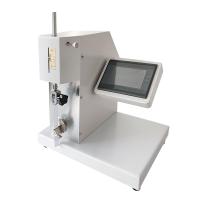
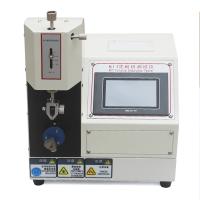
The MIT foldability Tester tests the foldability of cardboard by a double folding action. The cardboard is subjected to repeated folding at a fixed angle until it breaks. The number of folds of the cardboard in the test is a direct reflection of its durability.
Instrument composition
Folding device – including bi-fold blades, hemming rollers and chucks. The bi-fold blade is designed to fold cardboard at an angle of 135°.
The transmission system is composed of motor, pulley and toggle arm to ensure the stability of the instrument and the accuracy of the folding action.
Counter – Records the number of folds of the cardboard until it breaks.
Calibration method
Spring Tension – Adjust and calibrate the spring tension to ensure consistency of the folding force during testing.
Angle adjustment – to ensure that the folding angle is accurate and meets the 135° standard.
Alignment Check – Check and adjust the alignment of the folding blade and roller to guarantee the accuracy of the test.
Procedure and result calculation
Prepare the specimen according to the standard specifications and ensure that the dimensions and conditions of the cardboard meet the test requirements.
Adjust the spring tension according to the operating manual of the instrument to ensure the stability of the test.
Start the instrument, perform a double fold test, and record the number of folds before the cardboard breaks. Calculating the foldability of cardboard often requires recording the results of multiple specimens to obtain an accurate average.
9. Summary
The determination of the folding resistance of paper and cardboard is an important part of the evaluation of the durability of paper. The Schauber and MIT fold Testers offer two different test methods, each with its own scope and characteristics. Proper instrument calibration and specimen preparation are key to ensuring accurate test results. Through these measurement methods, the folding resistance of the paper in actual use can be effectively judged, so as to guide production and quality control.