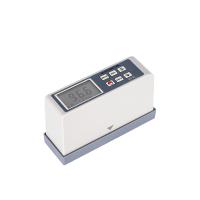
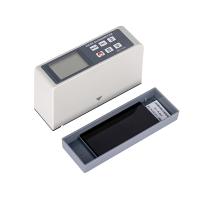
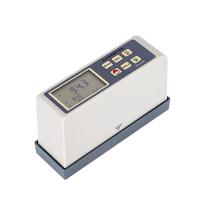
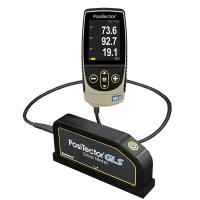
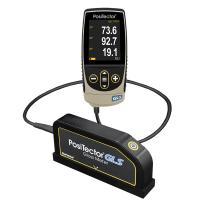
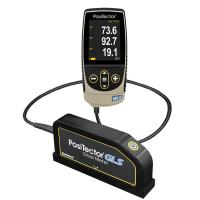
Gloss measuring instrument is a precision device used to evaluate the gloss of the surface of materials, which is widely used in coatings, plastics, metals and other fields. It calculates gloss values by measuring the intensity of light reflected from a surface, providing accurate gloss data to help control product quality and meet industry standards. Instruments typically support a wide range of gloss levels and measurement angles to ensure reliable measurement results.
20° angular gloss determination method
Glossimetry is used to evaluate the gloss of an object's surface under specific lighting conditions. The core concept is to measure the intensity of light reflected from a surface, reflecting the glossiness of an object's surface.
instrument
Instrument composition - gloss Tester mainly includes light source, lens, sample pressure plate and optoelectronic devices. The light source provides the light, the lens focuses the light, the specimen pressure plate fixes the specimen, and the optoelectronic device is used to detect the intensity of the reflected light. The sections need to be precisely configured to ensure the accuracy of the measurement results.
Spectral conditions – the light source should be stable and the spectral characteristics should meet the measurement requirements. Filters are used to adjust the wavelength of light, and the response range of optoelectronic devices needs to meet specific requirements to ensure the accuracy of the measurement.
Optoelectronic devices – The accuracy of optoelectronic devices directly affects the results of gloss measurements. Choosing optoelectronic devices with high sensitivity and small spot size can help improve measurement accuracy.
Specimen preparation
Specimens with smooth surfaces and no visible blemishes should be selected. The specimen needs to be thoroughly cleaned to remove dust and dirt from the surface to avoid affecting the test results.
When cutting the specimen, use tools that do not damage the surface and ensure that the specimen size and shape meet the test requirements. Specimen handling should be carried out in a dry, dust-free environment to reduce the interference of external factors.
Test procedure and result calculation
Before the test, the instrument needs to be warmed up to ensure the stability of the light source and optoelectronic devices. Instrument calibration is performed using standard gloss samples to ensure accurate measurements.
Test the procedure
The instrument was calibrated with a standard sample of known gloss.
The treated specimen is placed on the specimen platen and measured according to the instrument instructions.
The measurement data is recorded, and the gloss value is derived using the instrument's calculation method.
Calculation methods and data processing specifications
Based on the measurement data and calibration results, the gloss value is calculated and the accuracy of the results is ensured. The final result is a percentage representation of glossiness.
45° angular gloss determination
The 45° angular gloss measurement method is used to evaluate the gloss of the surface of an object at a 45° angle to the surface of the specimen when the light source is at an angle of 45°. This method reflects the glossy properties of an object at that angle by measuring the intensity of the light reflected from the surface.
instrument
Instrument composition – The gloss Tester consists of a light source, a grating, a lens, and a photocell. The light source emits the light, the grating disperses the light, the lens is used for focusing, and the photocell receives the reflected light and converts it into an electrical signal. The components need to be precisely configured to ensure accurate measurements.
Gloss Standard – The standard specular of the 45° angular gloss assay is a gloss standard sample of known reflectance that is used to calibrate the instrument and ensure consistent measurements.
Specimen preparation
Select specimens with smooth surfaces and no visible defects. The surface of the specimen should be cleaned to remove dust and dirt. Ensure that the specimen size and shape meet the test requirements for accurate measurements.
Test procedure
Before measuring, the instrument needs to be warmed up to ensure that the light source is stable. The instrument is calibrated using a standard specular sample to guarantee the accuracy of the measurement.
Procedure and data logging method for the testing process
The instrument was calibrated with a standard specular sample of known gloss.
Place the prepared specimen in the measuring position and take gloss measurements according to the instrument instructions.
The gloss data obtained during the measurement process is recorded.
Measurement accuracy and result processing
Ensure that the light source and photocell during the measurement process are stable and reduce errors. Based on the recorded data, the results are processed using the calculation methods built into the instrument and the final gloss value is analyzed.
75° angular gloss determination method
The 75° angular gloss measurement method is used to evaluate the gloss of the surface of an object at a 75° angle between the light source and the surface of the specimen. This method reflects the glossy properties of an object's surface by measuring the intensity of light reflection at that angle.
instrument
Instrument composition - the Tester includes a light source, a lens, a specimen pressure plate and an optoelectronic device. The light source is used to illuminate the specimen, the lens adjusts the direction of the beam, the specimen platen is used to fix the specimen, and the optoelectronic device is responsible for receiving the reflected light and converting it into an electrical signal. The components need to be precisely configured to ensure accurate measurements.
Gloss Standards – The 75° angular gloss assay uses a standard specular sample with known reflective properties to calibrate the instrument. This standard sample ensures consistency and accuracy of measurements.
Specimen preparation
Select specimens with smooth surfaces and no visible defects. Ensure that the specimen surface is clean and dust-free for accurate measurement results. Specimens should be handled in standard sizes and shapes to meet test requirements.
Test procedure
Before starting the test, the instrument needs to be warmed up to ensure that the light source is stable. The instrument is calibrated using a standard specular sample to guarantee the accuracy of the measurement.
Test operation procedures and data recording methods
Calibrate the instrument with a standard specular sample.
Place the treated specimen in the measuring position and measure it according to the instrument manual.
Accurately record the gloss data obtained during the measurement process.
Measurement accuracy requirements and data processing specifications
Ensure the stability of the instrument and reduce the measurement error. Based on the recorded data, the results are processed using the calculation methods built into the instrument and the final gloss value is analyzed.
summary
Gloss determination methods at different angles—20°, 45°, and 75°—have their own specific instrument configurations and measurement standards for different types of paper and cardboard materials. The 20° angle method is suitable for high-gloss materials such as cast coated paper and wax paper, the 45° angle method is used for metallic composite papers such as aluminum foil, and the 75° angle method is suitable for low-gloss paper and cardboard. The accuracy of the instrument, the spectral conditions, and the maintenance of the standard plate in each method are all critical to ensuring the accuracy of the test. By mastering these methods, the gloss of the material can be effectively assessed to ensure its performance in real-world applications.